Principal Characters & Performances
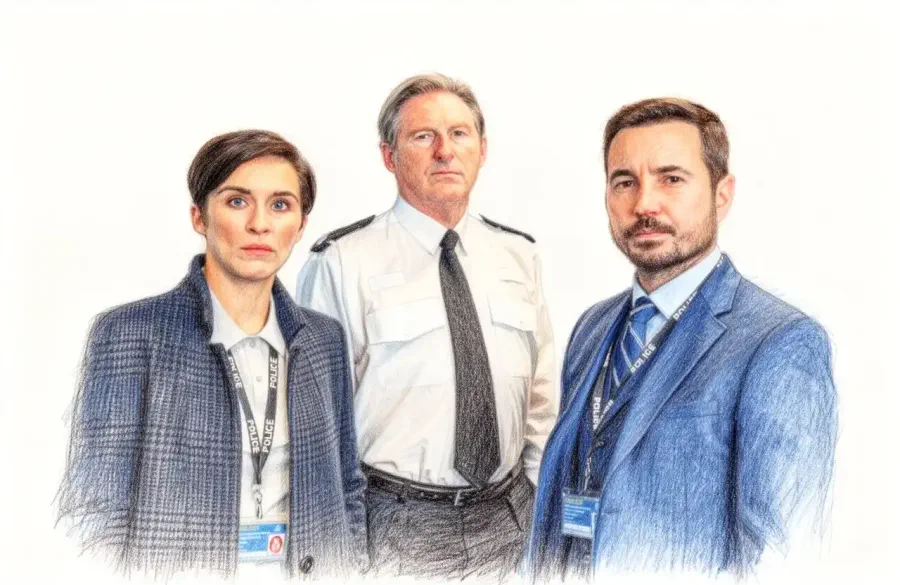
DS Steve Arnott
Martin Compston’s DS Steve Arnott is the moral compass of AC-12, though one that is frequently battered and bent. A former counter-terrorism officer, Arnott’s transfer to anti-corruption stems from an act of integrity, refusing to cover up a mistaken shooting.
This foundational principle defines him, but it also makes him a target. Across six series, Arnott evolves from a somewhat rigid by-the-book detective into a more nuanced, though perpetually pained, investigator.
His physical struggles, particularly a debilitating back injury sustained in Series 3, become a powerful metaphor for the psychological toll of the job. Compston portrays Arnott’s dogged persistence and simmering frustration with a quiet intensity.
The character’s personal life is a casualty of his dedication, and his loyalty to Ted Hastings and partnership with Kate Fleming form the emotional core of the unit. Arnott is the audience’s entry point, the man who believes the system can work if you follow the evidence, no matter where it leads.
Superintendent Ted Hastings
Adrian Dunbar’s Superintendent Ted Hastings is the commanding officer of AC-12 and one of television’s most compelling authority figures. With his catchphrases like “Now we’re sucking diesel” and “Mother of God,” Hastings could be a caricature, but Dunbar imbues him with profound complexity.
He is a man of apparent unwavering principle, a staunch defender of due process who insists that anti-corruption work is about “catching coppers, not villains.” Yet his own history and decisions are constantly scrutinised.
The series masterfully explores the tension between Hastings’s devout Catholic morality, his loyalty to his team, and the murky compromises required to navigate a corrupt institution. Dunbar’s performance ensures Hastings is never simply the gruff boss; he is a vulnerable, sometimes misguided, but fundamentally decent man fighting a war on multiple fronts, and the strain is always visible behind the stern facade.
DC/DI Kate Fleming and Notable Guests
Vicky McClure’s Kate Fleming is the operational backbone of AC-12. An undercover specialist, her ability to infiltrate other units is paramount to the investigations. McClure brings a steely, watchful intelligence to the role. Fleming is often the most pragmatic of the trio, balancing Arnott’s idealism and Hastings’s dogma with street-smart tactics.
Her loyalty is constantly tested, both professionally and personally, making her character arcs among the most tense. The guest stars who embody each series’s principal suspect are equally pivotal. Lennie James set a high bar as the charismatic DCI Tony Gates.
Keeley Hawes delivered a career-defining, award-winning performance as the morally ambiguous DI Lindsay Denton. Thandie Newton, Stephen Graham, and Kelly Macdonald each brought formidable, layered complexity to their roles, ensuring the “bent copper” was never a simple villain but a fully realised character caught in a web of their own making, elevating every confrontation in the interview room.
The World of Line of Duty
Line of Duty exists in a deliberately unnamed fictional city, a conscious choice that universalises its story of institutional corruption. The environment is a character in itself: the modern, glass-walled offices of AC-12, filmed at Invest Northern Ireland in Belfast, suggest transparency in an organisation tasked with seeing through lies.
The interview rooms within are claustrophobic arenas for psychological combat. This world is one of stark contrasts. The mundane reality of police work—the paperwork, the budget meetings, the office politics—is constantly juxtaposed with sudden, brutal violence from organised crime groups.
The show’s geography, using locations in Birmingham initially and then predominantly Belfast, creates a recognisable yet anonymised British urban landscape. It is a world where trust is the rarest commodity, every interaction is potentially transactional, and the most dangerous threats often wear the same uniform as the heroes.
Origin Story
Line of Duty was created and written by Jed Mercurio. Initially pitched to BBC One, it was redirected to BBC Two, which commissioned the first series. Produced by World Productions, principal photography for Series 1 began in August 2011 under directors David Caffrey and Douglas Mackinnon.
Mercurio served as producer on that first series, becoming an executive producer from the second onward alongside Simon Heath from World Productions and the BBC’s Stephen Wright, later Tommy Bulfin. This move to BBC Two, often seen as a secondary channel, provided the creative space for the show to develop its distinctive, detailed voice before it achieved mainstream breakthrough success.
Narrative Style & Tone
The show’s style is grounded and procedural, employing handheld camerawork and a muted colour palette to create a documentary feel. Its signature is the extended interview scene, where tension is built through dialogue, evidence files, and the careful parsing of legal terminology.
Non-linear storytelling through flashbacks and CCTV reconstructions is used to slowly piece together the truth. The tone is consistently serious and suspenseful, underscored by Carly Paradis’s recurring four-note musical motif.
It avoids glamour, instead focusing on the bureaucratic and psychological mechanics of police work. The narrative is serialised, with each series focusing on a single case while weaving threads into a larger conspiracy, demanding and rewarding close attention from its audience.
How is Line of Duty remembered?
Line of Duty is remembered as a landmark in British television drama, a series that redefined the police procedural for a modern audience. It is celebrated for its intricate, watertight plotting, its commitment to procedural authenticity, and its stellar performances from a core trio and a succession of acclaimed guest stars.
It generated a level of water-cooler and social media discussion rare for a UK drama, with its acronym-heavy jargon and cliffhanger endings becoming part of the cultural lexicon. The show is credited with revitalising mainstream interest in the genre on terrestrial television.
While the finale sparked debate, its record-shattering audience figures cemented its status as event television. It is ultimately remembered as a sophisticated, relentless exploration of corruption, loyalty, and the fragile systems meant to uphold justice.
In Closing
Line of Duty stands as a meticulously crafted, intellectually engaging pinnacle of the crime drama, proving that the greatest thrills can be found not in chase scenes, but in the pursuit of truth.