Principal Characters & Performances
D.C. Anna Travis
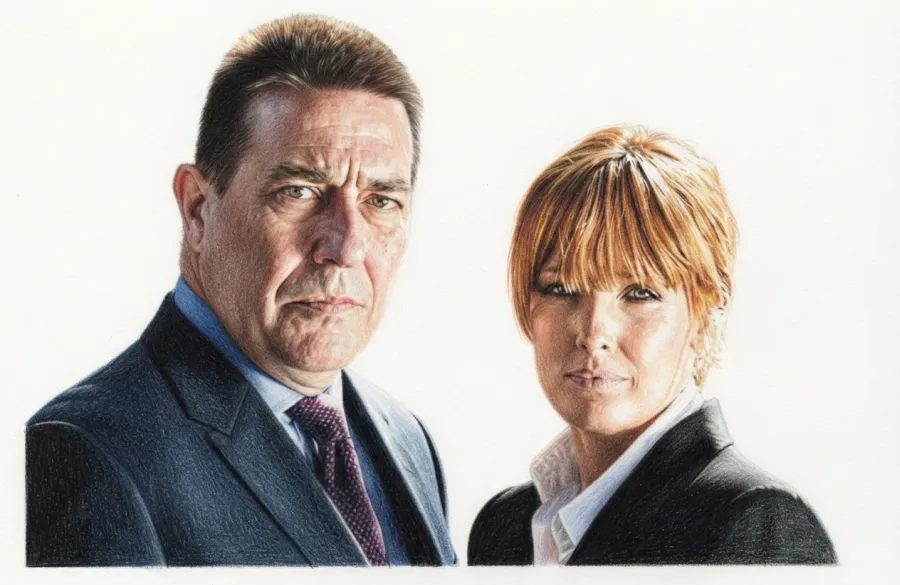
Anna Travis is the detective at the centre of Above Suspicion: a young officer joining a murder squad on a case that has run for eight years, and the daughter of a decorated policeman who has to prove she is there on merit rather than on her name. Kelly Reilly plays her as watchful and undeferential, and the series never asks the audience to like her.
Her rise is the series’ own progress. She starts as a detective constable, becomes a detective sergeant, and reaches detective inspector by the later cases, while the ranks and the squad around her shift with each story. Lynda La Plante wrote her as a deliberate answer to Jane Tennison, and Reilly drew the distinction plainly: Travis is not a political character, she said, and “she’s not fighting her ground.”
What Reilly brought was a coolness that resists ingratiation. She had come from the stage, with an Olivier nomination behind her, and the part gave her a returning ITV lead a decade before American television made her famous. Reviewers split on it: one early notice called her blank and bored-looking, while The Times, by the third series, admitted that disliking Travis so much meant something was working.
The character’s one continuous thread is her relationship with her superior, James Langton. It begins as mentorship, becomes an attraction neither of them resolves, and is still doing work in the final series, when the case and the personal history have become impossible to separate.
D.C.I. James Langton
James Langton is the senior detective who leads the squad Anna Travis joins: her superior, her late father’s colleague, and the series’ second lead. Ciarán Hinds plays him as weathered, short-fused and privately damaged, a man whose work has crowded out everything else.
His rank rises across the run from detective chief inspector to detective chief superintendent, and the fourth series turns on his being passed over for promotion to commander in favour of a younger, less experienced rival. The grievance runs through the whole of Silent Scream and shapes who is allowed to run the case.
Hinds was the established name among the cast, with Rome, Munich and There Will Be Blood behind him, and he gives Langton the weight the part needs without softening him. The relationship with Travis carries the series’ emotional line from the first episode to the last.
Notable Support and Guest Stars
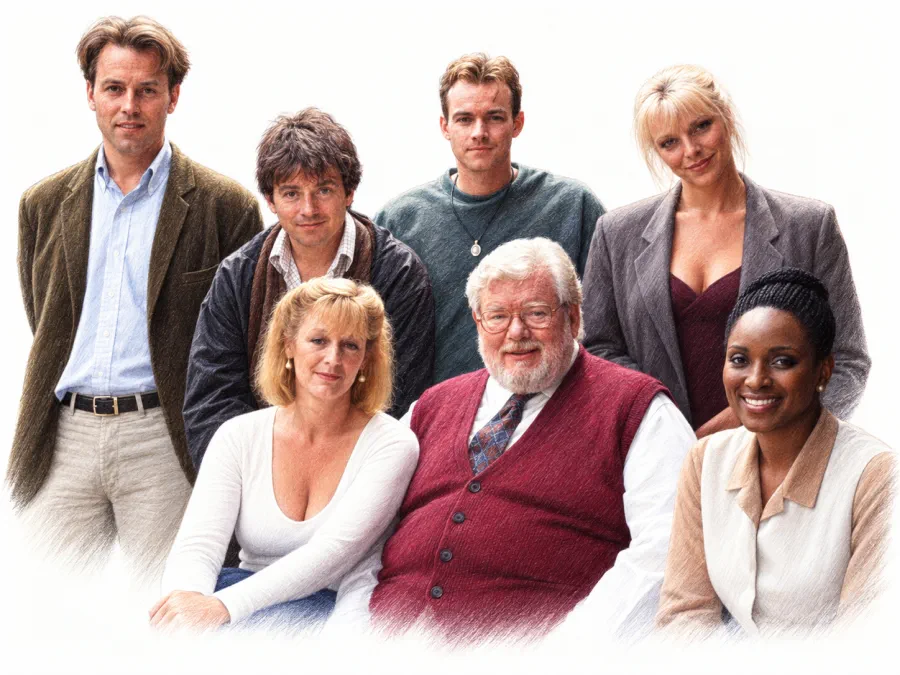
Shaun Dingwall’s Mike Lewis is the third constant across all four series, moving from detective inspector to detective chief inspector. Michelle Holmes plays DC Barbara Maddox and Amanda Lawrence DC Joan Faulkland; the role of DS Paul Barolli was played by Daniel Catagirone in the first series and by Celyn Jones from the second. Nadia Cameron-Blakey is Commander Jane Leigh, and Ray Fearon is Sam Power, the officer promoted over Langton in the last series.
The guests are drawn from the same London crime-drama pool. Jason Durr is the actor-suspect Alan Daniels in the first series; Sylvia Syms and Simon Williams appear in The Red Dahlia; Julian Sands and Robbie Gee in Deadly Intent. Silent Scream gathers a large supporting cast around Joanna Vanderham as the murdered film star Amanda Delany, with Holliday Grainger among the suspects.
None of these performers has a page on this site, so the cast rows below carry names and no links. The connection to the rest of A Cup of Crime is in the making rather than the faces: this is Lynda La Plante’s series, made by her own company, and it stands beside her Prime Suspect, Trial & Retribution and Widows.
The World of Above Suspicion
Above Suspicion is set in present-day London, in a Metropolitan Police murder squad of the old kind: an incident room, a handful of detectives running one case at a time, and a great deal of time spent on other people’s doorsteps. The private lives of the detectives are almost entirely kept off screen.
The series is filmed in London and rarely disguises the city. Part of the fourth series was shot in Lexham Mews in Kensington, and the production was based at Pinewood. The settings are chosen for the light they throw on the suspects: the theatre, the Thames, the family estate, the drug trade, the film industry.
That is the series’ argument about class. The people under suspicion are an actor, a landowning family, a cartel financier, a film star, and the cases keep turning on who is allowed to be thought above suspicion. La Plante’s London is a city where reputation and money quieten a case, and where a young detective has to work around the fact.
Origin Story
Above Suspicion adapts Lynda La Plante’s Anna Travis novels, one per series: Above Suspicion (2004), The Red Dahlia (2006), Deadly Intent (2008) and Silent Scream (2009). The third novel, Clean Cut, was passed over, so this is not quite the straight sequence it is often described as. La Plante wrote the screenplays for the first, second and fourth series; the third was written by Noel Farragher.
The series was made by La Plante Productions for ITV1 and sold as her return to the ground of Prime Suspect. ITV’s director of television called it her best work since that series, and the Telegraph called it a younger, sassier successor. Christopher Menaul, who had directed the first Prime Suspect, directed the opening story.
It ran four annual series from 2009 to 2012 and was then cancelled by ITV as the audience softened. There was no revival, no remake and no spin-off, and five later Anna Travis novels have never been adapted.
Narrative Style & Tone
The format is four self-contained stories, each told across two or three episodes: two for the first series and three for each of the others. The first three series were stripped across consecutive nights as event television; the fourth ran weekly.
The method is the puzzle. La Plante gives the audience more evidence than she gives the police, and the pleasure is in watching a young detective catch up with what the viewer already suspects. The first series hands over its suspect early and spends its energy on Travis’s unwilling attraction to him; the gore, which is plentiful, is photographed at close range.
Musically and visually it is conventional: Simon Lacey’s score, film photography, London locations and night interiors. What gives it its temperature is the relationship between the two leads, carried under every case, and a tone that is lurid rather than cool.
How is Above Suspicion remembered?
It was a hit, then a smaller one. The 2009 opener drew about 6.8 million viewers and built to 7.3 million; the second series, The Red Dahlia, peaked at 7.9 million, the largest audience of the run; by the third and fourth it had fallen away, and ITV cancelled it in 2012.
The press was divided throughout. The Telegraph was a loyal champion and asked for more of The Red Dahlia. The Guardian called the first series lurid, lame and lazy. The Times, which had called it garbage in 2009, admitted by the third series that it had grown into something worth watching.
Its afterlife is modest. It is available on disc from Acorn and on streaming services, and it is remembered as the series that kept La Plante’s name in British crime drama between Prime Suspect and the Tennison prequels, and as Kelly Reilly’s first sustained leading role.
In Closing
Above Suspicion is La Plante adapting herself, and it is best when it remembers that its subject is its detective, not its corpses. It is a disreputable pleasure: lurid, well played, and essential to anyone tracing the line from Prime Suspect to the crime serials that followed.