Principal Characters & Performances
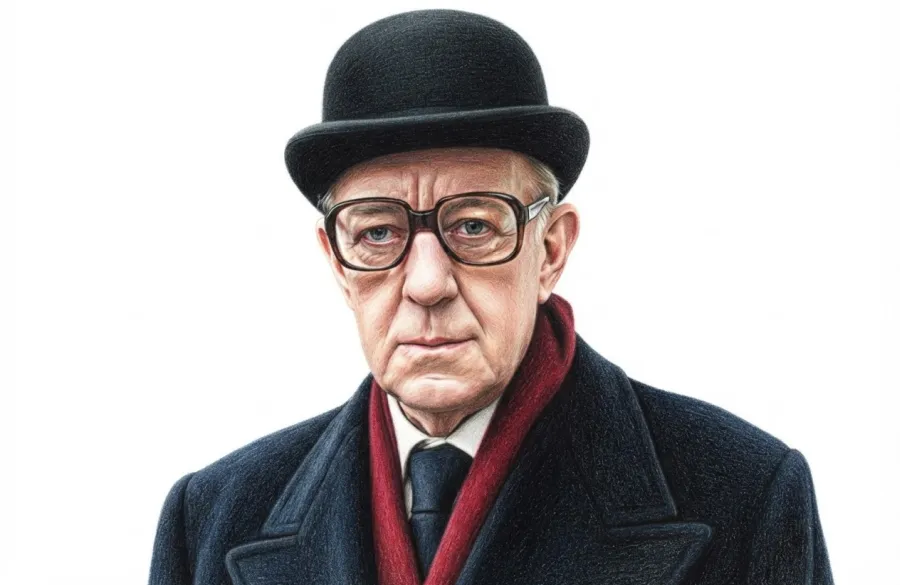
George Smiley
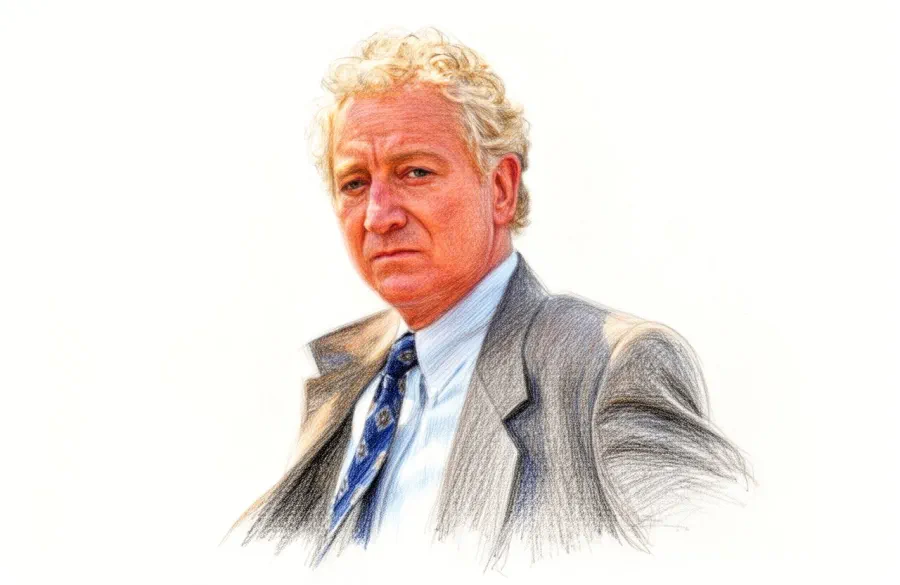
George Smiley is a retired officer of the Secret Intelligence Service, the Circus, and he is called back not to investigate a murder but to contain one. General Vladimir, an old Estonian asset, has been shot on Hampstead Heath, and Oliver Lacon of the Cabinet Office wants the mess tidied up quietly. Smiley takes the job and then ignores the instruction.
Alec Guinness had played him once before, in the BBC’s Tinker Tailor Soldier Spy of 1979, and this was the last time he did it. He said he had tried to make Smiley quicker, harder and more single-minded, and to bring out his sadness — particularly over the blackmail he uses on a man he has never met.
The performance is a study in withholding. Jonathan Powell, the producer, said Guinness would cut his own lines, replacing pages of the novel with a look, and critics noticed how often he has one word in a scene and gives it the weight of a speech.
What Guinness wanted to show was the resemblance underneath. By the end, he said, you should feel that Smiley and Karla are interchangeable: two lonely men using the same methods on each other. His Smiley won the BAFTA for best actor in 1983, his second for the same part, and an Emmy nomination. He never played it again.
Toby Esterhase
Toby Esterhase was the Circus’s head of the Lamplighter section and is now an art dealer with a gallery off Bond Street. He is the postman Vladimir quarrelled with, and the only ally Smiley has: he remembers that contact with Otto Leipzig runs through a nightclub owner in Hamburg, and he runs much of the operation in Berne.
Bernard Hepton had played him in the 1979 serial and returned for this one, remade. The character was brought closer to the novel, with a bouffant hairpiece and a Hungarian accent and a warmth that sits oddly against Smiley’s buttoned Englishness. Critics have singled him out ever since as the best performance here after Guinness’s.
He is the link to the earlier story, and the reminder that the Circus is a place people get thrown out of. He survives to the end.
Notable Support and Guest Stars
Beryl Reid returns as Connie Sachs, the Circus’s retired Russia analyst, dying in an Oxfordshire dacha with her companion Hilary. She gives Smiley the rumour that turns the case, and the line that stands for the whole serial: give it up, George, it’s grey — half-devils against half-angels, and nobody knows who the goodies are. Reid won the BAFTA for best actress for it.
Barry Foster is Saul Enderby, the Circus chief who gives Smiley a totally deniable blessing for the Swiss operation and would disown him if it failed. Anthony Bate is Oliver Lacon, who sets him going and then puts a tail on him; Michael Byrne is Peter Guillam in Paris; Michael Lonsdale is Anton Grigoriev, the Soviet counsellor Smiley breaks.
Patrick Stewart returns as Karla and, as in 1979, has no lines at all, so the adversary is built out of absence. Eileen Atkins is Madame Ostrakova, whose letter starts everything; Curd Jürgens is General Vladimir, in his last screen role; Bill Paterson, Mario Adorf, Vladek Sheybal, Maureen Lipman, Siân Phillips and Rosalie Crutchley fill out a deep bench.
Alan Rickman and Alex Jennings appear in small parts before anyone knew them. Barry Foster is the only member of this cast with a page on A Cup of Crime, so his row carries the link and every other row carries a name.
The World of Smiley's People
The institution is the Circus, le Carr’e’s name for the Secret Intelligence Service, and it is the second subject of the serial. Smiley is retired from it, Lacon of the Cabinet Office wants to keep it out of the newspapers, and the new chief, Saul Enderby, will back Smiley only if the operation can be denied later. Smiley works with his own people instead.
The ground is London first: Hampstead Heath, where Vladimir is shot; a safe house off Westbourne Terrace; the Bond Street gallery Esterhase now keeps. Then Paris, Hamburg, Berne and Thun, and one Cornish clifftop where Smiley ends his marriage. It closes at a Berlin bridge.
It was filmed in London, Paris, Hamburg and Berne. The Berlin crossing was shot at Lady Bay Bridge in Nottingham, standing in for the East’West divide, and the serial was made on location film rather than in a studio.
Origin Story
The source is John le Carr’e’s novel of 1979, the last of the three Karla books. The BBC skipped the middle one, The Honourable Schoolboy, whose story lay in South East Asia, and went straight to the end. It has never been filmed.
Jonathan Powell produced both serials. John Irvin, who directed the first, had moved into films; John Mackenzie replaced him and was himself replaced before shooting by Simon Langton, at Guinness’s wish. Arthur Hopcraft declined to adapt the sequel, so John Hopkins wrote it, and le Carr’e was then brought in to rebuild the opening and is credited as co-writer.
The BBC made it with Paramount Pictures for a reported three million dollars, and BBC Two showed the six parts on Monday nights from 20 September to 25 October 1982.
Narrative Style & Tone
It is one continuous story in six hours, and it is not a whodunnit. The audience is shown the Paris letter, the murder and the assassin’s side of the case before Smiley even appears, which is the change le Carr’e made to the script.
The method is a series of encounters. Smiley finds people and asks them things, and the case is built out of a photograph negative, a taped confession, a chalk mark and, in the end, blackmail rather than evidence.
It was shot on 16mm colour film with a monaural soundtrack, photographed by Kenneth MacMillan and scored by Patrick Gowers, whose music carries more of the tension than the action does. The pace is slow on purpose: BFI Screenonline notes that Smiley is absent for the first half-hour and that the plot takes a while to come into focus.
How is Smiley's People remembered?
The early notices were warm and the enthusiasm cooled as the six weeks went on. The New York Times called it a marvelously riveting television film and the best show likely to be on television for the time being, but in Britain the plot became a running joke, and Terry Wogan took calls from listeners trying to explain it.
It won four BAFTA awards in 1983 from ten nominations, among them best actor for Guinness and best actress for Beryl Reid, and it lost best drama series to Boys from the Blackstuff. It took a Peabody Award in the United States, was nominated for three Emmys, and won none of them.
Its standing has risen since. The Guardian put it at number 17 in its list of the fifty best television dramas, and Mark Lawson called it, in 2015, among the most beautiful and enduring achievements of TV drama. It repeats on BBC Four and sits on iPlayer, and its score was reissued on blue vinyl in 2020.
In Closing
The serial ends on the one scene le Carr’e could never improve: Karla crossing a Berlin bridge, dropping the lighter he took from Smiley twenty years earlier, and walking away into the West. Smiley does not pick it up. He has won, and it looks like nothing.