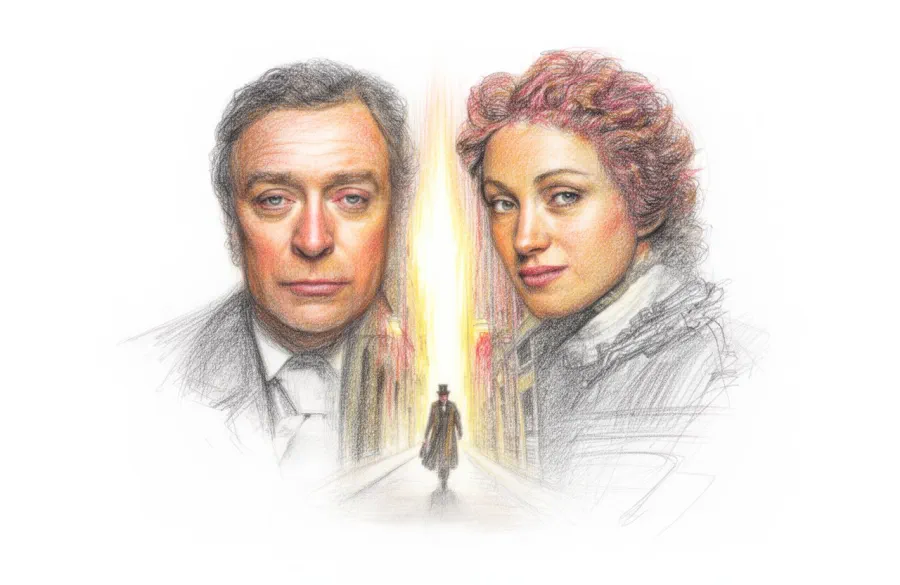
Principal Characters & Performances
Chief Inspector Frederick Abberline
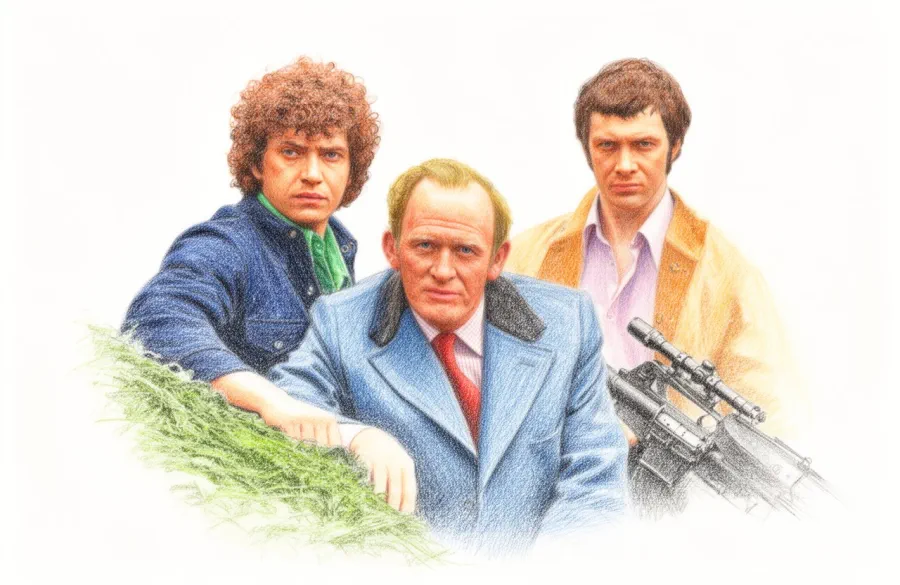
Michael Caine’s performance as Chief Inspector Frederick Abberline is the anchor of the entire production. He brings a world-weary gravitas to the Scotland Yard detective, a man burdened by personal demons and the immense pressure of an impossible case.
Caine portrays Abberline not as a infallible genius, but as a competent, dogged professional navigating a morass of bureaucracy and poverty. His struggle with alcoholism is a quiet, persistent character note, adding depth without melodrama.
The role demanded a balance of procedural sharpness and emotional vulnerability, particularly in his scenes with Jane Seymour’s Emma. Caine’s understated power grounds the series’ more extravagant conspiracy elements, making the journey feel personal and credible.
His portrayal was widely acclaimed, earning him the BAFTA TV Award for Best Actor in 1989. It remains a definitive television performance from that period of his career, a masterclass in leading a large ensemble with quiet intensity.
Sergeant George Godley
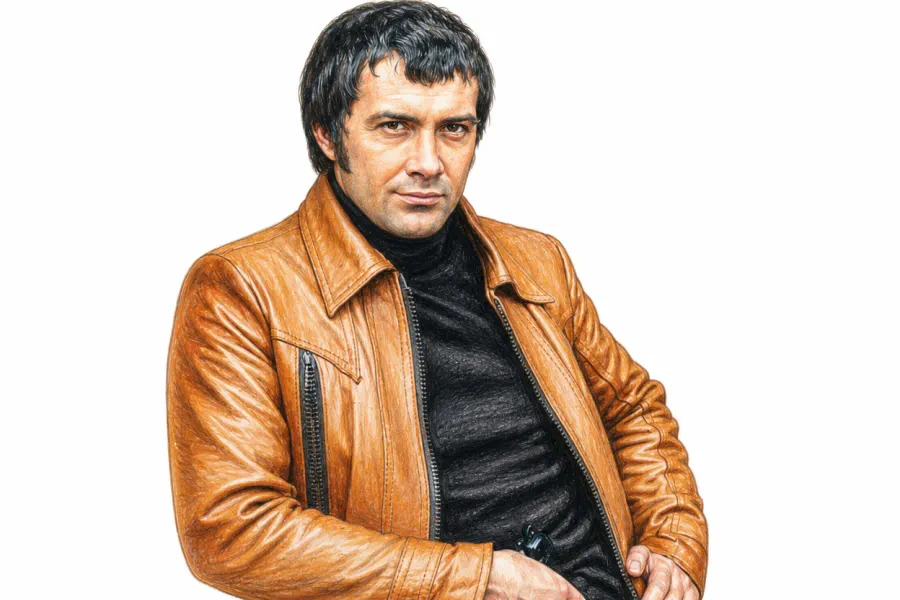
Lewis Collins provides the essential counterpoint to Caine’s Abberline as Sergeant George Godley. He is the reliable right hand, the pragmatic foil who translates Abberline’s instincts into actionable police work.
Collins plays Godley with a steady, no-nonsense demeanor. He is the bridge between Abberline and the gritty reality of Whitechapel’s streets, often serving as the audience’s guide to the procedural aspects of the investigation.
The dynamic between Caine and Collins is one of professional respect and unspoken loyalty. Godley’s steadfast presence highlights Abberline’s more volatile nature, creating a partnership that feels authentic and drives the investigative spine of the narrative forward.
Notable Support and Guest Stars
The miniseries boasts a formidable supporting cast that fleshes out its Victorian world. Ray McAnally is chillingly austere as Sir William Gull, Physician-in-Ordinary to Queen Victoria, his performance lending sinister weight to the conspiracy theory.
Jane Seymour brings warmth and complication as the fictional Emma Prentiss, whose connection to Abberline personalizes the stakes beyond the official investigation. Armand Assante is memorably intense as American actor Richard Mansfield, whose stage portrayal of Jekyll and Hyde mirrors the public’s fear.
Ken Bones turns in a compelling performance as the spiritualist Robert James Lees, adding an element of uneasy mysticism. Susan George and Lysette Anthony deliver poignant, tragic turns as victims Catherine Eddowes and Mary Jane Kelly, ensuring the human cost of the crimes is never forgotten.
These performances, from Hugh Fraser’s obstructing Commissioner Sir Charles Warren to Harry Andrews’s Coroner Baxter, create a rich tapestry of suspicion, authority, and victimhood that makes the historical setting feel fully inhabited.
The World of Jack the Ripper
The miniseries meticulously constructs a divided London. The Whitechapel of 1888 is a character in itself, all crowded, fog-bound alleys, damp lodging houses, and palpable despair. This East End is a world apart, where poverty and crime are endemic.
This is sharply contrasted with the clean, ordered spaces of Scotland Yard and the opulent, clubby interiors of the elite. The production design makes the social chasm visually explicit. The journey from a blood-soaked alley to a plush gentleman’s club feels like crossing into another country.
The environment is one of constant tension. Gaslight creates pools of illumination and deep shadow, perfect for suspense. The public unrest in the East End, fueled by sensationalist newspapers, adds a layer of political volatility to the criminal mystery.
This world feels authentically grimy and pressured. It’s a place where the fog seems to seep into the corridors of power, suggesting that the rot of the crimes may not be confined to the slums. The setting is not just backdrop; it’s the catalyst for the entire story.
Origin Story
Jack the Ripper was conceived as a major British television production for the centenary of the murders. Euston Films for Thames Television initiated it, with David Wickes directing and co-writing with Derek Marlowe.
Originally a lower-budget UK project, it transformed when CBS joined, creating an Anglo-American co-production with a budget around 11 million dollars. This led to a shutdown and restart in early 1988, with the entire production reshot on film at Pinewood Studios.
The recasting of Michael Caine as Abberline was a key move for the international market. Wickes famously filmed multiple endings to protect the plot’s secret. The aim was always to present a definitive, evidence-based solution to the enduring mystery, marking it as an event series.
Narrative Style & Tone
The series adopts a straightforward, linear crime procedural structure. It follows Abberline’s investigation step by step, grounding even its most speculative twists in a framework of detective work. The tone is serious and somber, with no room for gallows humor.
It blends historical fact with fictionalized conspiracy, presenting its theory with the conviction of a solved case. The cinematography is dark and atmospheric, using shadow and lamplight to build suspense. John Cameron’s score underscores the tension without overwhelming it.
Dialogue is functional and period-aware, focusing on police exchanges and social commentary. The style is character-driven, allowing time for Abberline’s personal arc alongside the central mystery. It avoids supernatural flourishes, aiming for a gritty, politically charged realism.
How is Jack the Ripper remembered?
Jack the Ripper is remembered as a landmark, high-quality television event from the late 1980s. Its primary legacy is popularizing the Royal conspiracy theory, embedding that specific narrative in the public consciousness for a generation. For many, this miniseries is the Jack the Ripper story.
It is recalled for Michael Caine’s commanding, BAFTA-winning performance, which elevated the production. The show is also noted for its high production values and atmospheric recreation of Victorian London, setting a benchmark for historical crime drama on television.
While criticized by historians for its speculative claims, its cultural impact is undeniable. It maintains a cult and nostalgic presence, periodically rebroadcast on archive channels. It stands as a definitive example of how British television could marshal top talent and production resources to create a compelling, if controversial, historical mystery.
In Closing
Jack the Ripper endures as a powerfully atmospheric and confidently acted piece of television. It delivers a gripping detective story while leaving you with a provocative, if unproven, solution to history’s most famous cold case.