Principal Characters & Performances
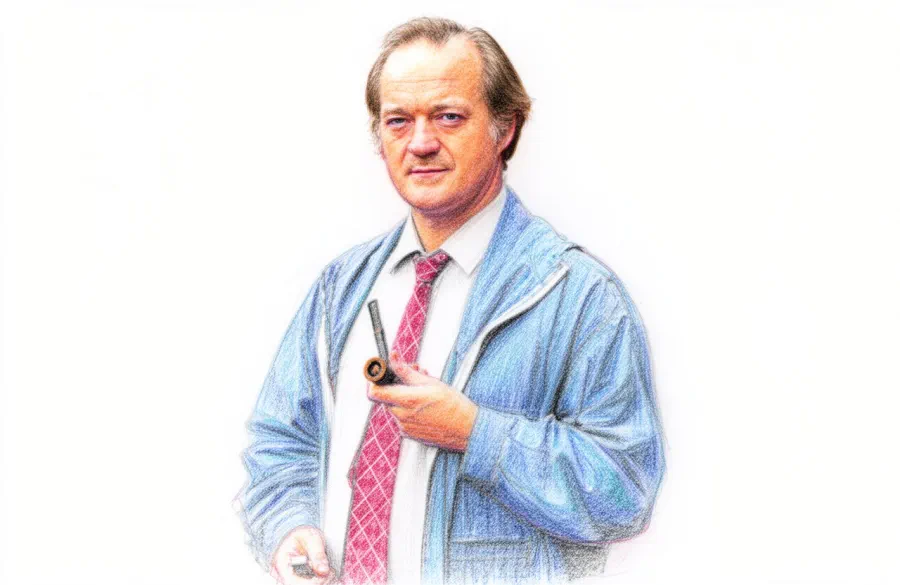
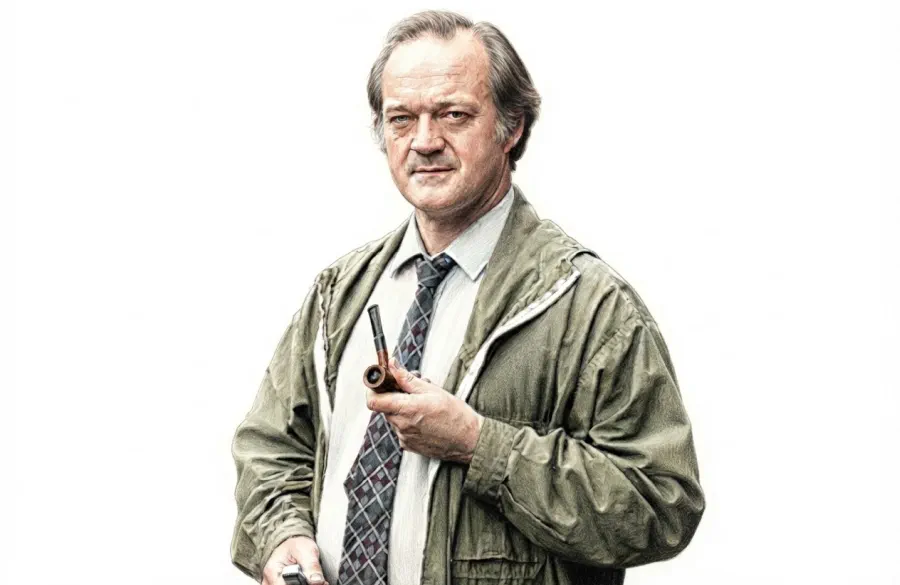
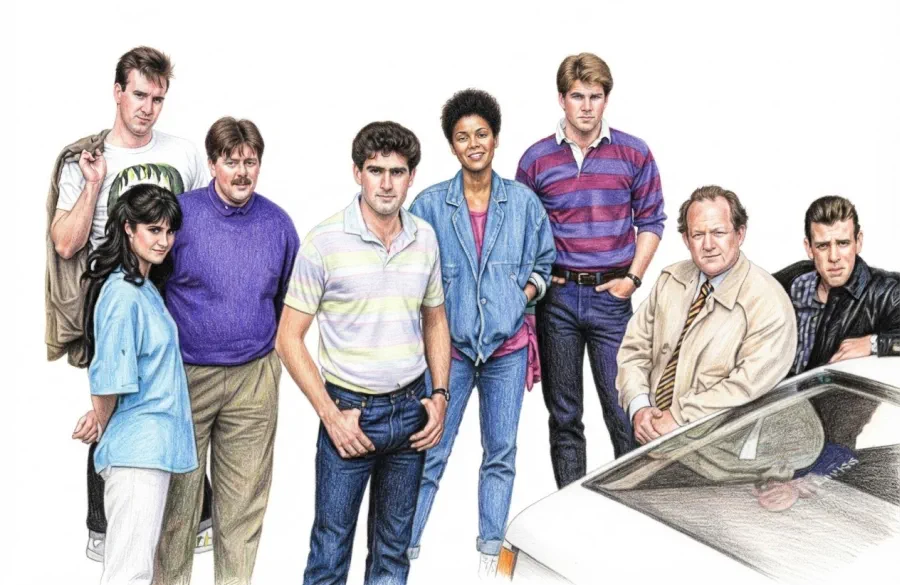
Detective Sergeant Alan Rockliffe
Rockliffe is introduced as an absence. The series was built on him, and he spends the whole first episode off with flu while DI Charlie Flight runs the squad. He arrives in the closing scene and takes the hour off everyone in it.
Ian Hogg plays him as a working sergeant rather than a television eccentric, and the temper he brings reads as weather rather than performance. His screen career began in Peter Brook’s Marat/Sade, and two years earlier he had been Inspector Bucket in the BBC’s Bleak House.
His function is to be the standard the recruits are measured against, and the series is unusually willing to find him failing it. He makes more mistakes than the officers he is supposed to be training, and his method is to let them err while he stays unimpressed.
It is also the only starring role of his career. Rockliffe runs eighteen months and two series, and when the BBC retooled the show the trade press reported that Hogg was the only cast member whose job was safe.
The Seven Recruits
The squad, not the sergeant, is the subject: seven plain-clothes probationers who supply most of the plots and nearly all of the consequences. They are PC Gerry O’Dowd, PC Steve Hood, PC David Adams, PC Keith Chitty, PC Paul Georgiou, WPC Janice Hargreaves and WPC Karen Walsh.
Joe McGann’s Gerry O’Dowd is the one who became a name. He plays the station’s charmer with a naivety that constantly undercuts him, and took the part’s Scouse gusto into the ITV sitcom The Upper Hand. His brother Paul appears elsewhere on this site, in Luther.
Brett Fancy’s Steve Hood is the most interesting of them: the local lad who knows the streets, works by his own rules, and carries a whiff of far-right politics the show never resolves. Against Bill Champion’s bookish David Adams, he is the series’ class argument in two uniforms.
The rest are thinner, as retrospectives tend to admit. Alphonsia Emmanuel, later of House of Cards and Peter’s Friends, is the strongest; Martyn Ellis plays the dim but game Georgiou; Susanna Shelling’s career afterwards was brief, and John Blakey’s Keith Chitty exists mainly to marry and settle down.
Notable Support and Guest Stars
Edward Wilson plays DI Charlie Flight, who runs the squad while Rockliffe is ill and therefore carries the pilot alone. He was a stage actor and, reportedly, an artistic director of the National Youth Theatre, and had appeared in When the Boat Comes In as Billy Seaton, not as a policeman.
Above him sit the station’s brass: Malcolm Terris as Detective Superintendent Munro, another When the Boat Comes In alumnus, and Brian Croucher as Chief Superintendent Barry Wyatt. Croucher already appears on this site as the criminal Raisen in The XYY Man.
Sergeant Benyon, played by Bill McCabe, is carried by the reference cast lists with no character detail attached. The records do show how the show was cast: seven unknowns chosen on the Auf Wiedersehen, Pet principle that one might become a star, while the reference books record the audience’s own verdict — that the ensemble, not Rockliffe, was the reason to watch.
The World of Rockliffe's Babies
The institution is a murder squad’s nursery: a Crime Squad of plain-clothed probationers at Church Street police station in inner London, where a senior officer’s job is to turn uniforms into detectives. The cases arrive through the estates around the station, most notoriously the Dragon Estate.
It was filmed where it is set. Location work concentrated on Kensal Rise in north-west London, the station interiors were built at Canalot Studios on Kensal Road, and the production was shot entirely on videotape. The remembered image is a patrol car crossing the Westway under the titles.
That London is the point, not the backdrop. The estate is unemployed, multiracial and mistrustful, and the recruits learn to police it at the moment relations between the Metropolitan Police and the communities it served were at their most fraught.
Origin Story
Rockliffe’s Babies exists because the BBC had a hole in its schedule. For three decades it had run police series more or less continuously — Dixon of Dock Green, Z Cars and its sequels, Juliet Bravo — and when Juliet Bravo ended in 1985 nothing was waiting behind it.
It was created by Richard O’Keeffe, a playwright who had won a competition in which Willy Russell came second and had written for Crown Court, and who co-wrote Anthony Page’s 1978 film Absolution without winning the screen credit he fought for. Leonard Lewis, of When the Boat Comes In, produced.
The series began on BBC1 on 9 January 1987 in the 9.30pm Friday slot, with eighteen 50-minute episodes and a rotating bench of writers and directors. A novelisation appeared four weeks earlier, and Joe Campbell and Paul Hart’s theme song — a nursery rhyme with a children’s choir — outlived the cases.
Narrative Style & Tone
Each episode is a self-contained 50 minutes, and the only arc is the recruits’ progress: from probationers who lose a suspect to officers sitting selection boards for the Detective Training School in the last episode.
The method is legwork — surveillance, informants, door-to-door — and failure drives the plots as often as crime does. The harder hours are unflinching for their slot: a death in custody from a contaminated drug, and assaults on women investigated by the squad itself.
Visually it is studio tape with location inserts, the BBC house style of 1987 rather than the film look ITV was moving towards. The tone is wry, and the relief comes from the recruits’ romances. The criticism that stuck was competence: a division this inept strains belief.
How is Rockliffe's Babies remembered?
It is remembered first for the row that ended it. In February 1988, with the second series still drawing more than ten million viewers, the trade paper The Stage reported a bitter internal dispute over a plan to drop the London format and send Rockliffe to Dorset. Only Ian Hogg’s job was said to be safe.
A source called the plan a rural Dixon of Dock Green and asked whether the BBC was running scared of new violence guidelines — a motive that was speculation then and remains unproven. Seven episodes later the format was gone.
Network released the first two series on DVD in 2017 — eighteen episodes, 908 minutes, certificate 15, no third series — and there are no awards and no streaming release. Its afterlife is specialist: a theme tune most of its audience knows better than its cases, and critics who find the casework ordinary beside The Bill.
In Closing
Rockliffe’s Babies is a training drama wearing a police badge: seven probationers failing in public while their sergeant keeps his judgement for the last scene of the pilot. It drew ten million viewers, lost its format anyway, and left behind a theme tune that outlived its cases.