Principal Characters & Performances
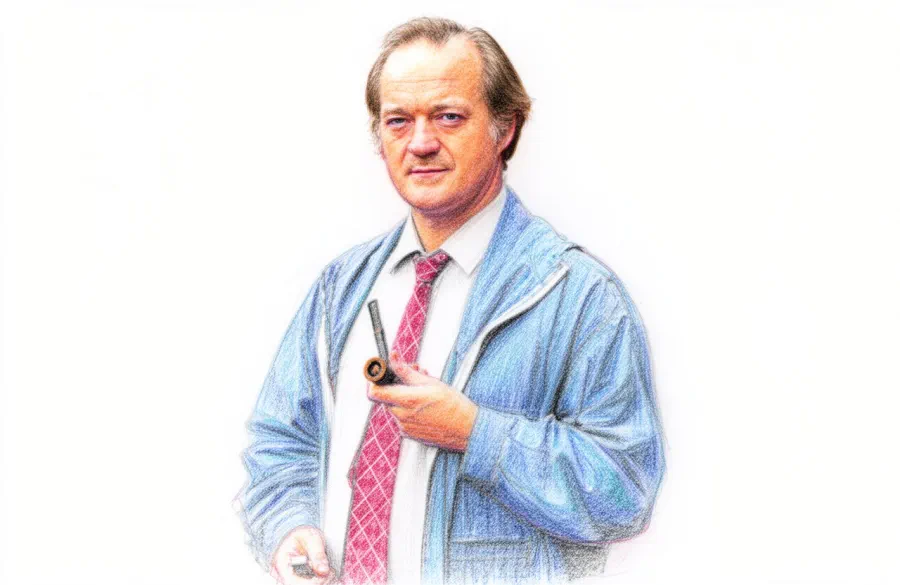
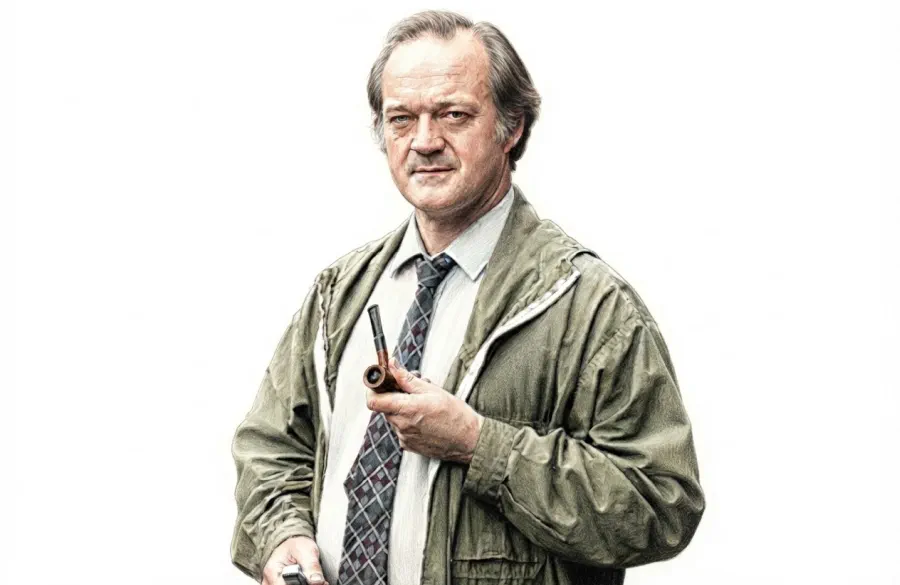
Detective Sergeant Alan Rockliffe
Rockliffe arrives in Wessex as a stranger. Everything around him is new — the force, the county, the colleagues — and he is the only element carried over from the two London series that made him. The show never pretends this is a promotion. He is a metropolitan sergeant in a rural division, working cases where the suspect is somebody’s neighbour, and the title is the verdict on the move.
Ian Hogg plays him with the same economy he brought to the Met, which is most of what the series has. The temper survives, but it has no audience of recruits to bounce off, and the private life the original series kept in the margins moves forward: an episode turns on a girl who reminds him of his daughter Kathleen. It is a quieter performance in a smaller room, and it carries seven episodes without strain.
It is also the end of the character. Hogg never played Rockliffe again, and the trade press reported at the time that he was the only cast member whose job survived the retool — the third series was built around one actor and nothing else. That is precisely what the published assessment of the London series had warned against, and the seven episodes demonstrate why.
The Wessex Division
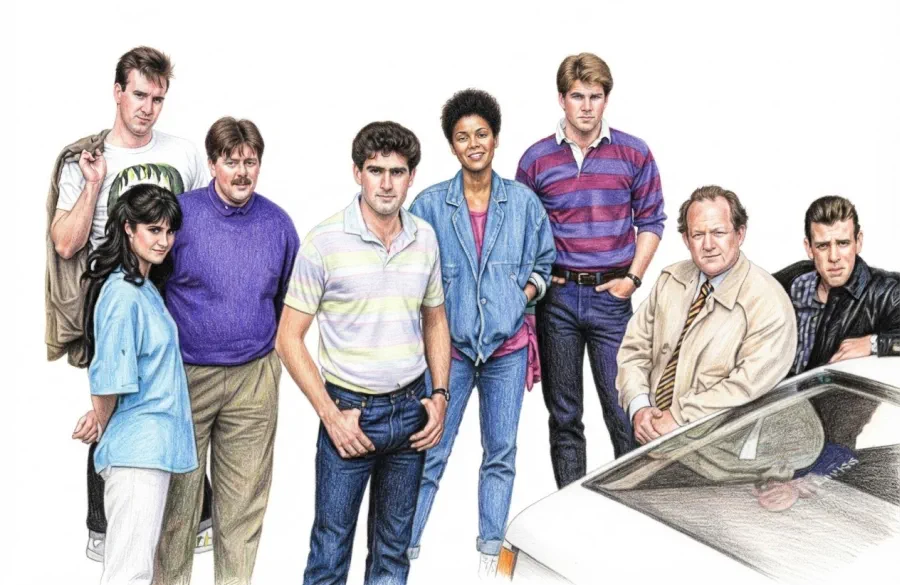
The new team is a full replacement rather than a development. Inspector Leslie Yaxley, played by Ian Brimble, is the uniformed officer above him; DI Derek Hoskins, played by James Aubrey, is the CID superior; Carole Nimmons’s Sergeant Rachel Osborne and Aaron Harris’s DC Paul Whitmore do the police work; and PC Guy Overton, WPC Hester Goswell and PC Alfred Duggan — Craig Nightingale, Elizabeth Heery and John Hartley — fill out the station.
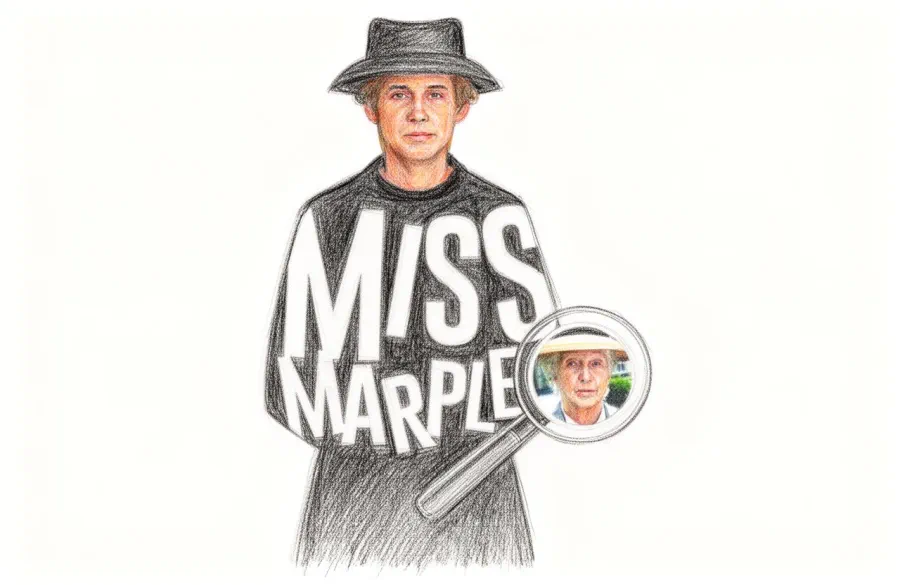
Brimble is the useful casting note for anyone who watches this site closely. He played the recurring Sergeant Lake in the BBC’s Joan Hickson Miss Marple films, and Miss Marple is already on A Cup of Crime — though the films’ better-known policeman, Detective Inspector Slack, is David Horovitch, not Brimble.
Aaron Harris is the other connection worth naming. He had already appeared in The Glory Boys and would later appear in Wycliffe as Detective Sergeant Dixon, both of them on this site, which makes him the cast’s most travelled performer across the site’s own catalogue. James Aubrey, cast as the local superintendent, was the Ralph of Peter Brook’s Lord of the Flies and had worked with Tony Scott and in The Hunger.
The rest are competent and anonymous, which is the structural problem in one sentence. The London series worked because seven young officers with flaws made trouble for each other; the rural series replaces them with a functional station and gives Rockliffe nobody to teach. Nimmons, whose earlier credits include the Bird of Prey thrillers, and Heery, later of Jeeves and Wooster, are the strongest of the remainder; Nightingale and Hartley have little else in the record.
Notable Support and Guest Stars
The most interesting guest credit belongs to Stephen Churchett, who appears in the run as Sergeant Charlie Greville. Churchett was an actor who became a writer, and this site’s entry on Lewis credits him with developing that series for television — so the man playing a country sergeant here is part of the authorship of a much later hit.
Beyond him and Laura Davenport, who plays Cassie Varcoe across the run, the parts are one-offs: villagers, farmers and offenders, the standard furniture of rural crime. None of them recur, and none of them change Rockliffe’s position, which is what the series needed and never had.
The World of Rockliffe's Folly
Wessex Police is a fictional county force and Maidenport its coastal town, which puts the show in the British tradition of inventing a jurisdiction and filming it somewhere real. The crimes change with the geography: a pesticide not used on that farm, boys hiding in an empty caravan by the sea.
It was shot in Dorset, with Weymouth standing in for Maidenport. That gives the series its one formal idea: the countryside is a promised escape that turns out to be a workplace like any other, and every case depends on the silence of the place rather than the density of a city.
The title says what the programme thinks of its own premise, and its contemporaries agreed. A BBC insider told The Stage the plan amounted to “a rural Dixon of Dock Green” that had thrown away “the fire and bite of London life”. Seven episodes later, the objection looked right.
Origin Story
The decision to move Rockliffe came while the second London series was still on air. In February 1988 The Stage reported a bitter internal dispute at the BBC over a plan to drop the London format and send the character to Dorset.
The jobs of the main cast were said to be at risk apart from Ian Hogg’s. A BBC spokesman called the new run a spin-off police series with “quite a few changes”, and the producer of the London series declined to confirm the revamp.
The production was rebuilt around it: Ron Craddock took over as producer, and the writers’ room was almost entirely new — Susannah Hagan, Stephen Gallagher, Vincent O’Connell, John McNeil and John Foster, with Richard O’Keeffe writing one episode.
Seven episodes ran on Wednesday evenings from 2 November to 14 December 1988. Hagan wrote the first and last, and Diarmuid Lawrence, a director held over from the earlier series, shot the opener.
Narrative Style & Tone
The format is unchanged: seven self-contained 50-minute cases with no serialised story, and one continuing thread in Rockliffe’s unsettled private life. What has gone is the friction that generated the London stories.
Rural investigation here means local knowledge, long memories and gossip rather than surveillance, and the better episodes understand that isolation is what makes a crime possible: a farm with one heir, a caravan nobody reports, a land deal nobody questions.
Visually it is a Dorset location drama in place of a London studio one, and the tone is softer. The harder material of the earlier series — deaths in custody, assaults on women, race and policing — is absent, and with it the sense that the show was about something.
How is Rockliffe's Folly remembered?
It is remembered as the folly its title promised. The standard assessment, recorded in the reference books, is that the change of formula caused a heavy decline in viewing figures and that the audience believed the London series had succeeded because of its ensemble rather than its lead.
No figure for the third series has ever been produced. The seven episodes were shown once on terrestrial television in 1988, and later reports of cable repeats conflict with the claim that the show was never repeated at all.
Network’s 2017 DVD collects the first two series and excludes this one, and no separate release has been found. Its afterlife is as a cautionary tale — a series that documents its own cancellation in its premise — and it completes the two-show picture of Ian Hogg that this site now holds.
In Closing
Rockliffe’s Folly is a cancellation announced in advance: a hit detective removed from the city that made him and given seven weeks in a county force that does not need him. It is remembered as a mistake, and the mistake is more instructive than the series.