Principal Characters & Performances
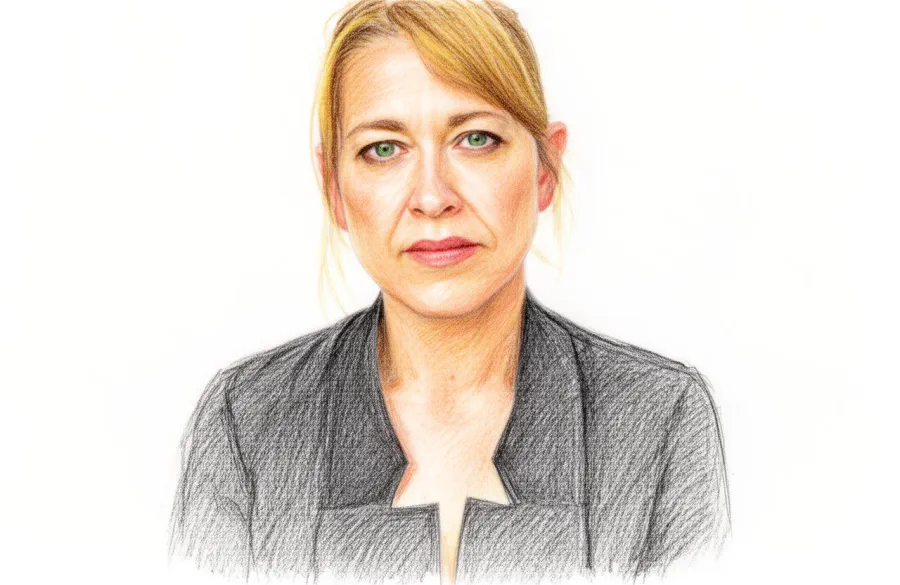
Detective Chief Inspector Cassie Stuart
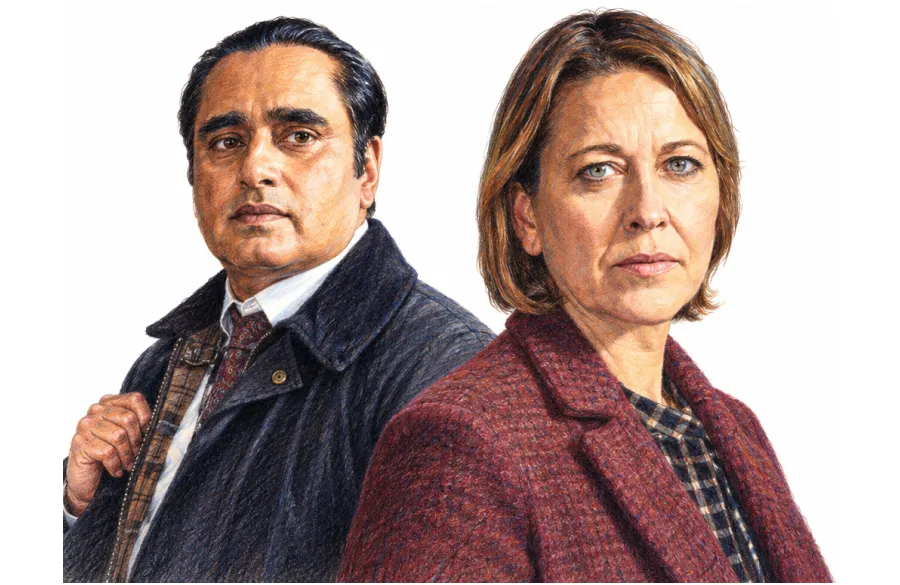
Nicola Walker played Cassie Stuart as an ordinary good officer: a chief inspector heading a Metropolitan Police historic case team at Bishop Street, with a widowed father she lived with and two adult sons. Nothing about her was eccentric, and that was the point.
Chris Lang wanted detectives remarkable for their ordinariness rather than their wounds, so Walker played composure rather than distress: suspects were interviewed with respect rather than pressure, and cases were solved by listening.
The cost of the work is the character’s spine. Series three ends with her close to breakdown; series four opens with a year away from the job, early retirement refused, and a return only to qualify for the pension she is owed.
For Walker — known for Spooks, Last Tango in Halifax and later The Split — it was the least showy role of a career built on brittle, quick-witted women, despite a Broadcasting Press Guild nomination.
Her exit was planned between Lang and Walker, not a falling-out: Cassie is struck by a stolen car in the penultimate episode of series four and dies in the finale, which ends with Sunny at her grave.
Detective Inspector Sunil “Sunny” Khan
Sanjeev Bhaskar’s Sunny Khan begins as a detective sergeant and ends a detective inspector, the second half of the closest professional partnership in recent British television: two friends with no friction and no romance.
Bhaskar arrived from a comedy career — Goodness Gracious Me, The Kumars at No. 42 — and brought a low-key stillness to the part, against the genre’s taste for the anxious, damaged detective.
The series gave Sunny his private life late: internet dating in series two, a partner, Sal Fields, from series three, an engagement in the series four finale, and the end of that relationship before series six.
Series six begins his relationship with the team’s pathologist, Leanne Balcombe, and it is Sunny who carries the show’s grief after Walker’s departure, as Lang intended.
Detective Chief Inspector Jessica “Jessie” James
Sinéad Keenan joined in series five as DCI Jessie James, deliberately not a like-for-like replacement: a budget-minded pragmatist who argues historic cases should be deprioritised, resented by Cassie’s loyal team while her own marriage collapses at home.
Lang asked her to keep her Dublin accent, and the writing courted hostility rather than denying it. Keenan predicted nobody would like her for the first half of the series; by the sixth she was called an unignorable Irish firecracker.
Her private story — a husband having an affair with her sister, played by Keenan’s real sister Gráinne — gives the run its domestic spine, and by the finale she has asked him for a divorce.
Notable Support and Guest Stars
The standing team is quietly characterised: Jordan Long’s DS Murray Boulting supplies the legwork and most of the humour; Pippa Nixon’s DC Kaz Willetts is Cassie’s loyal defender and Jess’s sharpest critic; Carolina Main’s Fran Lingley rises from DC to DS.
Each series is a six-hour ensemble piece for four to six guest leads, and the roll-call is the show’s signature: Tom Courtenay, who won a BAFTA as Eric Slater in series one, with Trevor Eve, Bernard Hill, Gemma Jones and Ruth Sheen; Mark Bonnar, Lorraine Ashbourne and Douglas Hodge in series two.
Later cohorts kept the standard: Alex Jennings, James Fleet and Neil Morrissey in series three; Susan Lynch, Andy Nyman and Liz White in series four; Ian McElhinney and Hayley Mills in series five; Victoria Hamilton in series six. Peter Egan recurs as Cassie’s father.
The World of Unforgotten
The unit is a Metropolitan Police historic case team working out of a London station the series calls Bishop Street, run by Cassie Stuart and answerable to a superintendent who personifies institutional caution. There is no gimmick and no specialist gadgetry: the six-part case is simply the team’s work.
Each series places its body somewhere different and lets the geography carry the theme: a skeleton under a demolished north London house in the 1976 case; a suitcase in the River Lea; a skeleton in the central reservation of the M1; a headless body in a freezer in a north London scrapyard.
Series five finds remains in a Hammersmith chimney and follows inherited aristocratic wealth back to enslaved labour; series six works a body on Whitney Marsh and reaches to Deal, Barnstaple and County Cork. Filming follows the fiction around Britain, from Lymington to Norfolk.
The series’ Britain is suburban, coastal and post-industrial rather than picturesque, and its subjects are class and money, institutional failure, migration and the state. Lang described the whole project as both a love letter and a j’accuse to the police.
Origin Story
Unforgotten is an original screenplay by Chris Lang, not an adaptation, and it began with the Stuart Hall case: watching a public cold case collapse into conviction, Lang wondered what the family of the accused were adjusting to in that moment.
His thesis was that good people can do bad things, and his reason for cold cases was that a lot of life has been lived between the crime and its discovery — which is the show’s whole structure, from identification to the four suspects who turn out to be connected.
Lang pitched it over coffee to the producer Laura Mackie, whose new company Mainstreet Pictures made it its first production. ITV commissioned it as a self-contained six-part thriller; the returning format was invented after the first series succeeded.
Lang has written every one of the 36 transmitted episodes and Andy Wilson has directed every one. Mainstreet remains the producer, now an ITV Studios label, and distribution passed from BBC Worldwide to BBC Studios.
Narrative Style & Tone
The signature is the reversal: the suspects are introduced before the police, four or five apparently unconnected lives that will turn out to share one body. The investigation then alternates with their domestic worlds, and the audience spends six hours waiting for the collision the structure has promised.
Cases are identified by physical minutiae — a key, a titanium plate, a pager list, a tattoo, a chocolate-bar wrapper — then worked through missing-person files, interviews and finally the interrogation, which is the show’s distinctive action and is conducted with respect rather than pressure.
The tone is melancholy and compassionate rather than suspenseful: Michael Price’s piano-and-strings score, Oh Wonder’s All We Do over the titles, naturalistic location shooting, and violence that exists in the remains and the accounts rather than on screen.
How is Unforgotten remembered?
Unforgotten is one of the most reliably watched British crime dramas of its decade. It opened in 2015 to 6.44 million viewers, grew to 9.49 million by 2021, and launched its sixth series in 2025 to 9.2 million.
Critical opinion hardened in its favour: The Telegraph called series two the best detective drama of the decade, five-star reviews met series three and four, and the awards are for performances — Tom Courtenay’s BAFTA in 2016, Mark Bonnar’s Scottish BAFTA in 2017.
The record is not unbroken: The Independent called series five serviceable if a bit naff, and the sixth divided opinion — The Guardian found it stuffed with politics, The New York Times thought several endings pat.
Its afterlife is what it proved: that a British crime drama could lose its lead at the height of her popularity and continue with a different kind of detective rather than a diminished copy. A seventh series was filmed in 2026 and is not yet screened.
In Closing
Six series, one body, and a format that has outlasted its own lead. Unforgotten is the rare British crime drama that made compassion a method rather than a mood, and it earned the right to continue after Nicola Walker left.