Principal Characters & Performances
Detective Chief Inspector Vera Stanhope
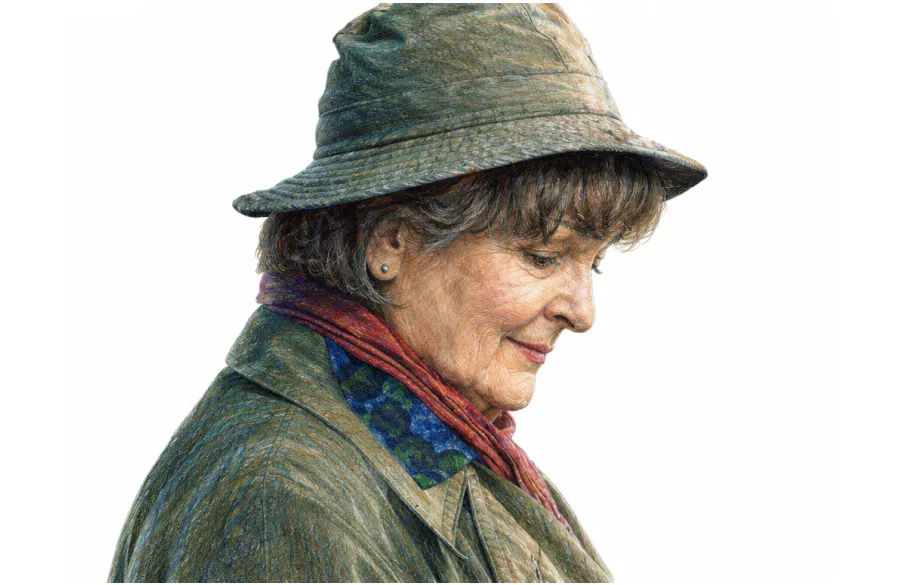
Brenda Blethyn played DCI Vera Stanhope for fourteen years, from the pilot in 2011 to the finale in 2025: a detective chief inspector of the fictional Northumberland and City Police, scruffy, bad-tempered, manipulative when it works and entirely without vanity.
It was a reversal of everything she was known for on screen — a film and stage career that had won her a Cannes Best Actress award, a BAFTA and a Golden Globe for Mike Leigh’s Secrets & Lies, playing the kind of warm, generous women Vera emphatically is not.
The character solves cases by noticing what a witness has got wrong rather than by forensics. Almost every episode ends in an interview she conducts herself, and the show’s pleasure is watching her apply pressure politely until somebody contradicts themselves.
Blethyn built the accent deliberately. She is Kentish; Vera is North Eastern, and the model she chose was the soft lilt of the television agony aunt Denise Robertson, kept moderate because of international sales. Ann Cleeves was at the first read-through.
The character was written as nearly retired from the start, and Blethyn played her from 65 to 78 without a reset. The Royal Television Society made her Performer of the Year in 2017, and in 2025 she took two awards at its North East ceremony.
Detective Sergeant Joe Ashworth
David Leon played Joe Ashworth, Vera’s first sergeant: young, married, a family man, and the normality against which her solitude is measured. He left at the end of the fourth series, promoted away, and was absent for eight years while Kenny Doughty’s Aiden Healy held the chair.
Leon, a Newcastle actor, returned in the thirteenth series as DI Ashworth, and it is Joe who finds Vera’s parting note in the finale, telling him it is time to spread those wings.
Detective Sergeant Aiden Healy
Kenny Doughty’s Aiden Healy arrived in 2015 as Joe’s replacement and stayed for eight years and more than thirty films, a younger and less deferential sergeant; with Blethyn he formed the partnership that settled the show’s middle decade.
He left in the 2023 Christmas special, the series’ first, written out by being sent to Australia. Doughty said he wanted to go while he was still happy with it, and called the job life-changing.
Notable Support and Guest Stars
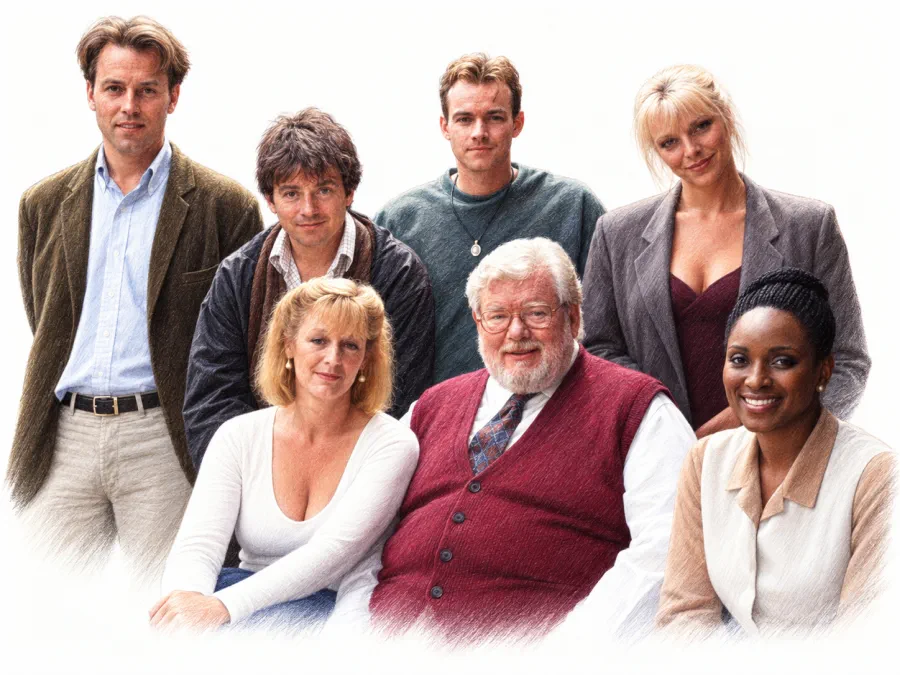
The team below the sergeants is small and turns over steadily: Jon Morrison’s DC Kenny Lockhart lasted all fourteen series, Riley Jones’s Mark Edwards grew from PC to DC, Wunmi Mosaku’s Holly Lawson and Cush Jumbo’s Bethany Whelan passed through, and Lisa Hammond’s intelligence officer Helen Milton was a rare continuing role written for a disabled actor.
The pathologist’s chair is a body of work in itself: Paul Ritter played Dr Billy Cartwright at the start, then Kingsley Ben-Adir, Christopher Colquhoun and Paul Kaye’s Dr Malcolm Donahue, who argues with Vera more than any of them, and Sarah Kameela Impey’s Dr Paula Bennett to the end.
The pilot’s guest cast is the show’s best trivia: Sam Fender, then a teenager, played the first murder victim, found in a bath surrounded by wildflowers, and Gina McKee played his mother. It remains the most quoted fact about the series.
The connections matter here. Blethyn came to it from Mike Leigh, Mosaku and Ben-Adir went from it to international careers, and Vera shares both its author and its producer with Shetland, though the two series share no characters and no fictional universe.
The World of Vera
The setting is the real North East dressed in invented names. Vera works out of a Newcastle station; the force is the fictional Northumberland and City Police, and the county’s villages appear on screen under other names: Alnmouth is Mardle, Amble is Peyton, Hexham is Bentham.
She lives on Holy Island, the tidal island off the Northumberland coast where the exterior of her cottage was filmed, with her dead father’s house and an old blue Land Rover Defender as the two props that define her.
The series shoots across Newcastle, Northumberland, County Durham and North Yorkshire, and it never pretends to be somewhere else; the beaches, harbours and headlands are the ones the viewer can walk. Its victims and suspects are caravan-park owners, trawlermen, care-home residents and the rural poor.
Cleeves argues the show changed how the region is seen: people tell her it is good to see posh houses in the North East on television, and she calls the adaptation a tourist board’s dream. Location tours of Vera country still run.
Origin Story
Vera began with an Oxfam shop. Elaine Collins, then ITV Studios’ books executive, picked up a paperback of Ann Cleeves’s The Crow Trap for her holiday; Cleeves’s account is that ITV wanted a strong female lead to replace Frost on Sunday nights.
The television series was developed by Collins with the writer Paul Rutman, who wrote the pilot from the third novel. Most of the fifty-six episodes that followed are original screenplays using Cleeves’s characters rather than adaptations, with only about ten drawing directly on the books.
Ten of the eleven novels have been dramatised, though not in order, and Cleeves has one screenwriting credit of her own. Blethyn credits Collins with casting her, and Cleeves with creating the character.
Production was based at the former Swan Hunter shipyard at Wallsend, with Northern Film and Media investing £30,000 in the pilot; the interiors, including Vera’s cottage, were sets built there while the exteriors were shot on location.
Narrative Style & Tone
Every episode is a standalone feature of about ninety minutes: one body, a long list of plausible suspects, the dismantling of their alibis across the middle hour, and a reveal in the interview room. There are no two-parters and no serialised arc beyond Vera’s own life.
It is a howdunnit rather than a whodunnit, and forensics is a support act; the pathologist’s finding usually redirects the case, but the solution comes from Vera noticing the lie in a statement. She interviews without a second officer present and has held the same rank for fourteen years.
The look is landscape-led and slow, with the coast and moors filmed as spectacle and a sparse, piano-led score by Ben Bartlett built on four chords written for the first episode’s opening scene. Deaths are frequent and grim in subject but shown coldly rather than lingered over.
How is Vera remembered?
It was the most reliably watched crime drama of its kind. Its first series averaged 6.6 million viewers and its eighth 9.03 million, peaking at 9.37 million for the series eight opener; the final two episodes still drew 6.2 million in January 2025.
Reviews were mixed at first and warm by the middle: The Guardian called Blethyn the best thing about it by a long shot, and the pilot’s critics reached for Wallander. Late notices were cooler, with the final case called conventional even by admirers of the farewell.
Its awards record is odd for a hit. The Royal Television Society made Blethyn its performer of the year in 2017 and honoured her twice more in 2025, and she took a TV Choice outstanding contribution award; but the series never won a BAFTA.
What it leaves is a demonstrated effect on the region: the biggest ITV Sunday-night detective series ever built around a woman over sixty, born as a replacement for A Touch of Frost.
In Closing
Fourteen years, one unsentimental detective, and the same ninety-minute shape from first to last. Vera is the last great ITV Sunday-night crime series of its kind, and it ended as it began, with Blethyn, a body and a landscape.