Principal Characters & Performances
Brother Cadfael
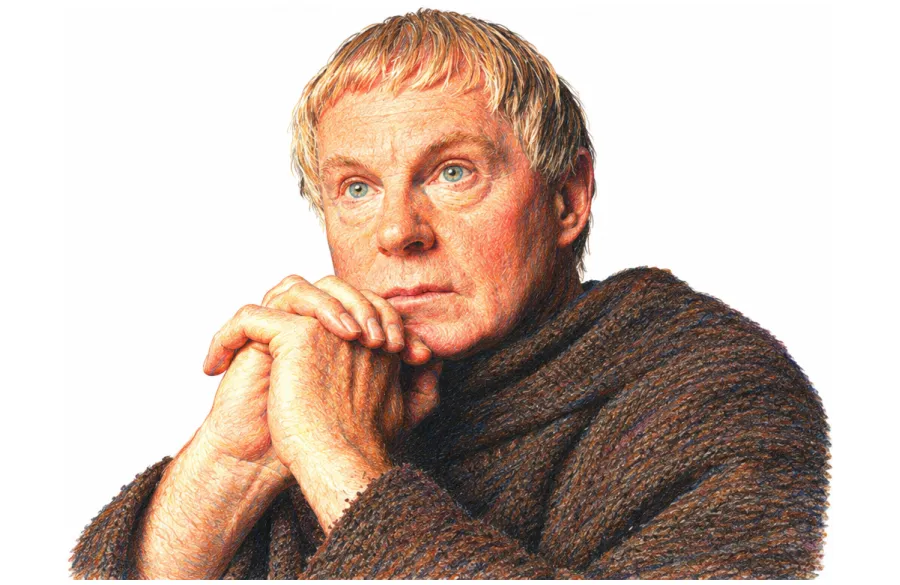
Brother Cadfael is a Benedictine monk of Shrewsbury Abbey in the 1130s and 1140s, a Welshman who came to the cloister late, after a life as a crusader and sailor and a love that came to nothing. He keeps the herb garden, and his knowledge of plants, wounds and people makes him the man the abbey and the sheriff turn to when someone dies.
Derek Jacobi, already known to millions as I, Claudius, plays him for humanity rather than menace. Television Heaven reports that Anthony Hopkins, Ian Holm and Philip Madoc were considered for the part; Jacobi’s Cadfael is, in the reviewer’s phrase, easy company, and the series is built on his warmth.
He is also a worldly man trying to be something better, weighing strict justice against mercy, and the cases often leave him troubled rather than satisfied. Not everyone admired the manner: reviewing “The Rose Rent” in 1997, The Times’s Matthew Bond noted a curiously theatrical style.
The Abbey
Michael Culver’s ambitious Prior Robert and Julian Firth’s officious Brother Jerome are in every film, the abbey’s permanent obstacles to Cadfael’s freedom. Peter Copley plays Abbot Heribert in the first series and Terrence Hardiman his successor, Radulfus, thereafter; Mark Charnock is Cadfael’s young assistant, Brother Oswin.
Hugh Beringar
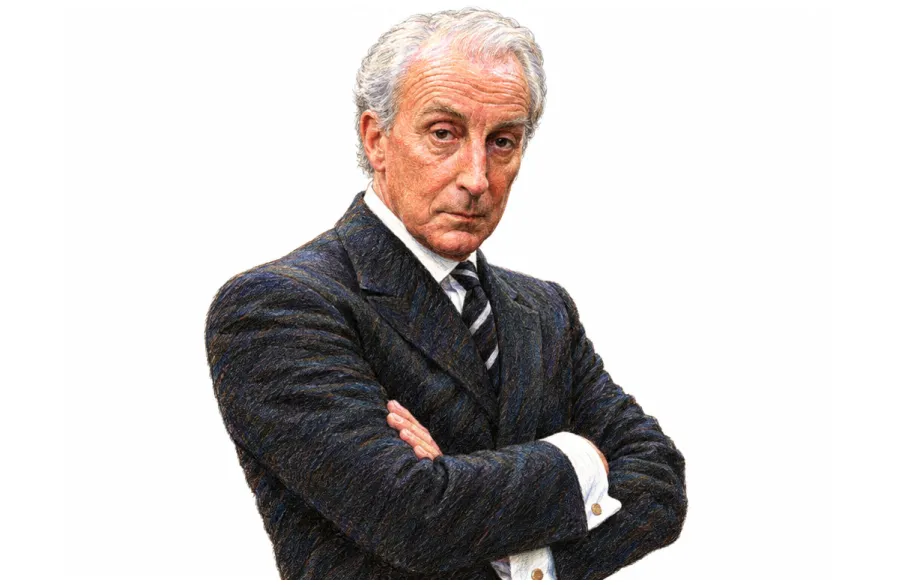
Cadfael’s friend and secular counterpart is the sheriff, Hugh Beringar, and the series never settled on him. Sean Pertwee played him in the first series, Eoin McCarthy in the second and third, and Anthony Green in the fourth; Television Heaven thinks Pertwee was possibly the best of the three.
Notable Support and Guest Stars
The guest casts mix established actors and newcomers. Hugh Bonneville, later of The Commander, appears in “The Sanctuary Sparrow”, Anna Friel in “A Morbid Taste for Bones”, Julian Glover and Ian McNeice in “The Devil’s Novice”, and the director Michael Grandage, then an actor, plays King Stephen in “One Corpse Too Many”. Albie Woodington plays the sheriff’s sergeant, Warden.
The World of Cadfael
Ellis Peters set her chronicles in Shrewsbury during the civil war between King Stephen and the Empress Maud, and the series keeps that border country of abbey, town and castle, with Wales just beyond. The war is never far away: the first film turns on the massacre of the castle’s garrison after the siege of 1138.
Shrewsbury Abbey survives only as its church, so Central built its abbey and town in Hungary. Television Heaven judged the production values excellent by British standards.
Inside the walls the politics are monastic: a prior who wants to be abbot, a brother who reports every lapse, and an abbot who must hold the house together while the country fights.
Origin Story
Ellis Peters was the pen name of Edith Pargeter, who wrote twenty-one Cadfael books between 1977 and 1994. Central Independent Television adapted thirteen of them for ITV, not in the order of publication, with Russell Lewis and Christopher Russell writing most of the scripts and Stephen Smallwood producing.
The first four films went out in May and June 1994. The rest followed irregularly: a Christmas film in 1995, two in the summer of 1996, three in August 1997, and the last three across 1998, ending with “The Pilgrim of Hate” on 28 December.
The adaptations changed a good deal: characters were swapped, motives rewritten, a suicide became a murder, and one late film is said to bear almost no resemblance to its novel. “The Pilgrim of Hate” was the last Peters book to be filmed.
Narrative Style & Tone
Each film is a self-contained mystery of about seventy-five minutes in which herb lore and close observation do the work of forensics. Television Heaven admires its sympathy with medieval faith and its refusal of tidy endings, and suggests that the lack of neat resolutions may have kept part of the mass audience away.
The weaknesses come from the books. Like the later novels, the plots can telegraph the villain, and the series, Television Heaven argues, magnifies the novels’ weaknesses as well as their strengths.
How is Cadfael remembered?
Fondly. Ben Dowell in The Guardian recalled it as a regular viewing habit for millions, its late films still drew more than six million viewers, and it went to America on PBS’s Mystery! and on to DVD in Britain, America and Australia.
Television Heaven calls it an excellent adaptation that was unfairly overlooked in the 1990s and has stood the test of time well. On IMDb it holds 8.1, with “The Virgin in the Ice” its best-rated film.
In Closing
A Welsh monk with a herb garden, a civil war outside the walls and a murder inside them. Cadfael stopped after thirteen of Ellis Peters’s twenty-one books, and Derek Jacobi’s humane, quizzical monk is the reason to watch all of them.