Principal Characters & Performances
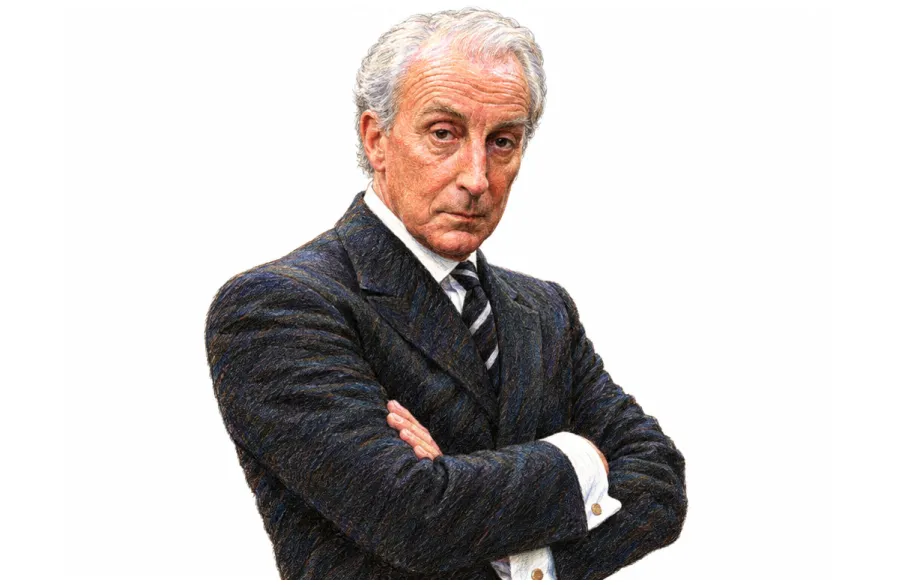
Francis Urquhart
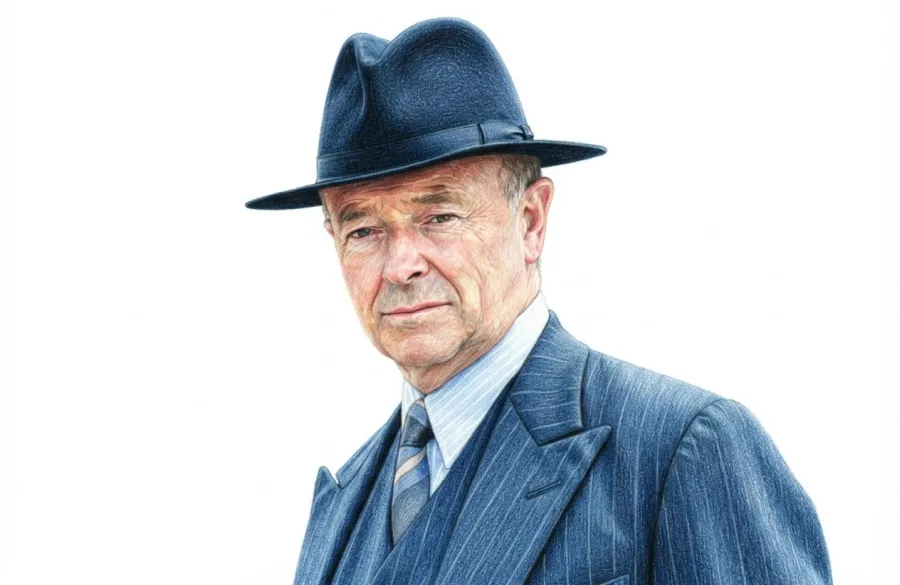
Francis Urquhart is the Conservative Chief Whip when the trilogy begins, passed over by a new Prime Minister and unwilling to accept it. Over three serials he destroys that Prime Minister and takes his place, forces a King off the throne and holds on long enough to pass Margaret Thatcher’s record, removing whoever threatens him along the way.
Ian Richardson, a founding member of the Royal Shakespeare Company, modelled him on Richard III, and the debt is open: Urquhart quotes the play and turns to the camera to take the audience into his confidence. His non-denial, “You might very well think that; I couldn’t possibly comment”, passed into political language and has been quoted in Parliament.
Richardson won the BAFTA for best actor for the first serial, and the part became his signature role, eclipsing a screen career that already included Bill Haydon in Tinker Tailor Soldier Spy. By his own account Urquhart was a joy to play. He died in 2007.
Elizabeth Urquhart
Diane Fletcher’s Elizabeth is the partner who pushes him hardest. Andrew Davies made her far more central than she is in Michael Dobbs’s first novel: it is Elizabeth who urges him to act in 1990, who brings the pollster Sarah Harding into his circle in 1993, and who, in the final serial, arranges with his security man Corder that her husband should die with his reputation intact.
Mattie Storin, the King and Tom Makepeace
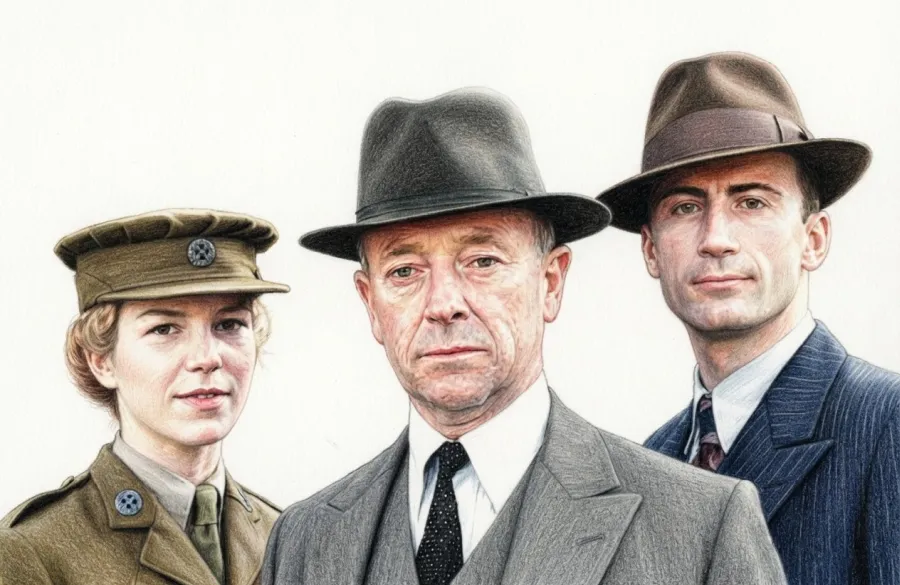
Each serial gives him an opponent. In 1990 it is Mattie Storin, played by Susannah Harker, a young political reporter who becomes his lover, calls him Daddy and works out what he has done; he throws her from the roof of the Palace of Westminster, and her death hangs over the rest of the trilogy.
In 1993 it is the new King, played by Michael Kitchen as an earnest monarch with a social conscience and widely read as a portrait of Prince Charles; The Spectator thought him a Spitting Image stereotype, others a clever impersonation. In 1995 it is Paul Freeman’s Foreign Secretary, Tom Makepeace, the negotiator of a Cyprus treaty, who resigns and challenges Urquhart for the leadership.
Notable Support and Guest Stars
Colin Jeavons plays Tim Stamper, Urquhart’s fellow whip and accomplice, who is passed over in his turn and pays for betraying him with his life; Nick Brimble is Corder, the security man who does what is needed. Kitty Aldridge’s Sarah Harding, the pollster who becomes Urquhart’s lover and then his next victim, carries much of the second serial.
The first serial’s ensemble includes Miles Anderson as the cocaine-using PR man Roger O’Neill, David Lyon as the Prime Minister Henry Collingridge and Malcolm Tierney as Patrick Woolton; the last has Isla Blair as Claire Carlsen, Urquhart’s aide and Makepeace’s lover, with Nickolas Grace and Julian Fellowes. Michael Kitchen, later Foyle, has a page on this site, as does Tinker Tailor Soldier Spy.
The World of House of Cards
The world is Westminster after Thatcher: the whips’ office, Downing Street, the party conference and the newspapers that feed on them, with the fictional Chronicle standing in for Fleet Street. The first serial follows a leadership contest, the second a stand-off between Downing Street and Buckingham Palace, the third the long last act of a premiership.
It was topical by design and by luck. Dobbs had worked at the heart of the Conservative Party, the first episode went out in the week Thatcher announced her resignation, and To Play the King set a socially conscious monarch against Downing Street at a time when the real royal family was rarely out of the news.
The Final Cut went further, opening with a state funeral for Margaret Thatcher while she was still alive. Newspapers called it inappropriate, and Dobbs asked for his name to be taken off the credits.
Origin Story
Michael Dobbs, a former chief of staff at Conservative Party headquarters, published House of Cards in 1989, and Andrew Davies adapted it for BBC One, with Ken Riddington producing and Paul Seed directing. Davies made changes that shaped everything after: Urquhart speaks to the camera, which he never does to Dobbs’s reader, he has an affair with Mattie, and Elizabeth moves to the centre.
The biggest change was the ending. In the novel Urquhart throws himself from the Commons roof and Mattie survives; on screen he throws her, and goes on to the Palace to form a government. That reversal made the sequels possible, and Dobbs later rewrote his novel to match it.
To Play the King followed in 1993, again directed by Seed, and The Final Cut in 1995, directed by Mike Vardy, both adapted by Davies from Dobbs’s sequels and both departing from them freely. Jim Parker’s “Francis Urquhart’s March” opens and closes all three.
Narrative Style & Tone
The defining device is the aside. Urquhart turns to the camera to explain, to boast or to invite complicity, and the viewer becomes the one person who knows everything he has done; the effect owes more to Richard III and Macbeth than to the television thriller.
Each serial runs four episodes towards a killing and a ceremony: Urquhart driven to the Palace in 1990, a boy King crowned in 1993 as Urquhart turns to the camera with “God Save the King”, and his own death in 1995 at the unveiling of a memorial to Thatcher, arranged by his wife. The tone is black comedy shading into tragedy.
The sequels repeat the pattern, and the repetition shows. One reviewer found To Play the King going over old ground, and The Final Cut is the lowest-rated of the three on IMDb.
How is House of Cards remembered?
As one of the defining British dramas of its time. Richardson’s BAFTA and Andrew Davies’s Emmy came for the first serial, and the BFI placed it 84th in its 2000 list of the greatest British television programmes. Its catchphrase has been quoted in Parliament and by the Prince of Wales, and reportedly by Prime Ministers.
Its largest afterlife is American. Netflix remade it in 2013 with Kevin Spacey and Robin Wright as the scheming couple and Davies among the executive producers, in what became the first major streaming original. On IMDb the first serial holds 8.5, the second 8.3 and the third 8.0.
In Closing
Three serials, twelve episodes and one narrator who takes the audience into every crime. House of Cards is a founding text of the British political thriller, and Ian Richardson’s Urquhart is still the best reason to watch it.