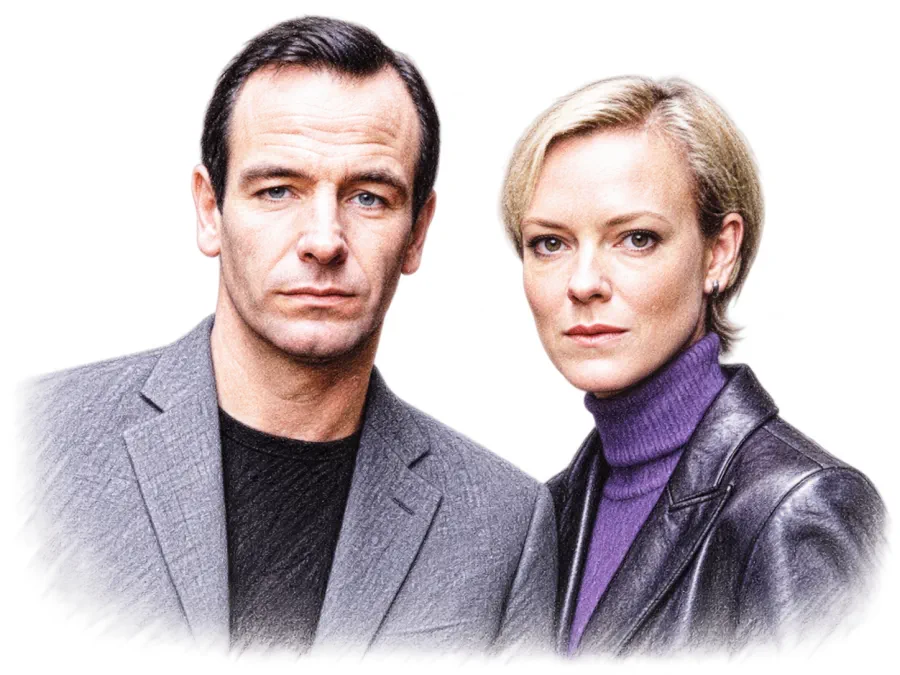
Principal Characters & Performances
Dr Tony Hill
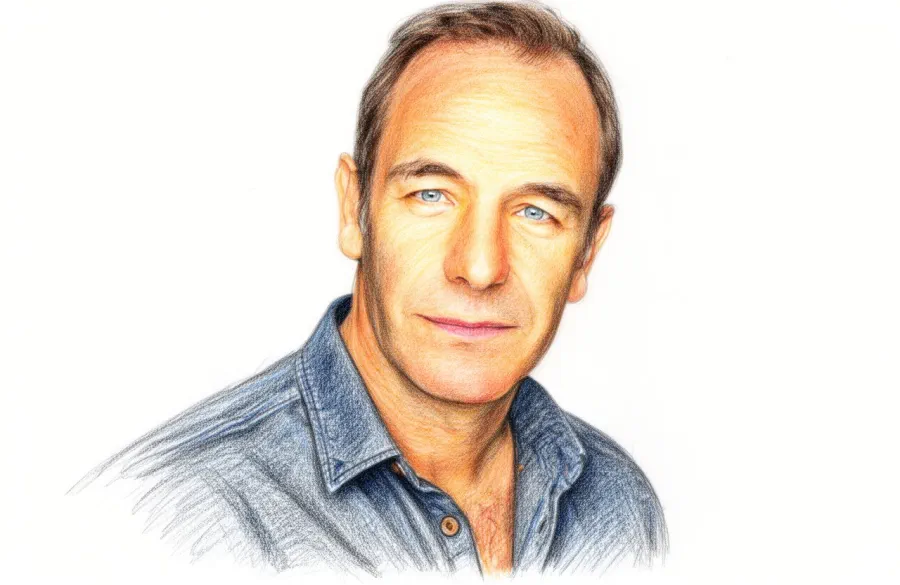
Tony Hill is a university clinical psychologist who builds profiles of serial killers from their behaviour, and the show’s selling line says what that means: to catch a killer, you must think like one. He is eccentric and endearing and driven by a strong sense of right and wrong, and he understands the people he hunts well enough to disgust himself.
The first-night critics took him seriously. In a round-up of four national reviews on 15 November 2002, the Guardian’s Nancy Banks-Smith called the drama “very dark indeed” and described Robson Green’s technique: the sleepy-eyed look, the “pitter-patter, rattling delivery, like mice on a hot tin roof”. The Times’s Paul Hoggart thought Hill was “two fingerprints short of a crime scene”, and quite a hunk with it.
Green’s own account of the character is more careful than the scripts sometimes are. “He’s on the periphery. When the crime is solved he disappears. He’s never applauded for what he does and he doesn’t stand out in a crowd.” He also pointed out what the part demanded of an actor: eight minutes of complicated dialogue in front of a microphone, which he said not many would have the nerve to attempt.
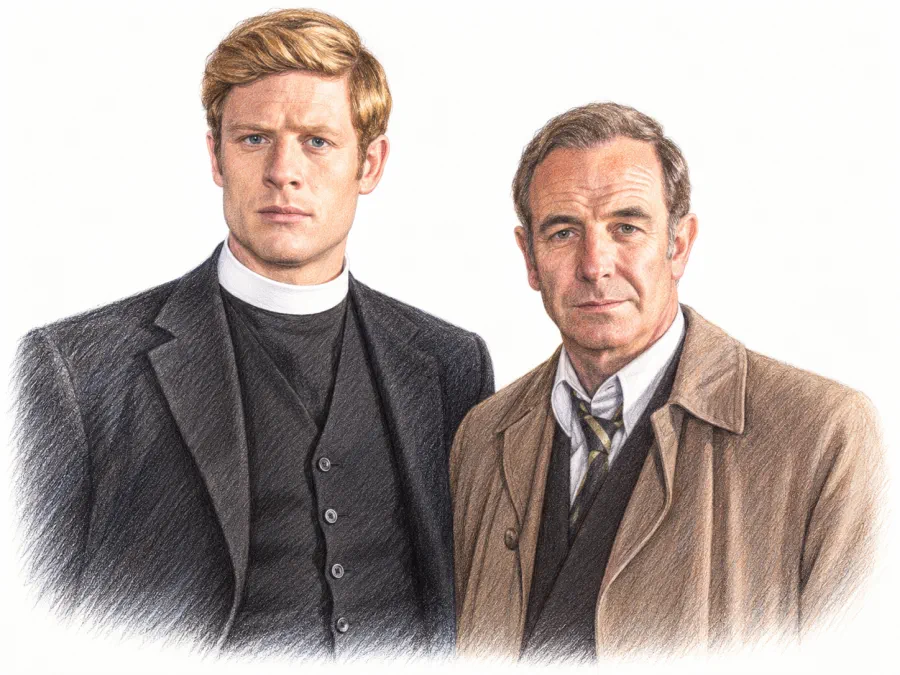
Green was the producer as well as the star: the series was made by Coastal Productions, his own company, with Tyne Tees Television for ITV, and he has said its sale to well over thirty countries meant more to him for that reason. Tony Hill is his longest-running crime lead before Geordie Keating in Grantchester.
Carol Jordan and Alex Fielding
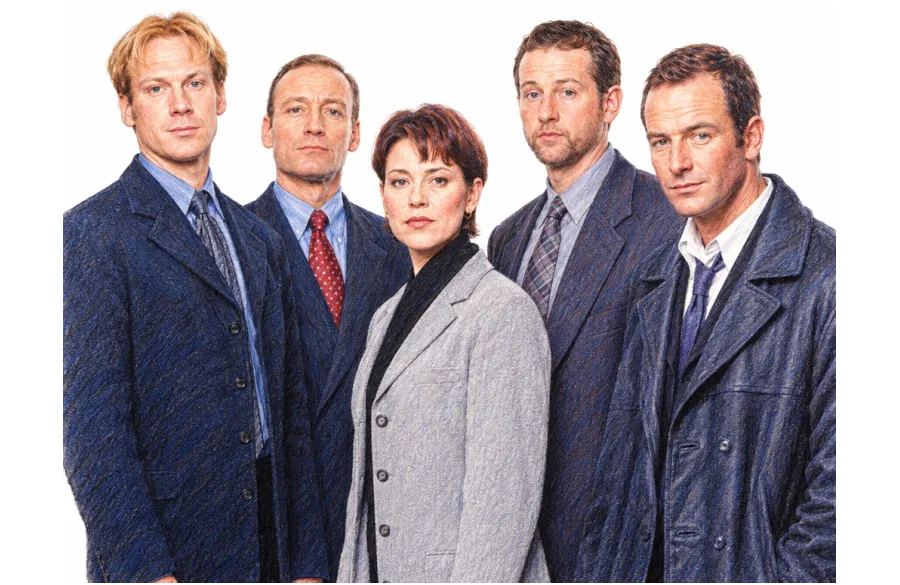
Hermione Norris plays DCI Carol Jordan, head of Bradfield’s Major Incident Team from series 2 (a DI in series 1) and Hill’s professional partner and romantic counterweight. The friction between a psychologist’s freelance authority and a police chain of command only works if the detective is willing to be persuaded, and she plays that as conviction rather than capitulation.
Norris left after three series and the show never wholly recovered. Jordan is written out abruptly, with Hill devastated when she leaves for South Africa, and Simone Lahbib’s DI Alex Fielding arrives in series 4, in Wikipedia’s phrase, “without real explanation”. The ratings show the new pairing taking an episode to bed in: the arrival story scores 7.6, the one after it 8.2.
Notable Support and Guest Stars
Mark Letheren’s DS Kevin Geoffries is the one police character present across all six series, which makes him the show’s institutional memory; Emma Handy’s DC Paula McIntyre joins in series 2 and stays to the end.
The senior-officer obstacle is the show’s recurring structural device, and it moves from actor to actor rather than settling: Tom Chadbon’s ACC John Brandon in series 1 and 2, Peter Sullivan’s ACC Paul Eden in series 3 and 4. Around them the supporting bench turns over too: Alan Stocks and Doreene Blackstock as sergeants, Elaine Claxton as Maggie Thomas, Mark Penfold as Dr Ashley Vernon, and Michael Smiley arriving as Dr Liam Kerwin in the final series.
Green did his own research for the part, spending time with the criminal psychologist Julian Boon and describing a man who carried his life in a blue bag and nobody looked at twice; the blue polythene bag became a prop. The quotation is flagged as needing a citation on the source page, so it belongs in the entry as reported detail, not as verified fact.
The World of Wire in the Blood
Bradfield is a fictional city assumed to lie in West Yorkshire, and the show is built around its Major Incident Team: every episode turns on a serial killer whom Hill helps identify through a behavioural profile rather than a forensic trail.
The world is institutional and forensic rather than domestic, including university offices, incident rooms, post-mortem rooms and crime scenes, and a constant theme is the struggle between Jordan or Fielding and senior officers who do not trust Hill’s methods. The show gets its tension from the fact that Hill has no authority at all.
His own life is deliberately unglamorous: he cycles to work and carries everything he owns in a blue polythene bag. Made by Tyne Tees with a Yorkshire setting, the series never looks like London, and its grimness is regional rather than metropolitan.
Origin Story
The series adapts Val McDermid’s Tony Hill and Carol Jordan novels, beginning with The Mermaids Singing as the opening two-parter in November 2002, and produced by Coastal Productions with Tyne Tees Television for ITV, a regional drama in an era when that was becoming unusual.
Green’s own statement of what the programme was for is the clearest account of its intentions. “Destructive behaviour is not something that drives itself from an outside force known as ‘evil’, but from a choice made by a human being. The consequences are visually unpleasant. As long as it’s not a gore fest, we don’t shy away from the reality of what we’re talking about.”
It ended on cost. The last episode was broadcast on 31 October 2008, and ITV cancelled the series in 2009 citing production costs estimated at up to £750,000 an episode and the competition of the network’s newer dramas, according to Broadcast. That figure is reported rather than verified.
Narrative Style & Tone
The format changed three times. Series 1 told three stories in six 60-minute parts; series 2 to 5 each told four stories as 90-minute single films; series 6 returned to 60-minute parts across four two-parters and added the standalone special. Through all of it the profile, not the arrest, is the engine.
This is the grimmest crime drama in this batch, and the contemporary verdicts say so: “very dark indeed”, “refreshingly quirky and unusually edgy”, “solid, if over-conventional”, “appallingly viewable”. Three of the four reviewers use the word gratuitous or something near it, which is the honest framing, and why the people who liked it liked it enormously.
Visually it is location-led with an eye on feature-film scale: Green spoke about pushing the budget for “a filmic quality” so each 90-minute story looked like a film, and the series-4 episode built around Caravaggio’s imagery is the clearest statement of that ambition and its limits.
How is Wire in the Blood remembered?
It won where adaptations rarely do. The series took the Royal Television Society’s award for Best Network Production in 2003 and three Edgar Allan Poe Awards for its writing: Alan Whiting in 2005, Guy Burt for “Redemption” in 2006 and Patrick Harbinson for “Prayer of the Bone” in 2009. Those come from a single secondary source.
The audience was large and international. Green claimed sales to more than thirty countries, the show travelled through BBC America, ABC in Australia and TV1 in New Zealand, ITV3 repeated it from 2014, and it now streams on ITVX. Its IMDb record of 8.2 from nearly eleven thousand votes is the strongest of any series covered in this batch.
The axe came in 2009 and nothing has followed it: no revival, no continuation. Val McDermid’s own site still maintains the series page and links readers to where it can be watched, which is rarer than it sounds, and ITV’s later McDermid adaptation, Karen Pirie, is the obvious comparison for anyone wanting more.
In Closing
Twenty-four stories about a man who thinks like the people he is hunting, and the only British crime series to win three Edgar awards for its writing. ITV killed it over money, an odd epitaph for a show that began as a regional production with its star’s company behind it.