My Critique of David Burke
David Burke’s defining achievement remains his Dr. Watson, a performance that gave the early Granada series its bedrock of empathetic warmth and intellectual credibility.
While his Stalin in ‘Reilly’ offered a chilling glimpse of his formidable range, later supporting turns in mainstream mysteries like ‘Midsomer Murders’ felt competent yet ultimately inconsequential, lacking the spark of his mid-career peaks. Positioned against his successors, Burke’s Watson was less a dramatic engine and more a vital, humanising anchor for Jeremy Brett’s mercurial Holmes.
For the modern viewer, his work matters chiefly as a masterclass in faithful, un-showy adaptation, a reminder that the most memorable characterisation is often the most quietly assured.
Early Life
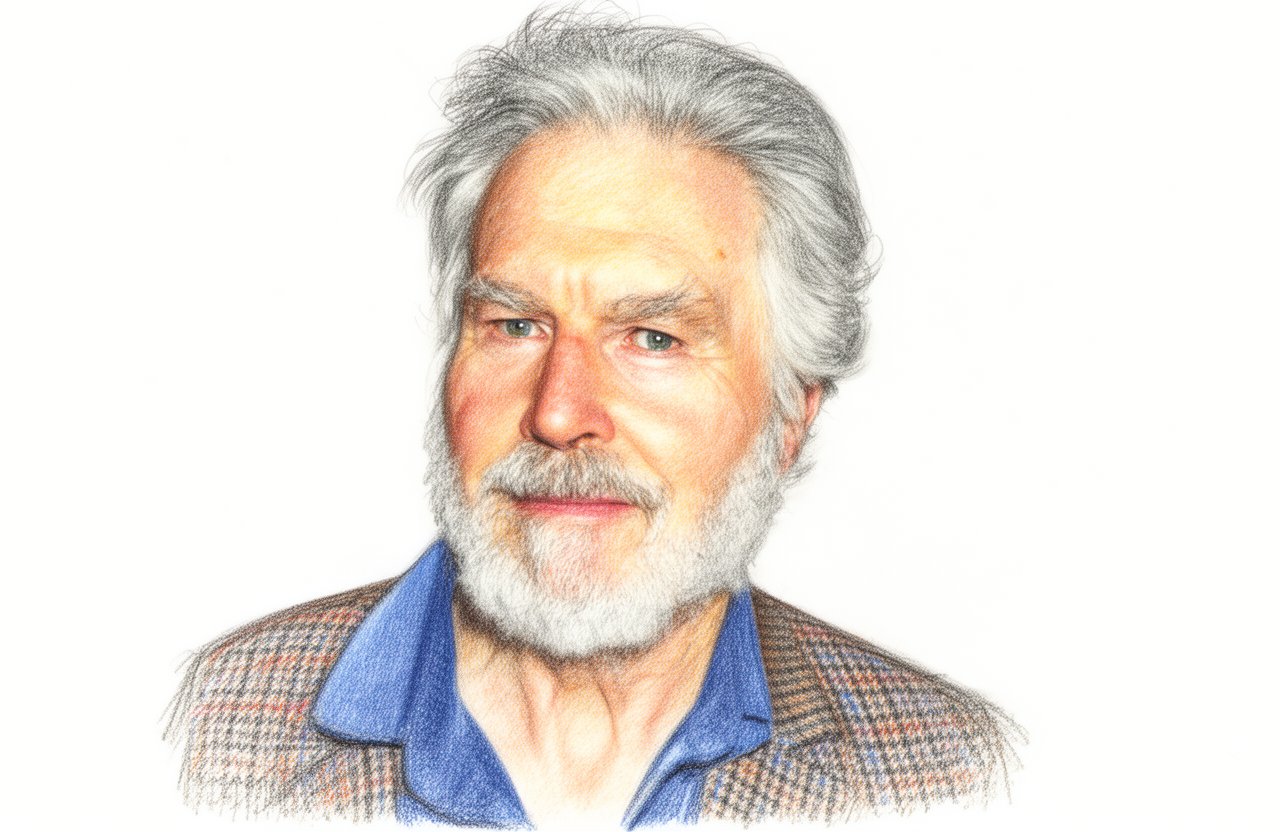
David Burke was born on May 25, 1934, in the port city of Liverpool, England. The cultural and social fabric of this historic city, known for its resilience and distinctive character, provided the backdrop for his formative years.
While details of his childhood are kept private, his path was decisively set toward the stage. He pursued formal training at the prestigious Royal Academy of Dramatic Art (RADA), one of the United Kingdom’s most venerable drama schools.
This rigorous foundation equipped him with the classical techniques and discipline that would underpin his long and varied career. It was at RADA that the professional actor was forged, preparing him for the demanding world of repertory theatre and, eventually, television.
His personal life found a deep and lasting connection within the acting community. He is married to the acclaimed actress Anna Calder-Marshall, a partnership that has endured for decades.
Together, they have a son, Tom Burke, who has followed in his parents’ footsteps to become a highly regarded actor in his own right, known for roles in productions like “The Musketeers” and “Strike.” Away from the stage and screen, Burke is a devoted supporter of Everton Football Club, maintaining a lifelong loyalty to his hometown team. This blend of northern roots, classical training, and a stable family life created a steady foundation for the actor.
Early Career & First Roles
Following his training, David Burke embarked on the traditional path of a working actor in the 1960s, building his craft and profile through numerous television appearances. His early career was characterized by the steady, unglamorous work that defines a reliable professional.
He quickly became a familiar face in various drama series of the era. Notably, his first foray into the world of Arthur Conan Doyle came not as Dr.
Watson, but as a villain. In 1965, he portrayed Sir George Burnwell in the BBC’s “Sherlock Holmes” series, specifically in the adaptation of “The Adventure of the Beryl Coronet.”
This period also saw him take on roles in contemporary military dramas. He appeared in the series “Redcap,” a show focusing on the Royal Military Police, playing both Private Burroughs and, in a separate episode, Corporal Bond.
These early parts, though not leading roles, were crucial stepping stones. They demonstrated his versatility and his ability to handle both period and modern settings, skills that would serve him well as he graduated to more substantial and defining characters in the decades to follow.
Major Roles
David Burke’s career is a testament to the power of skilled character acting. While he may not have been a perennial leading man, he possessed the rare ability to inhabit a role so completely that it becomes definitive for a generation of viewers.
His filmography is marked by several standout performances that showcase his range, from the loyal companion to the ruthless dictator. These roles are not just jobs he performed; they are characters he built with intelligence, subtlety, and a profound understanding of human nature.
Dr. John Watson in ‘The Adventures of Sherlock Holmes’ (1984-1985)
For many aficionados of detective fiction, Jeremy Brett’s portrayal of Sherlock Holmes in the Granada Television series is the definitive interpretation. Equally integral to the success of that iconic first series was David Burke’s masterful and deeply human performance as Dr.
John Watson. Burke did not merely play Watson as a foil or a chronicler; he embodied him as a fully realized, three-dimensional man—a competent former army surgeon, a loyal friend, and the audience’s emotional anchor in Holmes’s often cold and brilliant world.
His Watson was neither a bumbling sidekick nor a mere spectator; he was intelligent, brave, occasionally exasperated, and fundamentally decent.
Burke’s chemistry with Brett was the bedrock of the series. He provided the essential warmth and empathy that balanced Holmes’s detached genius.
In scenes where Holmes deduces, Watson reacts not just with amazement, but with a doctor’s curiosity, a friend’s concern, or a moral compass. Burke excelled in showing Watson’s internal life—his worry for Holmes’s well-being, his pride in their work, and his occasional loneliness when excluded from his friend’s reasoning.
This portrayal restored the character’s dignity and military bearing as described by Conan Doyle, moving away from some of the more caricatured versions of the past.
The physicality of his performance was also noteworthy. Burke’s Watson moved with the slight stiffness of an old wound, carried himself with a military bearing, and his expressions—a raised eyebrow, a concerned frown, a genuine smile—communicated volumes.
He made Watson the heart of the show. When Burke departed the series after the initial two seasons to pursue theatre work, his absence was keenly felt.
His tenure, though relatively short, left an indelible mark, setting a high standard for the character that emphasized companionship and humanity. For this role alone, David Burke secured a permanent and respected place in the canon of great Sherlockian adaptations.
Joseph Stalin in ‘Reilly, Ace of Spies’ (1983)
Just a year before donning the dependable tweeds of Dr. Watson, David Burke delivered a performance of chilling, quiet menace that showcased his extraordinary range.
In the acclaimed ITV series “Reilly, Ace of Spies,” Burke appeared in the final two episodes as Joseph Stalin, the rising Soviet revolutionary and future dictator. This was not a grandiose, shouty portrayal; it was something far more effective and sinister.
Burke’s Stalin was a study in controlled, calculating power. He played him as a man of few words, whose authority emanated from stillness, a direct gaze, and an aura of utter ruthlessness.
Burke captured the intellectual coldness and paranoia that defined Stalin. In his scenes, often opposite Sam Neill’s Sidney Reilly, he conveyed a mind constantly scheming, assessing loyalty, and dispensing life-and-death decisions with bureaucratic calm.
He avoided imitation in favor of essence, focusing on the character’s manipulative intelligence and the terrifying banality of his evil. The performance was a masterclass in understatement, proving that Burke could command the screen and embody historical figures of immense weight without resorting to caricature.
It stood in stark contrast to the warmth of his Watson, highlighting his formidable skill as a character actor who could disappear into roles at opposite ends of the moral spectrum.
Other Notable Work
Beyond these two landmark roles, David Burke’s career is filled with memorable supporting performances that enriched numerous television productions. He brought gravitas and authority to the role of Superintendent Malcolm Webberley in several episodes of “The Inspector Lynley Mysteries” (2002-2005), representing the sometimes obstructive but procedural-minded senior police hierarchy.
He appeared in the beloved crime series “Midsomer Murders,” playing Fred Messenger in the 2005 episode “Midsomer Rhapsody,” a role that allowed him to navigate the show’s unique blend of the quaint and the murderous.
Earlier in his career, he took on the role of the celebrated 19th-century designer and socialist William Morris in the 1975 BBC series “The Love School,” which explored the Pre-Raphaelite Brotherhood. This part demonstrated his affinity for historical figures and intellectual roles.
His film work includes appearances in “The Dogs of War” (1980) and “The Mirror Crack’d” (1980), alongside an enduring commitment to theatre, including a long association with the Royal Shakespeare Company. Each role, whether large or small, was approached with the same commitment to truth and detail.
Acting Style
David Burke’s acting style is defined by intelligent understatement, meticulous character construction, and a profound lack of ego. He is an actor who serves the story and the character, rather than drawing attention to himself.
His performances are built on a foundation of listening and reacting truthfully. Whether as the empathetic Watson or the chilling Stalin, he first establishes the character’s inner life—their thoughts, motivations, and history—which then informs every gesture, glance, and line delivery.
This internal work results in performances that feel authentic and lived-in, never showy or artificial.
He possesses a remarkable economy of expression. A slight shift in his posture, a pause before speaking, or a steady gaze can convey more than pages of dialogue.
This technique made him perfectly suited for television and film, where the camera captures subtleties. His voice, capable of both warm reassurance and cold command, is another key instrument.
Above all, Burke’s style is one of reliability and depth. He represents the pinnacle of the skilled British character actor: versatile, professional, and capable of elevating any production with his presence, making the craft look effortless while investing it with great substance.
Personal Life
David Burke has maintained a notably private personal life, choosing to keep the focus squarely on his work. The central pillar of his private world is his family.
His marriage to actress Anna Calder-Marshall represents a enduring partnership within the theatrical community, a union built on mutual understanding of the demands and passions of an acting career. Their shared life in the arts has extended to the next generation; their son, Tom Burke, has emerged as a formidable acting talent in contemporary theatre, television, and film.
This artistic lineage is a point of quiet pride, a continuation of a family tradition dedicated to the craft.
Away from the stage and screen, one of his most enduring personal passions is his support for Everton Football Club. This loyalty to his hometown team from Liverpool speaks to a man who remains connected to his roots.
It is a touchstone of normalcy and steadfast loyalty, qualities that also reflect in his professional demeanor. In an industry known for flux, Burke’s long marriage, family life, and even his football allegiance paint a picture of a man who values stability, continuity, and private contentment over public spectacle.
In closing…
David Burke’s career is a masterclass in the power and dignity of the character actor. He never sought the spotlight, yet through sheer skill and integrity, he illuminated every part he played.
From defining the modern interpretation of Dr. Watson to embodying the chilling quiet of Stalin, he demonstrated a range that was both vast and deeply nuanced.
He represents the indispensable backbone of British television drama—the reliable, superb performer who makes every scene better, every story richer. For viewers who appreciate craft over celebrity, depth over flash, David Burke’s body of work remains a enduring and highly respected contribution to the world of mystery, historical drama, and storytelling at its finest.