
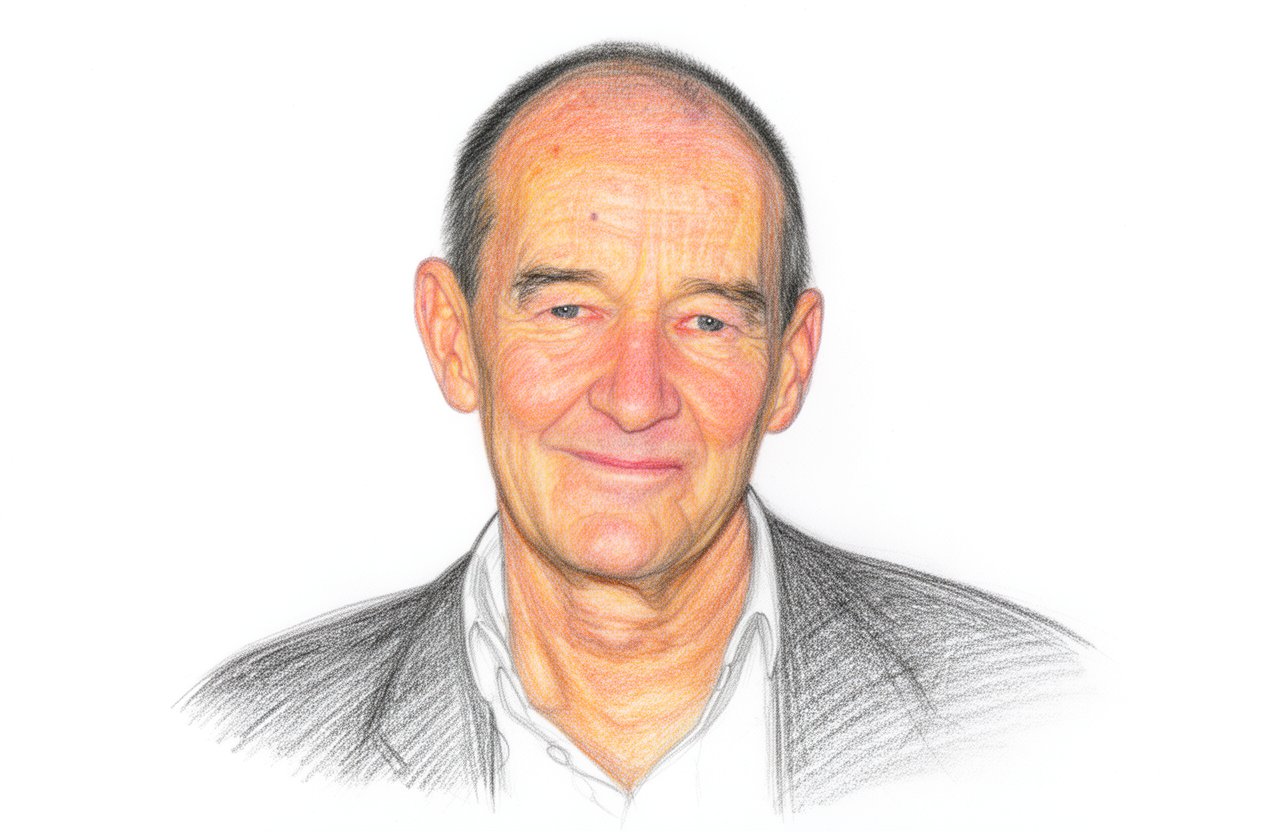
My Critique of David Hayman
David Hayman’s defining strength lies in his capacity for raw, uncompromising intensity, particularly evident in his commanding lead performance in *A Sense of Freedom*. While his formidable screen presence is undeniable, this same gravitas can occasionally feel monolithic, limiting his range to figures of stern authority.
Consequently, he occupies a different space than peers known for chameleonic versatility, carving a niche as a purveyor of unyielding moral weight rather than nuanced transformation. This specialization makes him a compelling, if predictable, choice for roles demanding gravitas.
For the modern viewer, his significance rests not on broad appeal, but on his singular embodiment of Scottish resilience and grim determination, offering a grounding, powerful authenticity in complex narratives.
Early Life
Born on February 9, 1948, in the Bridgeton district of Glasgow, David Hayman’s roots are firmly planted in the rich, often gritty soil of Scotland’s industrial heartland. This environment, characterized by its resilience and distinctive character, would later become a wellspring for his artistic sensibility.
His path to the stage was formalized at the Royal Scottish Academy of Music and Drama, where he immersed himself in the craft of dramatic art. Graduating in 1969, he stepped directly into the professional world at a crucible of theatrical innovation: Glasgow’s renowned Citizens Theatre.
It was here, amid ambitious productions and a fiercely creative atmosphere, that Hayman honed his skills. The Citizens Theatre provided not just a first job, but an artistic foundation, instilling a commitment to bold storytelling and complex character work that would define his entire career.
Early Career & First Roles
Hayman’s professional journey began on the stage, but his television debut arrived in 1972 with a role in the series ‘Just Your Luck’. Throughout the 1970s, he built a steady portfolio on British television, appearing in historical dramas like ‘The Eagle of the Ninth’ (1977) and the popular Scottish sketch show ‘Scotch & Wry’ (1978).
These early parts demonstrated his range, but it was a transformative television movie in 1979 that served as his first major calling card. His portrayal of the notorious Glasgow criminal-turned-artist Jimmy Boyle in ‘A Sense of Freedom’ was a raw, uncompromising performance that announced the arrival of a serious and fearless actor.
Major Roles
David Hayman’s career is a tapestry of intense, psychologically rich performances. While he has excelled across stage and screen, two roles in particular stand as pillars of his work in the mystery and crime genre, showcasing the depth and authority he brings to every part.
Chief Superintendent Michael Walker in ‘Trial & Retribution’ (1997–2009)
For over a decade, David Hayman commanded the screen as Chief Superintendent Michael Walker in Lynda La Plante’s gripping crime series ‘Trial & Retribution’. This was not the role of a detached bureaucrat or a quirky genius; Walker was the embodiment of institutional authority and dogged, procedural integrity.
Hayman played him as a granite-jawed, shaven-headed pillar of the Metropolitan Police, a man whose very presence in an incident room signaled that the full weight of the system was bearing down on the case.
What made Walker so compelling under Hayman’s stewardship was the profound humanity etched beneath the stern exterior. The character’s signature physical scar, often accentuated by makeup, became a metaphor for the psychic wounds accumulated from a lifetime confronting the darkest aspects of human nature.
Hayman masterfully conveyed the immense burden of command—the political pressures from above, the responsibility for his team, and the relentless pursuit of justice for victims.
He avoided easy sentimentality, instead showing a man whose compassion was expressed through sheer, unwavering competence and a deep, often weary, understanding of evil. In court scenes, Hayman was particularly formidable, his Walker observing proceedings with a hawk-like intensity, his silence as powerful as any outburst.
This long-running role established Hayman as a definitive presence in British television crime drama, an actor who could convey immense power and subtle vulnerability in a single, steely glance.
Jimmy Boyle in ‘A Sense of Freedom’ (1981)
If Michael Walker represented the law, then Jimmy Boyle was, initially, its most violent adversary. Hayman’s portrayal in the 1981 television film (a expanded version of the 1979 movie) remains a landmark performance in British television.
To play Boyle—a man of immense notoriety in Scotland for his gangland violence and subsequent brutal treatment in the prison system—required extraordinary courage and empathy.
Hayman did not shy away from depicting Boyle’s terrifying capacity for brutality, capturing the animalistic rage of a man trapped in a cycle of violence. However, the true mastery of the performance lay in charting the agonizing, almost imperceptible journey of redemption.
Hayman showed us the spark of self-awareness flickering in the darkness of solitary confinement, the tentative reach for expression through art, and the monumental struggle to build a new identity from the ashes of the old.
It was a physically and emotionally naked performance that went far beyond impersonation. Hayman embodied the transformation, making Boyle’s hard-won ‘sense of freedom’ feel both profoundly personal and universally significant.
This role proved Hayman’s fearlessness and his unique ability to locate the complex humanity within even the most challenging figures, a skill that would inform all his future work.
Other Notable Work
Beyond these two defining parts, Hayman’s filmography is rich with memorable characterizations. He brought a chilling, patriarchal menace to Jonas Franks in the BBC period drama ‘The Paradise’ (2012-2013).
In the forensic crime series ‘Waking the Dead’ (2000-2011), his recurring role as the shrewd, morally ambiguous police officer Eddie Vine was a perfect fit, allowing him to explore shades of grey within the police force itself.
More recently, a powerful guest appearance in the 2021 drama ‘Help’, set in a care home during the COVID-19 pandemic, showcased his enduring ability to deliver heart-wrenching, dignified character work. His stage career has also remained prolific, including acclaimed performances with the Royal Shakespeare Company and in politically charged new writing, reflecting a career-long commitment to theatrical substance.
Acting Style
David Hayman possesses a commanding, visceral presence that is immediately recognizable. He is an actor of formidable physicality, often using his stature, a penetrating gaze, and a distinctive, gravel-toned voice to dominate a scene.
This power, however, is never deployed for mere effect. It is always in service of character psychology.
He specializes in portraying complex, multifaceted men—often figures of authority or individuals grappling with profound internal conflict. Hayman excels at revealing the tension between a hardened exterior and a turbulent interior.
He can convey a world of thought and feeling through silence, a slight shift in posture, or a weary glance. There is an intense authenticity to his work; he fully inhabits his roles, making even the most extreme characters feel psychologically truthful and deeply human.
Personal Life
Away from the camera and stage, David Hayman’s life is grounded in family and a powerful commitment to social justice. He has been married to his wife, Alice, for decades, and together they have three sons: Sammy, David Jr., and Sean.
This stable personal foundation stands in contrast to the turbulent lives of many characters he portrays.
His humanitarian impulse is channeled most directly through Spirit Aid, the charity he founded. Focused on supporting vulnerable children and communities both in the UK and in conflict zones like the Balkans, Spirit Aid reflects Hayman’s deeply held belief in compassion and practical action.
This work informs his artistry, adding a layer of genuine social conscience to a career already distinguished by its empathy and intellectual rigor.