
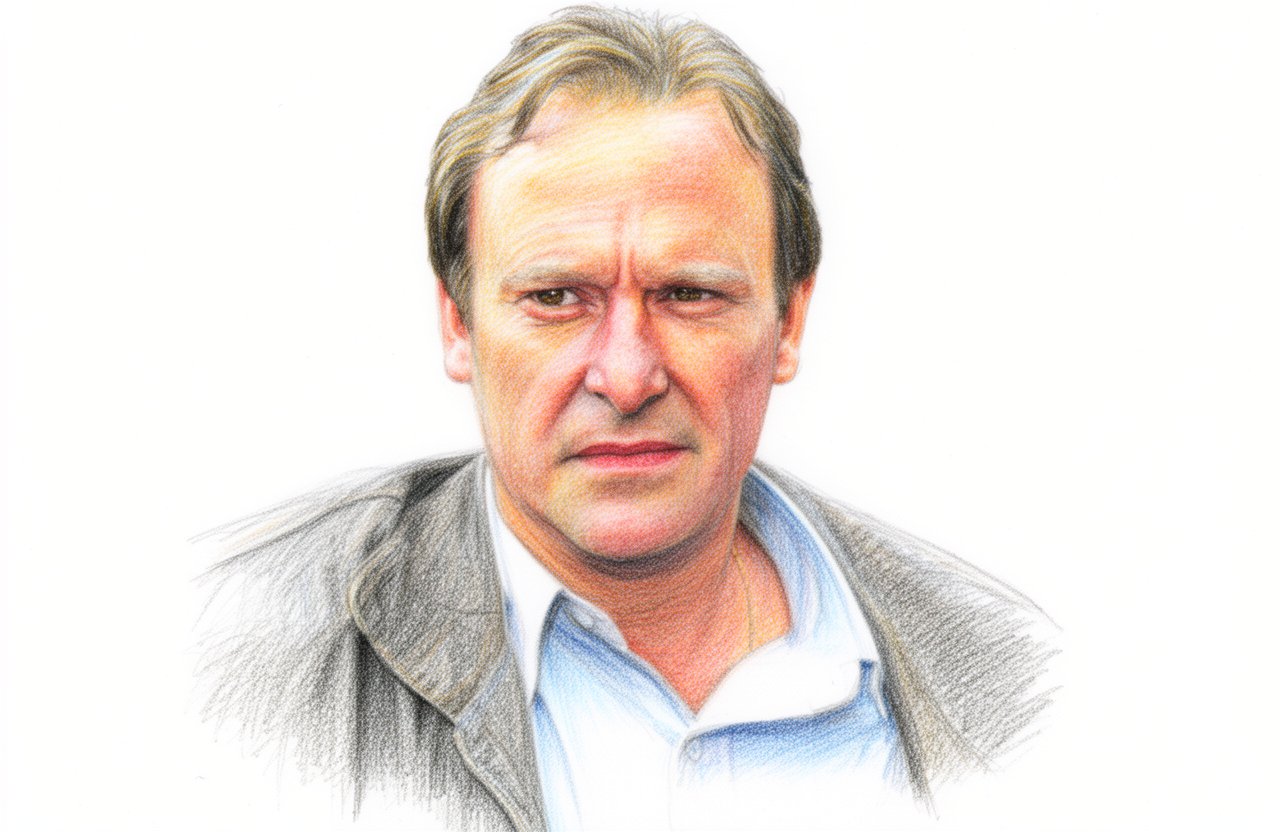
My Critique of Dennis Waterman
Dennis Waterman epitomised the tough-guy lead with an instinctive grasp of working-class authenticity, an earthy charisma that distinguished him from more polished contemporaries. His greatest strength was a capacity for warm, flawed humanity, grounding tough roles in relatable vulnerability and making him a uniquely sympathetic screen presence.
Yet this earthiness could tip into a brash, one-note swagger, and his personal controversies cast a long shadow over a career built on charm. For modern audiences, he remains an essential archetype of the British small-screen antihero, whose flawed appeal still resonates.
Early Life
Dennis Waterman was born into a bustling South London household in Clapham on February 24, 1948. As the youngest of nine children, he was immersed in a vibrant, working-class environment from the start.
This early exposure to the rhythms and characters of London life would later become a foundational element of his most iconic performances. His path to the stage was set early when he won a scholarship to the Corona Theatre School, a prestigious academy for child performers.
It was here that he received his formal acting training, honing the raw talent that would soon propel him into the professional spotlight before he had even reached his teenage years.
The discipline of the stage and the demands of a performing career became his education. While other children were in conventional classrooms, Waterman was learning his lines and mastering the craft of performance.
This unique upbringing, straddling the ordinary world of a large London family and the extraordinary demands of the theatre, forged a grounded, no-nonsense attitude. It instilled in him a professional work ethic that remained throughout his long career, ensuring he was never just a child actor, but a serious performer in the making.
Early Career & First Roles
Dennis Waterman’s professional career began with the unassuming charm typical of British cinema in 1960, with a role in ‘Night Train for Inverness’. This was swiftly followed by stage work, including a stint with the Royal Shakespeare Company.
However, it was television that first made him a familiar face. In 1962, he perfectly embodied the mischievous spirit of childhood as William Brown in the BBC’s ‘William’ series, based on Richmal Crompton’s beloved stories.
This role showcased his natural, unaffected screen presence—a quality that would define his work.
He balanced this with theatre, playing Oliver Twist in ‘Oliver!’ and Winthrop Paroo in ‘The Music Man’, proving his versatility across mediums. A foray into American television with the CBS sitcom ‘Fair Exchange’ and leading roles in Children’s Film Foundation adventures like ‘Go Kart Go’ rounded out a remarkably busy and varied apprenticeship.
By the late 1960s, he was transitioning to adult roles, with a significant part in the socially conscious film ‘Up the Junction’ (1968). This period was a crucible, transforming the child actor into a skilled and adaptable professional ready for the defining work to come.
Major Roles
Dennis Waterman’s career is a masterclass in building a lasting television legacy through a handful of perfectly pitched, culturally resonant characters. He didn’t just appear in hit shows; he helped define them, becoming synonymous with a certain brand of British toughness, loyalty, and wit.
His major roles form a trilogy of iconic television detectives and fixers, each building upon the last while carving out their own distinct space in the public imagination.
Gerry Standing – New Tricks (2003-2015)
As Detective Sergeant Gerry Standing in the BBC’s enduring hit ‘New Tricks’, Waterman delivered what many consider his career-capping performance. He was a foundational member of the original “UCOS” (Unsolved Crime and Open Case Squad) trio, a retired detective brought back to work on cold cases.
Standing was a magnificent creation: a charming, slightly roguish East End widower with a keen eye for the ladies and a occasionally flexible relationship with police procedure. Waterman played him with a twinkle in his eye and a lifetime of street wisdom in his demeanor.
The genius of the performance lay in its layered authenticity. Standing was not just a comic relief or a tough guy relic; he was a fully realized man navigating later life.
Waterman allowed us to see the vulnerability beneath the bravado, the deep loyalty to his team—Alun Armstrong’s Brian Lane and James Bolam’s Jack Halford—and the enduring passion for justice that made him so effective. His chemistry with Armstrong and Bolam was the bedrock of the show’s early success, a palpable sense of camaraderie and mutual respect forged from years of shared professional history.
Waterman’s own singing of the theme song, “It’s Alright,” became a beloved signature, a personal touch that connected the actor directly to the character and the show’s warm, nostalgic tone. For eleven series, he was the reliable, charismatic heart of ‘New Tricks’, proving that his particular brand of relatable, grounded heroism had lost none of its power.
The role showcased his maturity as an actor, blending the tough-guy persona honed over decades with a newfound warmth and accessibility that captivated a whole new generation of viewers.
Terry McCann – Minder (1979-1994)
If ‘New Tricks’ showcased the mature master, ‘Minder’ was the star-making phenomenon that cemented Dennis Waterman’s place in British cultural history. As Terry McCann, a former boxer trying to go straight as a “minder” (bodyguard) for the eternally scheming used-car dealer Arthur Daley (the sublime George Cole), Waterman created an icon.
Terry was the moral compass in a world of grey deals, the straight man to Daley’s comic fantasist, and the capable fists when things inevitably turned sour.
The dynamic between Waterman and Cole was nothing short of alchemical. Terry’s weary exasperation with Arthur’s get-rich-quick plans, underpinned by a deep, unshakeable loyalty, was the emotional core of the show.
Waterman played Terry with a wonderful physicality—his boxer’s poise was always evident—and a soulful depth. He was tough but never a brute, kind but not soft, a working-class man with dignity striving for a better life.
The show’s massive popularity made Terry McCann a national figure, a symbol of resilient London integrity.
Once again, Waterman’s voice became inseparable from the character, as he sang the iconic theme “I Could Be So Good for You.” It wasn’t just a catchy tune; it was Terry’s anthem, a promise of reliability and underlying goodness. For over a decade, ‘Minder’ dominated the ratings, and at its center was Waterman’s perfectly balanced performance, making Terry McCann one of the most beloved and enduring characters in British television history.
Other Notable Work
While ‘New Tricks’ and ‘Minder’ are the twin pillars of his legacy, his earlier breakthrough role was equally seismic. As Detective Sergeant George Carter in ‘The Sweeney’ (1974-1978), Waterman was the young, fiery partner to John Thaw’s iconic Jack Regan.
In the gritty, revolutionary police drama that redefined the genre, Carter was the loyal right-hand man, often the voice of caution to Regan’s maverick instincts. Waterman brought a raw energy and credibility to the role, holding his own against Thaw’s formidable presence and helping to create one of TV’s great detective duos.
This role established his “tough guy with a heart” persona that would be refined and deepened in the years to come.
He also demonstrated superb comic timing in sitcoms like ‘On the Up’ (1990-1992), playing Tony Carpenter, a self-made millionaire adjusting to wealth, and showed his versatility in drama series like ‘Stay Lucky’ (1989-1993). These roles, while not as culturally defining as his detective work, proved his range and his reliable ability to connect with an audience, whether in drama or comedy.
Acting Style
Dennis Waterman’s acting style was the antithesis of theatrical flourish; it was a study in authentic, grounded presence. He possessed a remarkable naturalism that made his characters feel less like performances and more like people you might actually know.
This was not method intensity, but a profound understanding of everyday humanity. He specialized in portraying men of action—detectives, minders, ex-boxers—but always infused them with a palpable inner life.
His characters were tough, certainly, but their strength was tempered by vulnerability, loyalty, and a weary, often witty, recognition of the world’s flaws.
His true mastery lay in his ability to embody the working-class hero without cliché. He brought a quiet dignity and intelligence to these roles, making them relatable and respectable.
Furthermore, his skill in seamlessly pivoting between drama and comedy was a key component of his success, particularly in ‘Minder’. He was the ultimate reliable co-star, known for generating exceptional on-screen chemistry, whether with John Thaw, George Cole, or the ‘New Tricks’ team.
The personal touch of singing his own theme songs wasn’t a gimmick; it was the final piece of authenticity, a direct, charming bond he forged with the viewing public.
Personal Life
Waterman’s personal life was as full and complex as his career. He was married four times, most notably to actress Rula Lenska from 1987 to 1998.
He spoke with regret in later years about his past struggles, including incidents of domestic violence during that marriage, demonstrating a willingness to confront his flaws. With his second wife, Patricia Maynard, he had two daughters, including actress Hannah Waterman.
He found lasting stability with his fourth wife, Pam Flint, whom he married in 2011 and with whom he emigrated to Spain in 2015.
A lifelong and passionate supporter of Chelsea Football Club, he also hosted the nostalgia football show ‘Match of the Seventies’. His interests included golf and painting, and he was a devoted friend, delivering a moving eulogy for his ‘Minder’ co-star George Cole in 2015.
His life had its very public challenges, including a driving ban, but these experiences seemed to add layers of understanding to the nuanced characters he played in his later years.
In closing…
Dennis Waterman’s passing in 2022 marked the end of a singular chapter in British television. He was not an actor of Shakespearean grandeur, but something perhaps more valuable: a consummate professional who specialized in truth.
Through Gerry Standing, Terry McCann, and George Carter, he gave us a trilogy of unforgettable everymen—flawed, funny, and fundamentally decent. He narrated the working-class experience with warmth, wit, and unwavering credibility, singing his way into the nation’s living rooms and hearts.
For those who appreciate craft over flash, character over celebrity, and authenticity above all, Dennis Waterman’s body of work remains a compelling and deeply satisfying legacy.