
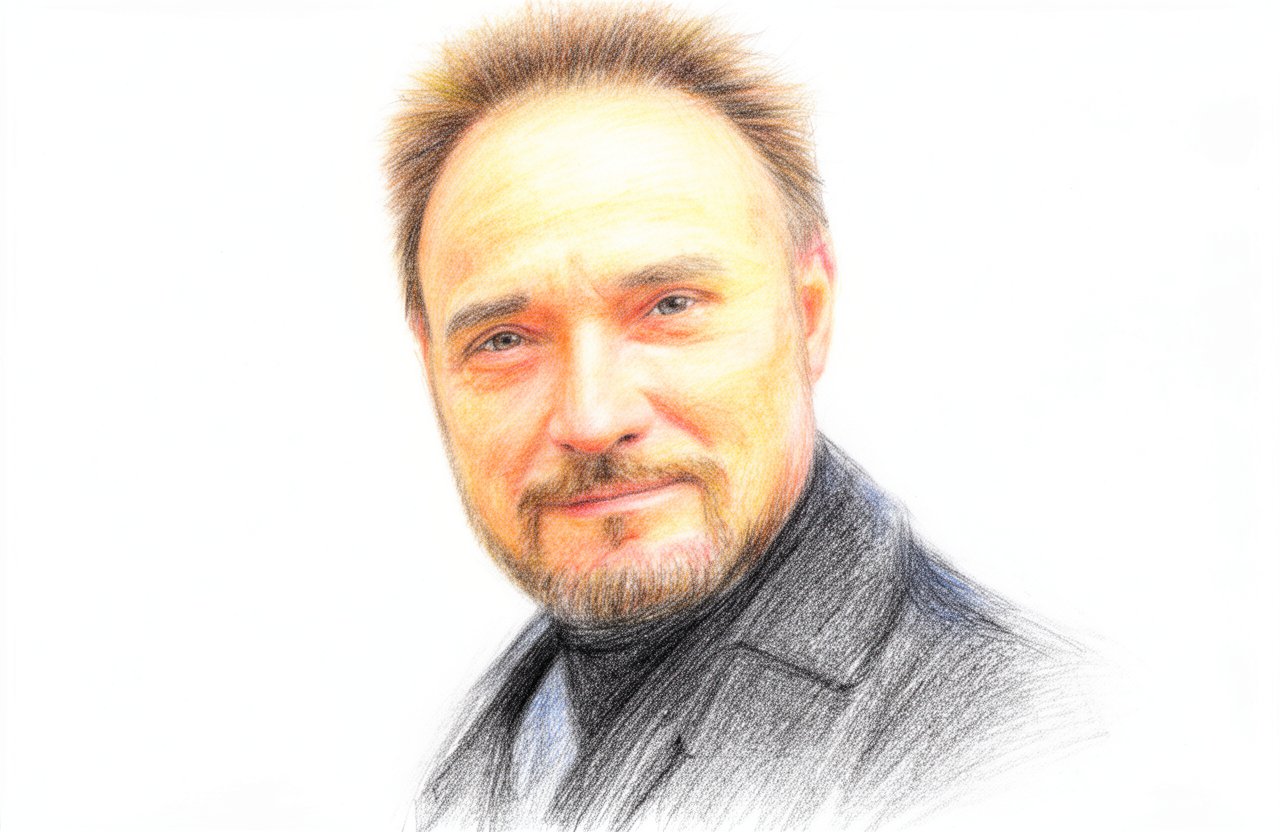
My Critique of Don Henderson
Don Henderson brought a rare authenticity to British crime drama, his gravelly gravitas grounded in real police experience. His long-running Detective George Bulman offered a pragmatic, workaday counterpoint to the cerebral sleuths of the era.
Yet his formidable presence often tipped into a monolithic gravitas, limiting his range in more nuanced character studies. While peers like John Thaw could pivot to vulnerability, Henderson’s stock-in-trade remained unyielding authority.
For the modern viewer, his Bulman trilogy is a valuable time capsule of procedural grit, though its dramatic texture now feels rigid. He matters as a conduit for a certain unvarnished, pre-procedural policing reality on screen.
Early Life
Don Henderson was born on November 10, 1931, in Leytonstone, London, a world away from the stages he would later command. He grew up in Epping, Essex, the son of a carpenter, a background that instilled a practical, grounded sensibility he would carry throughout his life.
His path to acting was anything but direct. After completing his national service as a technician in the Royal Army Dental Corps, he embarked on a career in law enforcement with the Essex Constabulary.
He proved adept, rising to the rank of detective sergeant in the CID.
This experience in observing human nature and navigating institutional hierarchies would later become an invaluable resource for his performances. Following his police service, he worked as an insurance salesman, a conventional life that belied his latent talent.
It was a friend’s dare that finally set his true course. Challenged to audition for the Royal Shakespeare Company in his thirties, he succeeded, joining the prestigious ensemble from 1966 to 1972.
His professional acting life, beginning at an age when many careers are plateauing, was just getting started.
Early Career & First Roles
Henderson’s early screen work in the late 1960s and 1970s established his physical and vocal presence. He cut a distinctive figure, often cast in genre films that utilized his imposing stature.
He appeared in horror titles like ‘The Ghoul’ (1975) and ‘The Touch of Satan’ (1974), and had a small role in the star-studded drama ‘Voyage of the Damned’ (1976). His most famous early credit is a brief but memorable one: General Tagge in George Lucas’s original ‘Star Wars’ (1977).
Clad in Imperial grey, Henderson brought a palpable, scowling authority to the Death Star conference room, holding his own amidst Peter Cushing’s Grand Moff Tarkin. These roles, while often supporting, showcased a formidable character actor in the making.
Major Roles
Don Henderson’s career is a masterclass in building a compelling and enduring television character. While he delivered countless effective supporting performances, his legacy is inextricably linked to one role that evolved across a decade of British television.
Detective George Bulman – ‘The XYY Man’, ‘Strangers’, and ‘Bulman’
The character of Detective Sergeant George Bulman first appeared in Granada Television’s 1976 adaptation of Kenneth Royce’s novels, ‘The XYY Man’. Henderson, with his detective background and innate authority, was perfectly cast.
Bulman was introduced as the dogged, somewhat world-weary police minder to reformed cat burglar Spider Scott.
This was not a glamorous detective. Henderson’s Bulman was rumpled, pragmatic, and operated with a cynical wit that felt earned.
He was the procedural anchor in a series leaning towards thriller conventions. The performance was so compelling that the character was spun off into his own series, ‘Strangers’, in 1978.
Here, Henderson truly made the role his own. Promoted to head the “Strangers” unit—a mobile team investigating serious crime across different police jurisdictions—Bulman became a more defined and fascinating figure.
Henderson portrayed him as a brilliant, intuitive, but fiercely independent and often tactless detective.
He was a maverick who clashed with superiors, a man of principle who was also capable of profound stubbornness. Henderson found wonderful layers in the character: the sharp intellect, the dry, sardonic humour, and a deep-seated loyalty to his small team, particularly his long-suffering colleague, Detective Sergeant David Singer.
The final chapter, simply titled ‘Bulman’ (1985-1987), saw the character forced out of the police force. Now a private investigator running a delicatessen, he continued to solve cases.
This iteration allowed Henderson to explore Bulman’s more eccentric, entrepreneurial side while retaining the core investigative tenacity.
Across three series and over a decade, Henderson crafted one of British television’s most complete and believable detectives. He avoided cliché, presenting a man who was brilliant and frustrating in equal measure, whose mind was his greatest weapon and his personality his biggest obstacle.
It is a distinguished, masterful piece of sustained character acting.
Gavrok – ‘Doctor Who: Delta and the Bannermen’
In stark contrast to the procedural realism of Bulman, Henderson delivered a gloriously over-the-top villain in the 1987 ‘Doctor Who’ serial ‘Delta and the Bannermen’. As Gavrok, the merciless leader of the genocidal Bannermen, Henderson embraced the heightened reality of the show’s later classic era.
Clad in a ruthless black uniform, with a chilling, dead-eyed stare and a voice that could curdle milk, his Gavrok was a pure, unadulterated force of malice. He played it absolutely straight, which made the character all the more terrifying.
There was no camp, no winking at the audience; just a relentless, predatory evil.
His commanding physicality and that deep, resonant voice, usually deployed for weary authority, were here weaponised into tools of tyranny. It is a performance remembered with great affection by fans—a testament to how a truly skilled actor can elevate genre material into something memorably sinister and fun.
Other Notable Work
Henderson’s film work showcased his versatility in major productions. He was the intimidating First Black Maria Guard in Terry Gilliam’s dystopian masterpiece ‘Brazil’ (1985).
In the epic ‘The Adventures of Baron Munchausen’ (1988), he was the besieging Commander.
On television, he was a solid and reliable presence in countless dramas. He played the stern Master-at-Arms Frank Heron in the popular BBC series ‘Warship’ (1973-1975) and the brutish Tom Carne in the original ‘Poldark’ (1975).
Later roles demonstrated his enduring appeal, including a poignant turn as John Hennessey in an episode of ‘Cracker’ (1993) and a final, posthumously aired appearance as a Rogue Simulant in ‘Red Dwarf’ (1997). His voice work as multiple giants in the animated ‘The BFG’ (1989) remains a beloved highlight.
Acting Style
Don Henderson was an actor of immense, unforced authority. His style was built on a foundation of absolute conviction.
Whether playing a detective, a villain, or a spaceship commander, he fully inhabited the logic and reality of the character.
He possessed a rare combination of a formidable physical presence—solid, imposing, and used with great economy—and a truly remarkable voice. It was a deep, resonant, and textured instrument, capable of conveying weary intelligence, dry wit, or implacable threat with subtle shifts in tone.
He was often cast as “tough guys” or figures of authority, but he consistently avoided one-dimensional portrayals. His characters, even in smaller roles, felt lived-in and complex.
He excelled at showing the mind working behind the eyes, whether it was Bulman piecing together a clue or Gavrok calculating a cruelty.
There was a grounded humanity to his work that made even his most outlandish roles believable. He was a compelling and highly respected character actor whose skill lay in making strength interesting and authority nuanced.
Personal Life
Away from the camera, Henderson’s life was marked by both profound love and difficult tragedy. He was first married to Hilary, with whom he had a son and a daughter.
Her death from a mysterious lung disease in 1977 was a devastating blow.
He found happiness again with actress Shirley Stelfox, whom he married in 1979. The couple shared a strong professional bond, appearing together in several productions, most notably in the ‘Bulman’ series where Stelfox played his character’s wife.
They made their home in Stratford-upon-Avon, where Henderson became a familiar and well-liked local figure.
In 1980, he was diagnosed with throat cancer. He battled the disease with characteristic fortitude for many years, continuing to work consistently throughout the 1980s and into the 1990s.
Don Henderson ultimately passed away from the illness at Warwick Hospital on June 22, 1997, at the age of 65. He was survived by his wife Shirley and his children.
In closing…
Don Henderson’s career is a testament to the power of the character actor. He arrived at his profession with a wealth of real-world experience, which he channeled into performances of uncommon authenticity and depth.
While he will be best remembered for the brilliant, curmudgeonly creation of George Bulman—a defining role in British television detective drama—his body of work is a rich tapestry of memorable turns. From the corridors of the Death Star to the streets of Granada’s noirish England, he commanded attention with a quiet, unwavering skill.
A reliable, compelling, and deeply human presence on screen, his work continues to be discovered and appreciated by new audiences, securing his place as a distinguished and fondly remembered figure from a golden age of British television.