
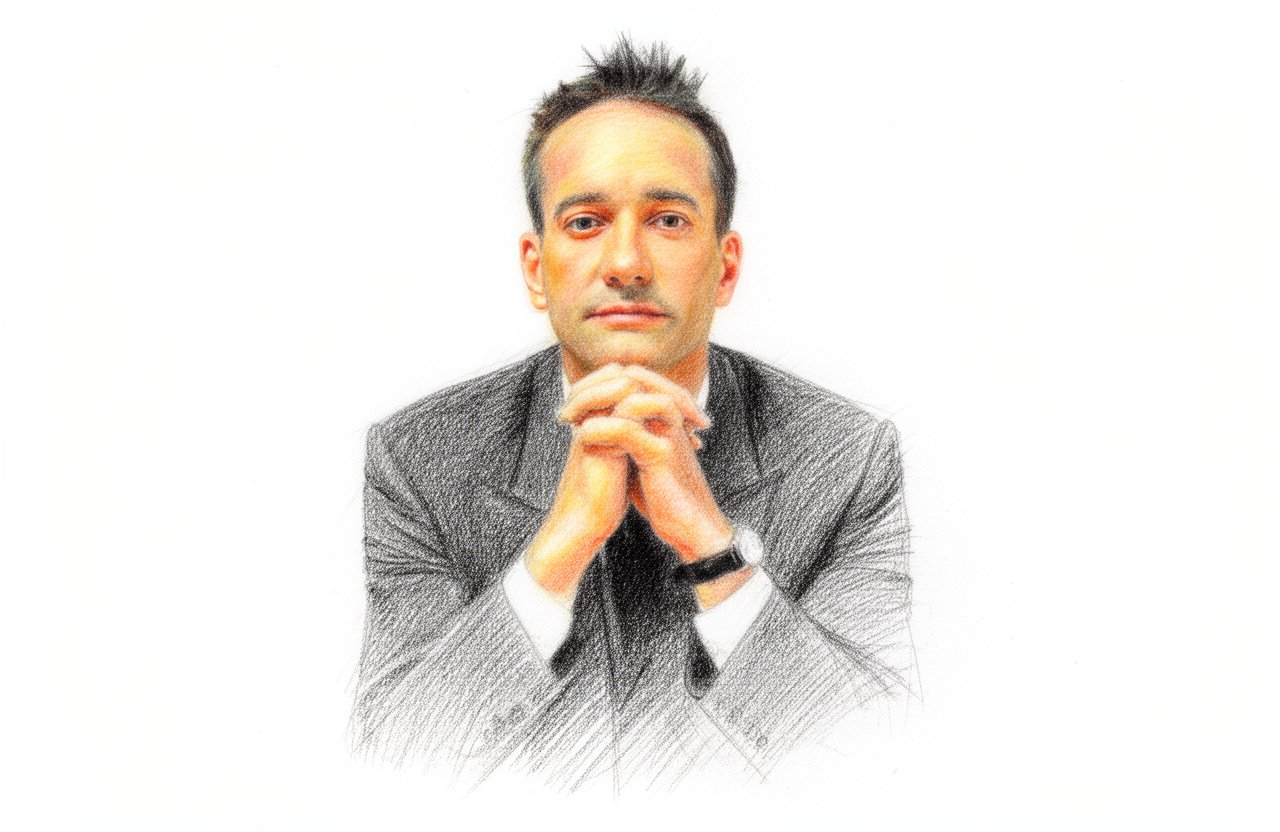
My Critique of Matthew Macfadyen
Matthew Macfadyen excels as the quietly devastating supporting player, providing the still, molten centre to sprawling ensemble dramas. His Tom Wambsgans in Succession was a masterclass in compromised ambition, earning him Emmy and Golden Globe success.
Yet for all that applause, his range as a lead remains less tested. He can feel like a masterful utility player, not the untethered star of a one-man show.
Compared to peers like Andrew Scott or Benedict Cumberbatch, Macfadyen opts for precision and shapeshaking over overt charisma. This makes him a vital, clarifying presence in modern British drama, an actor who reliably elevates the whole.
Early Life
Matthew Macfadyen was born on October 17, 1974, in Great Yarmouth, Norfolk, England. His heritage is a blend of Scottish and Welsh, from his paternal and maternal grandparents respectively.
His father, Martin, was an oil executive, a career that dictated a peripatetic childhood for the family. This led to a youth spent in various locations, including Scotland and Jakarta, Indonesia, before settling back in England.
It was his mother, Meinir, a former actress and drama teacher, who nurtured the artistic spark. Macfadyen developed a passion for performance early on, actively participating in school plays.
He attended Oakham School in Rutland before his commitment to acting solidified, leading him to the prestigious Royal Academy of Dramatic Art (RADA). He graduated in 1995, citing Ingmar Bergman’s ‘Fanny and Alexander’ as a key inspiration during his studies.
Early Career & First Roles
Macfadyen’s professional journey began on television in 1998 with a supporting role as Hareton Earnshaw in a ‘Wuthering Heights’ adaptation. This was swiftly followed by a series of compelling early parts that showcased his range.
He played a UN peacekeeper in the harrowing BBC drama ‘Warriors’ (1999) and the dissolute Sir Felix Carbury in ‘The Way We Live Now’ (2001).
Concurrently, he built a formidable reputation on stage with the acclaimed Cheek by Jowl theatre company, delivering notable performances in Shakespeare and Jacobean drama. His early film work included a turn in ‘Enigma’ (2001) and a powerful lead role in the New Zealand drama ‘In My Father’s Den’ (2004).
These diverse projects established him as a serious and versatile actor from the outset.
Major Roles
Matthew Macfadyen’s career is a masterclass in selective, intelligent role-building. He has consistently chosen complex characters across television and film, avoiding easy categorization and instead building a portfolio of fascinating, often morally intricate individuals.
His work is defined by a quiet intensity and a remarkable ability to find the human core within any character, no matter how flawed or grandiose.
Tom Wambsgans in ‘Succession’ (2018–2023)
For audiences of discerning taste, Macfadyen’s portrayal of Tom Wambsgans in HBO’s ‘Succession’ stands as a towering achievement in contemporary television acting. On the surface, Tom is an outsider, a midwestern striver who marries into the monstrously wealthy Roy family and spends four seasons desperately, and often hilariously, trying to secure his place within their orbit.
Macfadyen, however, elevates Tom far beyond a mere punchline or pathetic figure.
He crafts a breathtakingly nuanced study of ambition, anxiety, and abject vulnerability. Watch the subtle terror in his eyes during the infamous “boar on the floor” scene, or the heartbreaking fragility he reveals when confessing his pre-nuptial doubts to his wife, Shiv.
Macfadyen mines immense comedy from Tom’s social clumsiness and sycophancy, but always lets us see the calculating, and later, shockingly ruthless, mind working beneath the surface.
The performance is a symphony of small choices: the awkward posture, the strained smile, the way he delivers a line like “I wonder if the sad I’d be without you would be less than the sad I get from being with you” with devastating, logical clarity. His chemistry with Nicholas Braun’s Cousin Greg became the show’s unlikely emotional and comedic backbone, a partnership built on mutual exploitation and desperate need.
By the series’ end, Tom’s journey from desperate hanger-on to the ultimate corporate pawn-king is both horrifying and perversely triumphant, a testament to Macfadyen’s ability to make us understand, and even pity, a man making a Faustian bargain in real time.
This masterful work was rightly celebrated with two Primetime Emmy Awards and a Golden Globe for Outstanding Supporting Actor, cementing his status as a performer of extraordinary depth and skill. For mystery and crime aficionados who appreciate psychological complexity, Tom Wambsgans is a character study of the highest order.
Inspector Edmund Reid in ‘Ripper Street’ (2012–2016)
Long before ‘Succession’, Macfadyen anchored the atmospheric Victorian crime drama ‘Ripper Street’ as Detective Inspector Edmund Reid. In the shadow of the Jack the Ripper murders, Reid is tasked with maintaining order in Whitechapel’s volatile H Division.
This role allowed Macfadyen to explore a classic mystery archetype—the dogged, intellectual detective—while imbuing it with a very modern psychological weight.
His Reid is not a flamboyant sleuth but a methodical, deeply moral, and internally tormented man. Macfadyen portrays him with a reserved intensity, his calm demeanor often masking a furnace of guilt and determination.
The character is haunted by personal loss and the failure to catch the Ripper, which Macfadyen conveys through a weary gaze and a tightly controlled physicality. He is a man of principle navigating a corrupt system, and his pursuit of justice is as much about personal atonement as it is about policing.
The show excelled in weaving standalone criminal investigations with serialized character arcs, and Macfadyen was the steady, compelling center throughout. His dynamic with Jerome Flynn’s rugged Sergeant Drake and Adam Rothenberg’s unconventional American surgeon, Homer Jackson, provided a rich core of camaraderie and conflict.
For fans of period crime drama, Macfadyen’s performance offers a compelling, grounded take on the Victorian detective, emphasizing the psychological cost of the job over mere procedural cleverness.
Other Notable Work
Macfadyen’s filmography is rich with standout performances that reward the attentive viewer. His Mr.
Darcy in Joe Wright’s ‘Pride & Prejudice’ (2005) offered a refreshingly vulnerable and socially awkward interpretation that stood apart from more aloof versions. In the superb BBC serial ‘Criminal Justice’ (2008), he delivered a quietly devastating performance as a solicitor crumbling under stress, earning a BAFTA.
He shone as the soulful Arthur Clennam in ‘Little Dorrit’ (2008) and brought tragic depth to Logan Mountstuart in ‘Any Human Heart’ (2010). More recently, he displayed impeccable comic timing as the scheming, pathetic quiz cheat Charles Ingram in ‘Quiz’ (2020) and fully embodied the bizarre political tragedy of ‘Stonehouse’ (2023).
Even in smaller film roles, like Oblonsky in ‘Anna Karenina’ (2012), he steals scenes with effortless charisma.
Acting Style
Matthew Macfadyen possesses an acting style defined by intelligent restraint and profound emotional specificity. He is a master of the micro-expression, conveying chapters of inner life through a slight shift in the eyes, a hesitant pause, or a suppressed smile.
He gravitates towards complexity, excelling at portraying men who are internally conflicted, morally ambiguous, or hiding vulnerability behind a facade of competence or buffoonery.
He has a peerless dry wit, which he deploys not for mere comic relief but as a vital character tool—a defense mechanism, a weapon, or a sign of intelligence. Notably, he often expresses a preference for supporting or ensemble roles, finding them more dynamic and dramatically interesting than straightforward leads.
This choice reflects a confident actor secure in his craft, one who understands that the most fascinating truths about people are often revealed in how they react, adapt, and survive within a larger ecosystem.
Personal Life
Matthew Macfadyen has cultivated a notably private personal life away from the glare of his profession. He has been married to acclaimed actress Keeley Hawes since November 2004.
The couple met while co-starring in ‘Spooks‘ and have two children together, a daughter and a son. Macfadyen is also a stepfather to Hawes’s son from her previous marriage.
The family makes their home in London.
By all accounts, he values this separation between his public and private worlds. He is known to enjoy gardening as a respite, is musically inclined, and maintains a well-documented dry, self-deprecating sense of humor in interviews.
This desire for a normal, grounded life off-screen perhaps informs the authenticity and relatable humanity he brings to even the most extraordinary characters on-screen.
In closing…
Matthew Macfadyen represents the very best of his craft: an actor of immense skill who chooses his roles with discernment and executes them with unwavering intelligence and heart. From the gaslit streets of Whitechapel to the boardrooms of Waystar Royco, he consistently delivers performances that are compelling, nuanced, and deeply human.
For viewers who cherish character depth and psychological realism, his body of work is a rich and rewarding destination.