My Critique of Richard Griffiths
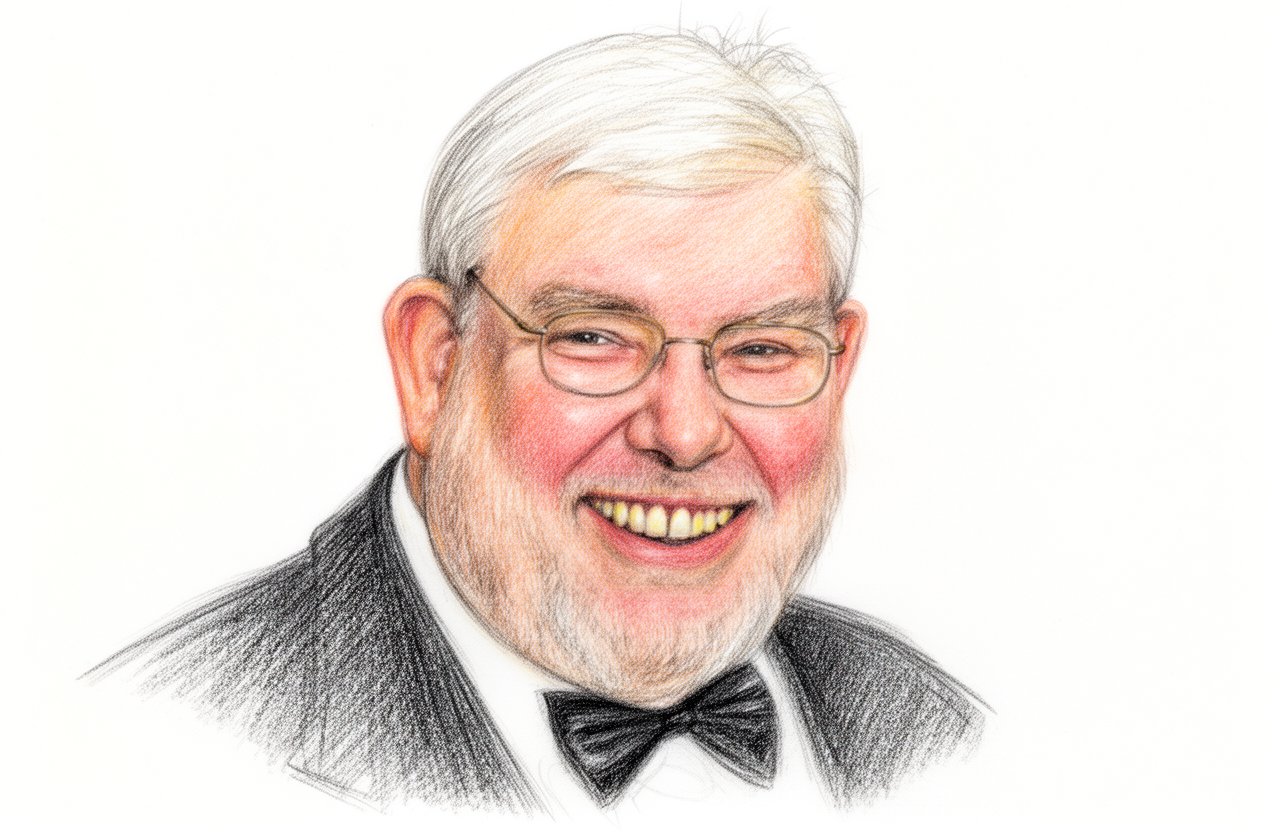
Richard Griffiths was a commanding presence, a master of both classical verse and the quiet pathos of the common man. While effortlessly dominating the stage with the Royal Shakespeare Company, he carved a singular niche on screen as the amiable, food-loving DI Crabbe in *Pie in the Sky*.
This comfort with authority masked a darker physical struggle, his lifelong obesity stemming from childhood radiation therapy. Unlike contemporaries who chased leading-man glamour, Griffiths embodied a relatable, lived-in authenticity.
For modern viewers, his legacy is the definitive British character actor: a figure whose profound warmth and humanity elevated every role.
Early Life
Richard Griffiths was born on July 31, 1947, in Thornaby-on-Tees, North Riding of Yorkshire, England. His childhood was marked by profound challenges and unique circumstances that would later inform his empathetic character.
Both of his parents, Thomas Griffiths, a steelworker, and Jane Denmark, a bagger, were deaf. Griffiths became fluent in British Sign Language to communicate with them, an early immersion in non-verbal expression that perhaps seeded his later physical expressiveness as an actor.
Family tragedy was a quiet, constant presence. He had an elder sister and two brothers who all died in infancy before he was born; only a younger brother survived.
Raised as a Roman Catholic, his early years were further complicated by health struggles. At eight years old, he underwent radiation therapy on his pituitary gland due to being underweight, a treatment that led to lifelong struggles with obesity.
Restless and unhappy, he attempted to run away from home multiple times as a child. His formal education ended at 15 when he dropped out of Our Lady & St Bede School in Stockton-on-Tees, taking a job as a porter for Littlewoods.
His life’s trajectory changed when his boss, recognizing his potential, persuaded him to return to education. This led him to a drama class at Stockton & Billingham College, a fateful first step.
He later honed his craft at the Manchester Polytechnic School of Theatre, now the Manchester School of Theatre.
Early Career & First Roles
Griffiths began his professional acting career in 1974 with a role in an episode of the television series ‘Crown Court’. He quickly diversified, joining the BBC Radio Drama Company, where he gained invaluable experience in vocal performance and storytelling.
Concurrently, he built his stage reputation in small theatres, sometimes acting and sometimes managing, developing a particular flair for Shakespearean clown roles.
His early film work included a debut in ‘It Shouldn’t Happen to a Vet’ (1976). The early 1980s saw him in a string of prestigious, critically acclaimed supporting roles that showcased his versatility to a wider audience.
He appeared in Best Picture winners ‘Chariots of Fire’ (1981) and ‘Gandhi’ (1982), as well as the literary adaptation ‘The French Lieutenant’s Woman’ (1981). These roles established him as a reliable and skilled presence in ensemble casts.
Major Roles
Richard Griffiths’ career was a masterclass in building a formidable body of work across stage, television, and film. While he never sought the traditional leading man path, his ability to command attention and imbue characters with extraordinary depth made him a standout in every project.
For the discerning mystery and character drama aficionado, two roles in particular define his legacy: the gentle, food-loving detective Henry Crabbe and the brilliant, flawed pedagogue Hector.
Detective Inspector Henry Crabbe in ‘Pie in the Sky’ (1994-1997)
For fans of character-driven mystery, Griffiths’ portrayal of Detective Inspector Henry Crabbe in ‘Pie in the Sky’ remains a singular and beloved achievement. The premise was deliciously subversive: a police officer forced into early retirement who finds his true calling not in further law enforcement, but in running his dream restaurant, The Pie in the Sky.
Crabbe is reluctantly drawn back into solving cases, often using his culinary skills and restaurateur’s insight into human nature to crack them.
Griffiths did not merely play Crabbe; he inhabited him with a warmth and authenticity that made the character instantly iconic. This was not a hard-boiled, tormented detective, but a man of immense decency, patience, and wit.
Griffiths’ physicality—his expressive face, his deliberate movements—perfectly conveyed a man who found joy in the tactile pleasures of creating food and frustration in the bureaucratic pettiness of his former job.
The genius of his performance lay in its quiet authority. He solved crimes through observation, empathy, and a deep understanding of people’s motivations, often revealed over a perfectly cooked meal.
Griffiths made Crabbe’s intelligence palpable and his passion for food contagious. The show was a celebration of life’s secondary passions, arguing that a man could be defined as much by his perfect pastry as by his solved case file.
In Griffiths’ hands, Henry Crabbe became one of television’s most humane and relatable detectives, a figure whose appeal lay in his profound normality and unwavering moral compass.
It was a role that showcased Griffiths’ unparalleled ability to generate affection and respect simultaneously. He brought a Shakespearean weight to the everyday, treating the creation of a steak and kidney pie with the same solemnity and craft another actor might bring to a soliloquy.
For four seasons, he offered a masterful lesson in how to lead a series with gentle charisma rather than brute force, making ‘Pie in the Sky’ a cherished, comforting classic in the mystery genre.
Hector in ‘The History Boys’ (2006)
If Henry Crabbe represented Griffiths’ mastery of gentle, televisual realism, his Olivier and Tony Award-winning performance as Hector in Alan Bennett’s ‘The History Boys’ showcased the full, breathtaking depth of his theatrical power. Hector is a profoundly complex creation: a charismatic, eccentric English teacher at a Sheffield grammar school who inspires a love of literature and knowledge in his boys, yet is tragically flawed, his affectionate pats crossing professional boundaries.
Griffiths’ portrayal was a monumental achievement in ambiguity and humanity. He made Hector’s brilliance magnetic, filling the stage with joyous, unpredictable energy as he quoted poetry, led sing-alongs, and imparted Bennett’s sublime dialogue.
The audience, like the boys, was seduced by his intellect and his genuine, if misguided, passion for their souls. Simultaneously, Griffiths never shied from the character’s darkness and sadness, allowing the vulnerability and loneliness beneath the bluster to surface with heartbreaking subtlety.
He navigated this moral tightrope with extraordinary skill, ensuring Hector was never a monster nor a saint, but a desperately human contradiction. His performance was both uproariously funny and deeply tragic, often within the same scene.
It was a role that demanded an actor of immense technical control and profound emotional reserves, and Griffiths delivered what many consider the performance of his career. He didn’t just play Hector; he embodied the very spirit of messy, complicated, and passionate teaching, leaving an indelible mark on everyone who witnessed it.
Other Notable Work
Beyond these pillars, Griffiths’ filmography is a treasure trove of memorable character work. For mystery and comedy fans, his turn as the befuddled nuclear scientist Dr.
Albert S. Meinheimer (aka Earl Hacker) in ‘The Naked Gun 2½: The Smell of Fear’ (1991) is a sublime example of his comic timing.
He brought a wonderful, confused dignity to the slapstick chaos.
He excelled in literary adaptations, bringing Dickensian flair to the unforgiving lawyer Mr. Tulkinghorn in the 2005 BBC version of ‘Bleak House’.
Genre fans cherish his collaborations with Tim Burton, playing the pompous Magistrate Philipse in ‘Sleepy Hollow’ (1999) and the kindly bookseller Monsieur Labisse in Martin Scorsese’s ‘Hugo’ (2011). His voice work also delighted, from the Vogon Jeltz in ‘The Hitchhiker’s Guide to the Galaxy’ (2005) to the iconic Slartibartfast in the radio adaptations of Douglas Adams’ series.
Each role, no matter the size, was treated with the same meticulous care and infused with a unique personality, making him the very definition of an actor’s actor who also commanded great public affection.
Acting Style
Richard Griffiths possessed a commanding yet unassuming acting style built on formidable technique and deep human understanding. His physical presence was substantial, but he used it with remarkable subtlety, often conveying volumes through a raised eyebrow, a sigh, or a deliberate pause.
He was a master of both verbal and non-verbal communication, a skill undoubtedly rooted in his childhood communicating with his deaf parents through sign language.
He had a rare versatility, moving seamlessly from broad comedy to profound tragedy, from Shakespearean verse to modern sitcom dialogue, always with clarity and truth. His performances were characterized by meticulous preparation and a generosity that elevated everyone around him.
He never played down to a role, bringing the same integrity and depth to a Hollywood blockbuster like ‘Pirates of the Caribbean: On Stranger Tides’ as to a National Theatre production. His characters, whether authority figures or eccentrics, were always grounded in recognizable humanity, making them instantly relatable and enduringly memorable.
Personal Life
Off-screen and off-stage, Griffiths was known for the same warmth and intelligence he projected in his roles. He married actress Heather Gibson in 1980, and the couple enjoyed a long, private, and devoted marriage until his death; they had no children.
Colleagues consistently spoke of his kindness, mentorship of younger actors, and a legendary, mischievous sense of humor—he was a renowned prankster on set.
A passionate and erudite reader, he was often quoted reciting Shakespeare or other classics, a love that clearly informed his work. He maintained a strong connection to his roots, never forgetting his working-class background in Yorkshire.
Despite his international success, he remained notably down-to-earth, valuing craft and camaraderie over celebrity. His personal life reflected the decency of many of his characters, marked by loyalty, intellectual curiosity, and a great, rumbling laugh that was as memorable as any of his performances.
In closing…
Richard Griffiths was not just an actor; he was a beloved institution. His passing in 2013 left a void filled with fond memories of his profound talent and his immense personal kindness.
He represents the pinnacle of British character acting—a performer of immense skill who could steal a scene without ever seeming to try, who brought weight to comedy and lightness to drama. For lovers of mystery, character, and sheer quality, his work, especially as the incomparable Henry Crabbe, remains a benchmark of intelligent, humane, and masterfully crafted television.
He is deeply missed, but through his rich and varied body of work, his singular presence endures.