My Critique of Sarah Lancashire
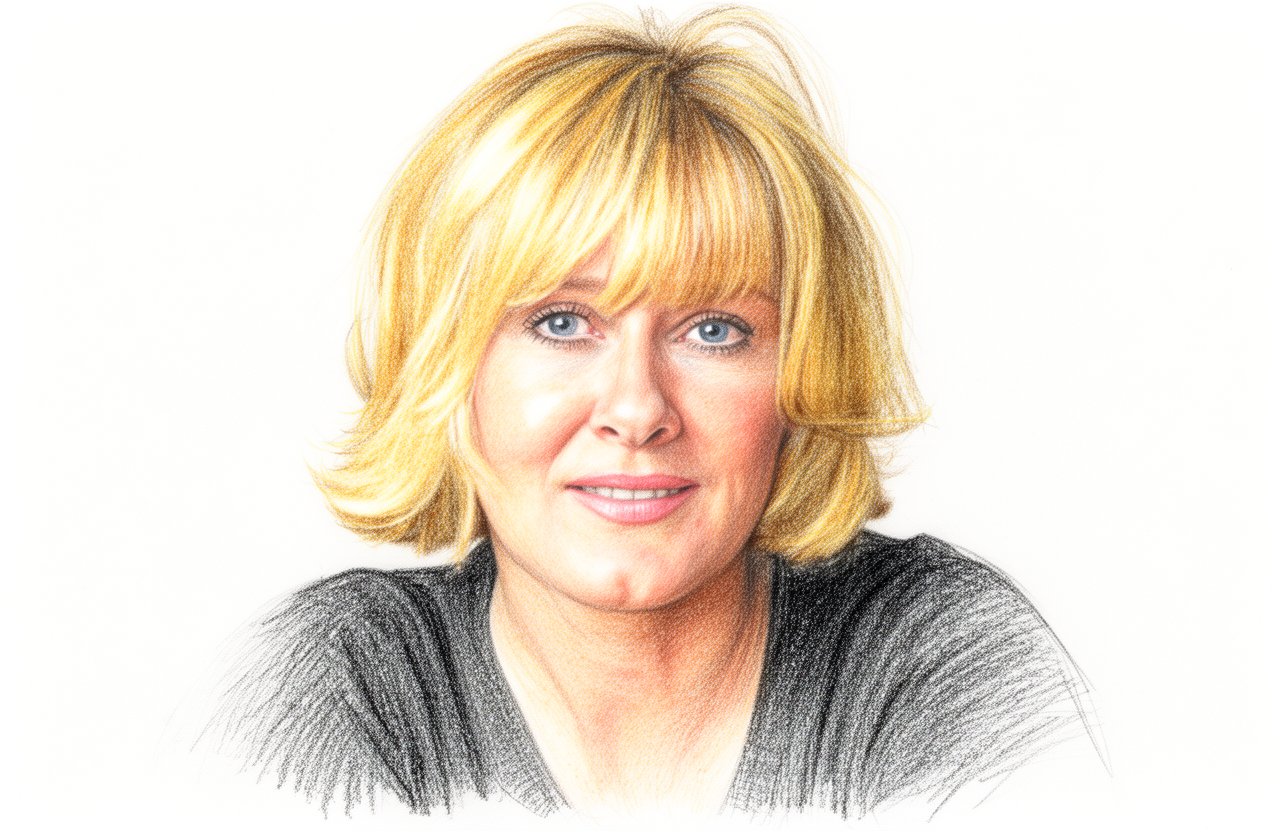
Sarah Lancashire’s defining strength is an emotional unvarnishedness that elevates material from conventional drama to forensic character study. Her work in *Happy Valley* is not merely a performance but a sustained exposure of grief etched into a community’s bones.
In *Last Tango in Halifax*, she achieves something rarer still: quiet joy that never forgets its cost. Lancashire possesses a technical control of restraint that many contemporaries mistake for stillness; hers is a purposeful calibration of pressure and release.
A counterpoint is a slight sense of typecasting in resilient, working-class matriarchs, which can blunt her chameleonic range if not actively resisted. Compared to peers such as Olivia Colman or Keeley Hawkes, Lancashire trades on intimate austerity over aristocratic polish or glamour, inhabiting the unadorned centre of British life rather than its glossy peripheries.
For modern viewers, she matters because she anchors the genre in lived, unshowy humanism, refusing to glamorise pain while insisting on the dignity of endurance, a quiet radical in an age of performative heroics.
Early Life
Sarah Lancashire was born on October 10, 1964, in Urmston, Lancashire, England. Her early environment was steeped in the world of performance, being the daughter of Geoffrey Lancashire, a notable television writer for programmes like “Coronation Street.” This familial connection to storytelling provided an early, if indirect, education in character and narrative.
She pursued formal training at the Guildhall School of Music and Drama, graduating in 1986. The transition from student to professional, however, was not without its tremors.
Her initial forays onto the stage with the Manchester Library Theatre Company, in productions like ‘Pacific Overtures’ and ‘The Beauty Game,’ were daunting.
She found the immediacy of live theatre “terrifying,” a crucible where the risk of failure felt intensely personal. Yet, it was here she honed her craft, earning a nomination for Best Supporting Actress at the Manchester Evening News Theatre Awards.
These early years, punctuated by uncertain breaks between roles, forged a resilient and thoughtful performer.
Early Career & First Roles
Following her theatre debut, Lancashire’s career began to gain traction. A significant early success was playing the title role in an adaptation of ‘Educating Rita’ in 1991.
This demonstrated her capacity for carrying a narrative, a skill that would soon be broadcast to millions.
That same year, she joined the iconic serial “Coronation Street” as the kind-hearted, somewhat naive barmaid Raquel Wolstenhulme. Initially reserved about the part, Lancashire aimed to highlight the character’s latent potential, a mission she accomplished with great warmth.
This role made her a household name and established her formidable screen presence.
Major Roles
Sarah Lancashire’s career is a masterclass in evolution, moving seamlessly from soap opera darling to one of British television’s most formidable and respected dramatic actresses. Her choices reflect a sharp intelligence and a profound empathy for complex, often wounded, women.
Sergeant Catherine Cawood, Happy Valley (2014–2023)
In the landscape of British crime drama, Catherine Cawood stands as a monumental creation, and Lancashire’s portrayal is nothing short of legendary. This role transformed Lancashire from a highly respected actress into an era-defining icon.
Catherine, a West Yorkshire police sergeant hardened by personal tragedy—the suicide of her daughter following a rape—is a figure of breathtaking complexity.
Lancashire imbued her with a raw, unsentimental humanity. Her performance was a physical and emotional tour de force, from the weary slope of her shoulders under a fluorescent police vest to the volcanic eruptions of maternal fury and profound grief.
Catherine was never simply “tough”; she was vulnerable, sarcastic, morally unwavering, and deeply damaged.
Lancashire mastered the show’s unique, naturalistic dialogue, delivering lines with a world-weary cadence that felt utterly authentic. Her chemistry with co-stars, particularly James Norton as her nemesis Tommy Lee Royce, generated an almost unbearable dramatic tension.
The series finale, a devastating and cathartic confrontation, was anchored entirely by Lancashire’s flawless, wordless communication of a lifetime of pain and hard-won resolution.
This performance did not just win awards; it redefined the potential of the television police protagonist. Catherine Cawood is a seminal character in the crime genre, and Lancashire’s embodiment of her is a masterpiece of acting that will be studied and admired for generations.
Caroline Dawson, Last Tango in Halifax (2012–2020)
If “Happy Valley” showcased Lancashire’s power, “Last Tango in Halifax” revealed her exquisite subtlety and comedic timing. As Caroline Dawson, a headteacher navigating a late-life lesbian relationship alongside a complicated family dynamic, Lancashire delivered a performance of remarkable nuance and warmth.
Caroline is successful, witty, and outwardly composed, but Lancashire beautifully charted her internal landscape of loneliness, self-doubt, and yearning for connection. Her chemistry with Nicola Walker’s Gillian was the emotional core of the series, portraying a mature, sometimes fraught, deeply loving relationship with unparalleled authenticity.
The role allowed Lancashire to balance light comedy—often derived from Caroline’s prickly interactions with her family—with moments of profound emotional heft. She made Caroline’s journey from a place of guarded isolation to one of open-hearted commitment feel both earned and deeply moving.
This performance earned her widespread critical acclaim and a British Academy Television Award, cementing her status as a leading dramatic actress of her generation.
Other Notable Work
Lancashire’s versatility is staggering. She delivered a harrowing, BAFTA-winning performance as Angela Mawson in the 2005 drama “Cherished,” about a woman wrongly accused of killing her child.
In the atmospheric department store drama “The Paradise” (2012-2013), she was a delight as the prim yet kind-hearted Miss Audrey.
She ventured into psychological thriller with 2018’s “Kiri,” playing a conflicted social worker, and crossed the Atlantic to embody an iconic figure with joyful authority in the HBO Max series “Julia” (2022-2023). Even a guest appearance in “Doctor Who” (2008) as the sinister Miss Foster remains a memorable highlight, proving her command across any genre.
Acting Style
Sarah Lancashire’s acting is distinguished by its profound emotional truth and lack of theatrical vanity. She possesses a rare ability to make the internal external, conveying a character’s entire history through a glance, a sigh, or the set of her jaw.
Her style is deeply naturalistic, avoiding melodrama in favour of authentic, often understated, human response.
She excels at portraying intelligent, resilient women bearing the weight of their experiences, finding both the strength and the fragility within them. There is a compelling stillness to her work; she listens intently, making her reactions as telling as her actions.
Furthermore, she navigates the tonal shifts between drama and comedy with seamless skill, understanding that life contains both. Her performances are not demonstrations of technique, but immersive inhabitations.
Personal Life
Lancashire has been married twice: first to music lecturer Gary Hargreaves, with whom she has two sons, and later to television executive Peter Salmon, with whom she has another son. She is also a stepmother to Salmon’s three children from a previous marriage.
She has been candid about her experiences with clinical depression, a honesty that undoubtedly informs the depth and empathy she brings to her roles.
Preferring to keep her family life private, she took an 18-month break at the height of her career following the birth of her third son, a testament to her priorities. This balance between a demanding public career and a guarded private life has allowed her artistry to flourish without being defined by celebrity.
In closing…
Sarah Lancashire’s journey from the Rover’s Return to the pinnacle of British television is a narrative of exceptional talent meeting discerning choice. She is an actress of peerless integrity and power, whose contributions—particularly through the iconic Catherine Cawood—have indelibly shaped the landscape of television drama.
For connoisseurs of mystery and character, her body of work stands as a compelling, masterful, and essential testament to the art of performance.