My Critique of Dempsey And Makepeace
Dempsey and Makepeace fused transatlantic buddy-cop energy with 1980s ITV production values, delivering slick location work and charismatic sparring that felt fresher than the procedural pack. The series balanced procedural mechanics with romantic tension, yet often defaulted to machismo and formula; its questionable depiction of women occasionally tips into titillation, undermining its otherwise polished craft.
In an era of The Sweeney and Minder, its globe-trotting glamour and Americanized swagger looked comparatively glossy, even if plotting could lag behind the character heat. Today it stands as an intriguing cultural artifact—watchable, energetic, but better appreciated as a period oddity than a template worth revisiting.
Principal Characters & Performances
Lieutenant James Dempsey
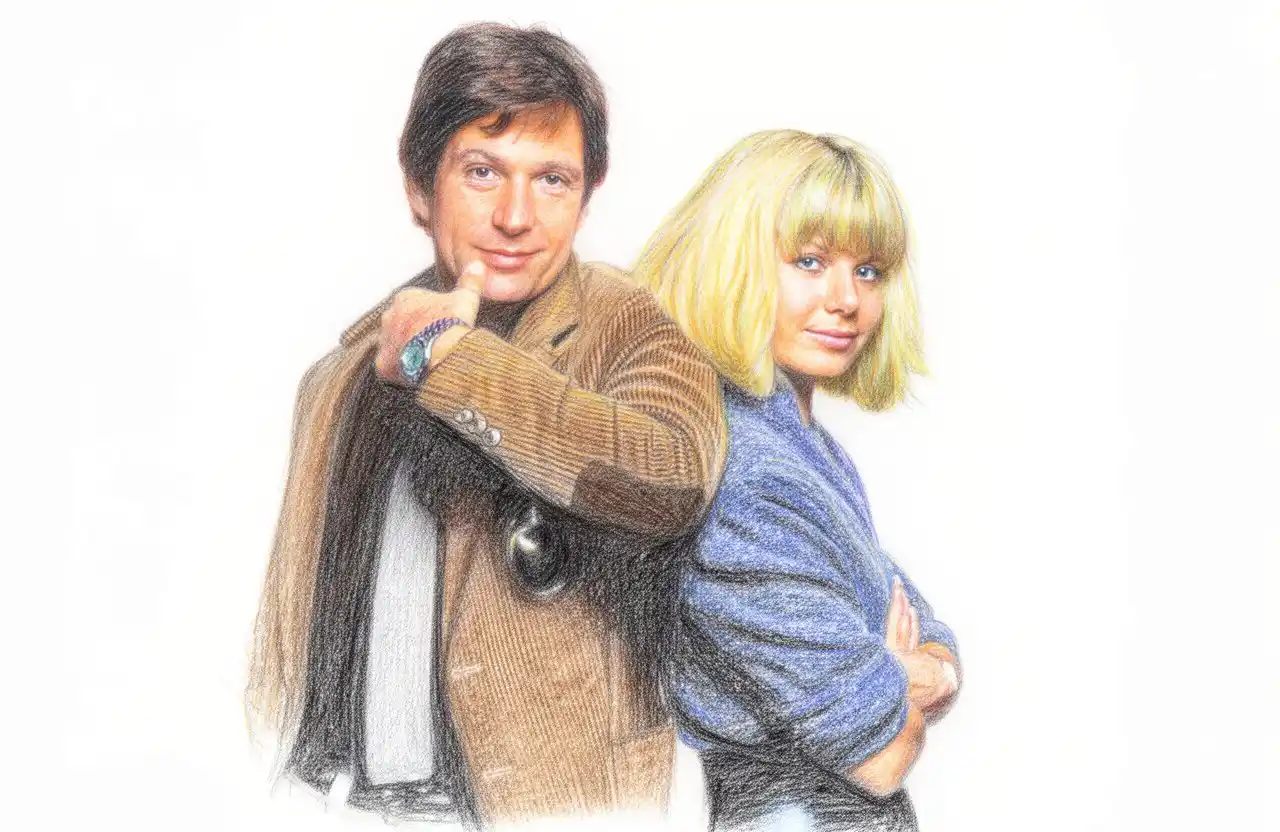
Michael Brandon brought a distinctly American energy to British screens as Lieutenant James Dempsey. The character is a New York police officer, a Vietnam veteran whose streetwise tactics and brash confidence are born from experience.
Transferred to London after exposing corruption linked to a powerful mobster, Dempsey is a fish out of water. His assignment to the Metropolitan Police’s SI 10 unit is as much about protection as it is about duty.
Brandon’s performance sells the core contrast. Dempsey relies on instinct and action, often clashing with British procedure.
Yet beneath the tough exterior, the writing and performance reveal a principled officer fiercely loyal to his new partner.
His chemistry with Glynis Barber is the engine of the series. The romantic tension is palpable, built on a foundation of professional respect that slowly deepens.
Brandon makes Dempsey more than a stereotype; he is the relatable, human centre of the action.
Detective Sergeant Lady Harriet “Harry” Makepeace
Glynis Barber’s Harriet Makepeace provided the perfect counterpoint to Dempsey’s Americanism. As Detective Sergeant Lady Harriet Makepeace, she is aristocracy in a police uniform, a Cambridge-educated officer with a keen intellect.
Her background as the daughter of Lord Winfield adds layers of conflict. She must constantly navigate between the expectations of her class and the demands of her job in SI 10.
Barber portrays Makepeace as utterly capable and by-the-book, yet never cold. Her initial frustration with Dempsey’s methods gives way to a recognition of their effectiveness, and her own courage in the field is never in doubt.
The role allowed Barber to showcase a blend of sophistication, physicality, and dry wit. Her evolving relationship with Dempsey, from sparring partners to trusted allies and potential lovers, is the series’ emotional core, made believable by her nuanced performance.
Notable Support and Guest Stars
The core SI 10 unit was anchored by two key performances. Ray Smith played Chief Superintendent Gordon Spikings, the commanding officer.
Smith brought a weary, pragmatic authority to the role, often serving as the exasperated buffer between his unorthodox American import and the police bureaucracy.
Tony Osoba provided vital support as Detective Sergeant Charles “Chas” Jarvis. As the unit’s researcher and tech expert, Osoba’s Jarvis was the reliable backbone of the team, offering crucial information with a steady, calm presence.
Colin McFarlane and Jonathan Docker-Drysdale appeared as Detective Sergeants Watson and Ward, rounding out the team. Guest roles were often filled by notable British actors of the period.
Ralph Michael appeared as Lord Winfield, Harriet’s father, bringing a dignified, traditional presence that highlighted the world Makepeace came from. These supporting roles grounded the series, creating a believable workplace around the two charismatic leads.
Key Episodes & Defining Stories
Armed and Extremely Dangerous
This pilot feature-length episode is where it all begins. It efficiently establishes the entire premise: Dempsey’s forced transfer from New York, his introduction to the Metropolitan Police and SI 10, and his explosive first meeting with Harriet Makepeace.
The case involves a violent arms-smuggling ring, allowing for the kind of stunt work and location filming that set the series’ action standard. The culture clash is immediate and electric, as Dempsey’s direct methods collide with Makepeace’s protocol.
Fans remember it for laying the foundational chemistry. It introduces not just the leads, but Chief Superintendent Spikings and Sergeant Chas Jarvis, completing the team dynamic.
The episode matters because it successfully sold the high-concept buddy cop format to a massive UK audience, securing the show’s future.
Cry God for Harry
This episode is a masterclass in blending genres. When priceless jade is stolen from Winfield Hall, the Makepeace family estate, the investigation becomes a classic country-house whodunnit.
Filmed at the stunning Chilham Castle in Kent, it visually immerses Dempsey in Harriet’s world of aristocratic privilege.
The episode deepens Makepeace’s character significantly, forcing her to balance professional duty with family loyalty under her father’s watchful eye. Dempsey, meanwhile, navigates pheasant shoots and suspicious servants, providing both humour and an outsider’s perspective.
It is remembered for its sophisticated shift in tone. By adopting Agatha Christie-style conventions, it demonstrated the series’ versatility beyond urban crime.
The Shakespearean title underscores its literary aspirations, making it a standout for its character development and atmospheric setting.
The Burning (Parts 1 & 2)
This two-part story that opened the final series is the show’s dramatic peak. Confronting Dempsey’s past, it sees him fake his death and go deep undercover as gangster Johnny Lupino to infiltrate a transatlantic crime network.
Makepeace acts as his control, creating intense dramatic irony as she watches him risk his sanity. The storyline introduces the formidable villain Mara Giardino and brings the threat from corrupt New York commissioner Coltrane to a head.
Fans regard it as the creative high point for its serialised narrative, moral ambiguity, and raised emotional stakes. It provides definitive closure to Dempsey’s central conflict.
These episodes matter because they represent the series pushing its own boundaries, delivering a tense, cinematic conclusion to the overarching plot.
The World of Dempsey and Makepeace
The series is firmly rooted in a stylised version of mid-1980s London. The fictional SI 10 unit operated from a real location on Penarth Street in South Bermondsey, giving the headquarters an authentic, gritty base.
Extensive location filming across the capital captured the era’s atmosphere.
This London is a playground for both high society and organised crime, a dichotomy mirrored in the leads’ backgrounds. Makepeace’s upmarket home on Camberwell Grove contrasted with the docklands and backstreets where much of the action unfolded.
The show also bridged the Atlantic. Dempsey’s backstory and several plotlines connected this London to New York, broadening the scope.
Iconic landmarks like the Cutty Sark featured, embedding the fictional adventures in a recognisable real world. This grounded setting made the action and romance feel more immediate.
Origin Story
Dempsey and Makepeace was a British television crime drama created by Scottish writer Ranald Graham. It was produced by London Weekend Television for the ITV network, with Tony Wharmby as producer and Nick Elliott as an executive producer.
The production company Golden Eagle Films was also involved in its creation. The series was first broadcast in January 1985.
It was conceived as a prime-time drama capitalising on the buddy-cop formula, pairing an American detective with a British aristocratic officer.
With music composed by Alan Parker, the show was designed from the outset to blend action, crime-solving, and character-driven tension. Its successful pilot led to a full series order, capturing the spirit of mid-80s television entertainment.
Narrative Style & Tone
The series operates as a crime drama with a strong emphasis on action and partnership dynamics. The core narrative engine is the “opposites attract” tension between Dempsey’s instinctive, street-smart approach and Makepeace’s intellectual, procedural style.
This clash generates both conflict and humour, with sharp verbal sparring balancing the violent set pieces. The tone is primarily energetic and entertaining, driven by a will-they-won’t-they romantic subplot that simmers beneath the professional collaboration.
Episodes mix investigative procedure with undercover work and explosive confrontations. The style is polished for its time, using cinematic shots and Alan Parker’s memorable score, including the title theme “Makepeace Not War,” to create a distinctive, pacey 1980s feel.
How is Dempsey and Makepeace remembered?
The show is fondly recalled as a classic of 1980s British television. It achieved significant popularity during its original ITV run, with ratings reportedly reaching up to 20 million viewers at its peak.
The chemistry between Michael Brandon and Glynis Barber was a major draw, a fact amplified by their eventual real-life marriage in 1989.
While not a major award-winner, it secured a lasting place in popular culture. Its international syndication, particularly its popularity in Eastern European countries, speaks to its broad appeal.
The series has enjoyed a nostalgic afterlife through rebroadcasts on channels like ITV3 and ITV4.
It is remembered for its successful fusion of American action sensibilities with British detective drama, all wrapped in the distinctive style of the decade. For fans, it represents a specific, entertaining era of television, defined by a charismatic partnership and uncomplicated, energetic storytelling.
In Closing
Dempsey and Makepeace endures as a quintessential piece of 1980s ITV drama. Its legacy is built on the potent combination of transatlantic chemistry, solid action, and the timeless appeal of a partnership that was always greater than the sum of its parts.