
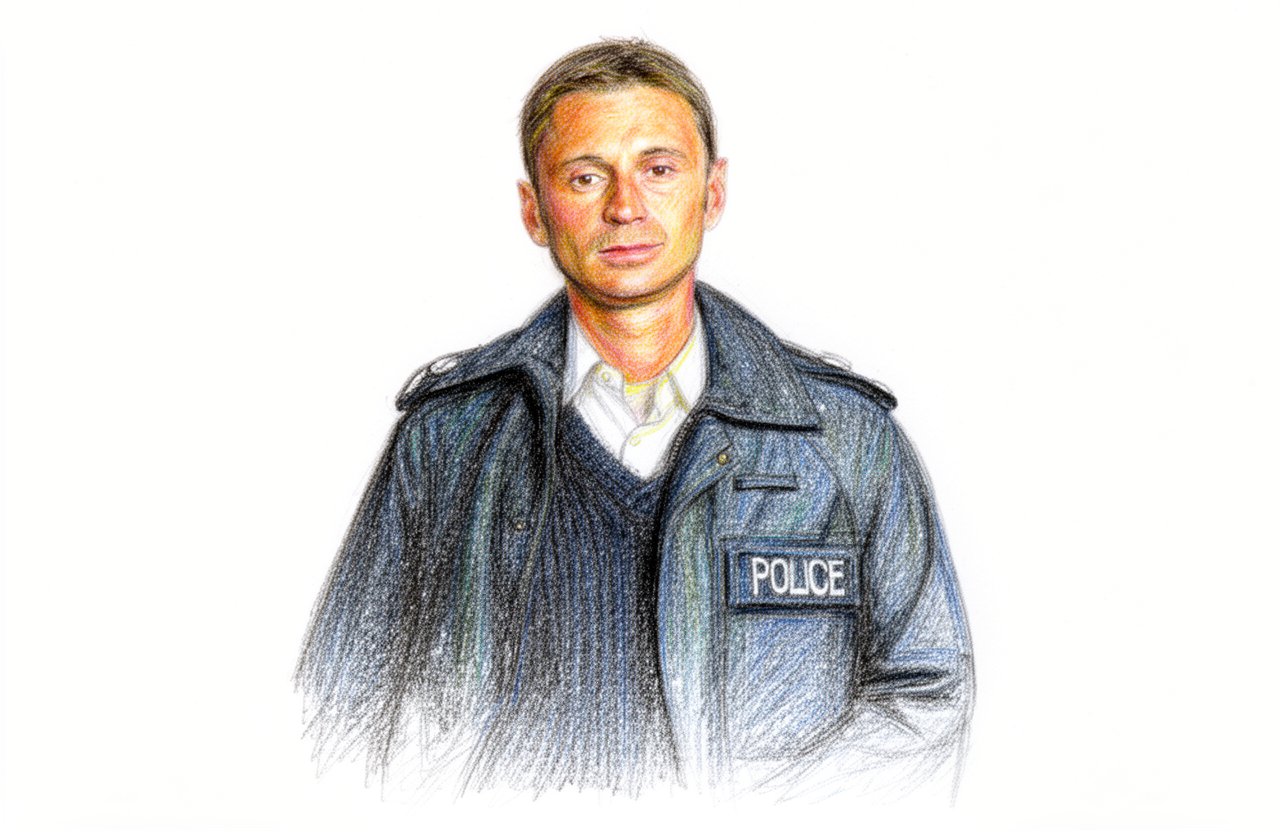
My Critique of Hamish Macbeth
Hamish Macbeth’s defining strength lies in Robert Carlyle’s effortlessly soulful portrayal of a copper as wry folk healer rather than bureaucratic enforcer. Its Highland milieu, rendered with atmospheric authenticity, elevates the drama above contemporaries like Midsomer Murders by fusing cosiness with a capricious, unforgiving nature and psychic disquiet.
Yet the show’s charm courts limitation; the quirkiness can curdle into whimsy, and its earlier hours sometimes swaddle difficult themes in affable buffering. Crucially, the later run leans into darker currents—bereavement, mental fragility, institutional erosion—signalling a tonal maturation that distinguishes it from standard cosy crime.
For modern viewers it matters as a model of humane local policing and community stewardship, simultaneously nostalgic and quietly cautionary. Its episodes model emotional intelligence, asking audiences to accept moral ambiguity over procedural tidiness.
Viewed today, it stands as a cunningly idiosyncratic bridge between folkloric charm and a more austere, psychologically textured British crime drama.
Principal Characters & Performances
Hamish Macbeth
Robert Carlyle’s portrayal of Police Constable Hamish Macbeth is the quiet, beating heart of the series. He is not a hard-boiled detective but a pragmatic, community-minded policeman who understands that justice in a remote Highland village often requires wisdom over warrants.
Carlyle embodies a man deeply attached to his home, Lochdubh, and fiercely protective of its residents. His performance masterfully balances a laid-back, almost lazy exterior with a sharp intelligence and profound moral core.
This complexity is most evident in episodes dealing with personal loss, where Carlyle conveys deep wells of grief and guilt with remarkable restraint. Hamish’s conflicts are internal as much as external, torn between his love for the village and the pressures of a modernising police force.
Carlyle makes Hamish’s ultimate choice—to remain the unconventional local bobby—feel not like a lack of ambition, but a hard-won affirmation of his identity and values.
John James “TV John” McIver
As Hamish’s civilian assistant and closest confidant, Ralph Riach’s TV John is far more than comic relief. He is the series’ anchor of local folklore and slight magical realism, claiming clairvoyant visions that often, unsettlingly, prove correct.
Riach plays him with a wonderful, rumpled sincerity, making his eccentricities feel entirely authentic. TV John’s loyalty to Hamish is absolute, and he often serves as the constable’s moral compass and early warning system for village unrest.
Their relationship, built on mutual respect and understated friendship, is a cornerstone of the show. TV John represents the old, intuitive ways of the Highlands, perfectly complementing Hamish’s more grounded, though still unorthodox, approach to policing and life.
Notable Support and Guest Stars
The ensemble cast creates Lochdubh’s vibrant, believable community. Shirley Henderson brings a determined spark and vulnerability to Isobel Sutherland, the local reporter whose will-they-won’t-they romance with Hamish provides a key emotional thread.
Valerie Gogan, as the aristocratic novelist Alex Maclean, offers a contrasting love interest, her sophistication clashing with and ultimately being softened by Highland life. Barbara Rafferty and Stuart McGugan are perfectly paired as pub landlords Agnes and Barney Meldrum, the village’s gossip hub and entrepreneurial spirit.
Brian Pettifer and Anne Lacey find gentle humour in the romance between grocer Rory Campbell and schoolteacher Esme Murray. Stuart Davids, as the scheming Lachie MacCrae, embodies the petty, profit-driven mischief that often crosses Hamish’s path.
Together, they form a tapestry of personalities that makes the fictional Lochdubh feel like a place you could visit, full of familiar faces and quirks.
Key Episodes & Defining Stories
Wee Jock’s Lament
This early episode is a tonal masterclass, demonstrating the series’ capacity to pivot from gentle comedy to raw, emotional drama. The plot is triggered by the death of Hamish’s dog, Wee Jock, at the hands of escaped convicts.
What follows is not a standard police pursuit but a study in grief and rage, as the usually placid constable abandons his post for a personal vendetta. Robert Carlyle’s performance here is devastating in its quiet intensity.
The episode matters because it redefines Hamish for the audience and himself. It reveals the depth of his attachments and the potential for darkness beneath his easygoing manner.
Fans remember it as the moment the show proved it was more than a cosy mystery, willing to explore the real psychological cost of its hero’s isolated role and the profound loyalty his community holds for him in return.
No Man Is an Island
Following the death of Alex Maclean, this episode is arguably the series’ boldest narrative departure. It largely abandons a crime plot to focus on Hamish, consumed by guilt, retreating to a remote island in a state of deep depression, contemplating suicide.
Directed by Nicholas Renton, the episode is a stark, intimate character study. The drama shifts to the villagers, led by TV John and Isobel, as they realise the extent of his despair and mount a rescue mission.
It matters profoundly for the series arc, showcasing the immense personal sacrifice Hamish makes for his job and his people. It underscores that his strength is not infinite.
Fans remember it for its brave handling of mental health and existential crisis within a primetime drama slot, and for Carlyle’s hauntingly restrained performance, which cemented Hamish Macbeth as a uniquely thoughtful and psychologically complex crime series.
Destiny (Part 2)
As the series finale, this episode, directed by Nicholas Renton and written by Daniel Boyle, provides a fittingly bittersweet conclusion. It resolves the professional pressures on Hamish from the Northern Constabulary and the unresolved threads of his romantic life with Isobel.
The central investigation forces Hamish to a final choice between career advancement and his beloved Lochdubh. The resolution avoids neat, sentimental endings, instead honouring the character’s established nature.
It matters because it delivers definitive closure while staying true to the show’s wry, melancholic heart. Hamish’s decision reaffirms the series’ core theme: that true belonging and purpose are found in community, not institutional validation.
Fans remember it as a satisfying and emotionally honest end to the story, one that solidifies the show’s legacy as a character-driven drama first and a police procedural second, leaving Hamish exactly where he belongs.
The World of Hamish Macbeth
The fictional village of Lochdubh is as much a character as any resident. Brought to life by the real Highland village of Plockton in Wester Ross, its identity is defined by stunning coastal scenery, variable weather, and palpable isolation.
This is a community connected by single-track roads, an unstaffed railway station, and the rhythms of fishing and seasonal tourism. The local pub, grocery shop, school, and church form the social pillars.
The setting is not just a backdrop but a driving force in every story. The remote location dictates Hamish’s policing style, where common sense and local knowledge trump procedure.
The beauty of the lochs and mountains contrasts with the close-knit, sometimes claustrophobic nature of village life, where everyone knows everyone else’s business. This environment creates a unique pressure cooker for crime and drama, filtered through a distinctly Highland lens of tradition and resilience.
Origin Story
Hamish Macbeth began as a BBC Scotland production, adapted from M.C. Beaton’s crime novels by primary writer and creator Daniel Boyle.
The independent company Zenith Entertainment produced it for BBC1. While inspired by the books, the television series, under Boyle’s guidance and with directors like Nicholas Renton, established its own distinct identity—leaning more heavily into character comedy and community drama.
Principal filming took place in Plockton, which perfectly embodied the fictional Lochdubh, with additional work in Kyle of Lochalsh and the surrounding west Highlands. This commitment to authentic location shooting, paired with John Lunn’s Scottish-influenced score, grounded the series in a real sense of place from its first broadcast in March 1995.
Narrative Style & Tone
The series expertly blends genres, mixing police procedural elements with comedy-drama and a dash of magical realism. The tone is primarily lighthearted and quirky, deriving humour from village eccentricities and Hamish’s subversion of police formalities.
However, it consistently balances this with darker, more serious narrative undercurrents. Crimes are often rooted in human failings like greed, jealousy, or grief, which Hamish solves through empathy and local insight rather than forensics.
The storytelling is character-driven, with long-running personal relationships and community dynamics taking precedence over complex plotting. This approach, using single-camera location shooting for a cinematic feel, creates a unique hybrid: a cozy mystery with genuine emotional stakes and a wry, melancholic edge.
How is Hamish Macbeth remembered?
Hamish Macbeth is remembered as a cult classic of 1990s British television, a show that carved out a unique niche. It developed a loyal fan base that has persisted through repeats, DVD releases, and streaming availability.
While author M.C. Beaton expressed dissatisfaction with the adaptation’s divergence from her novels, the television version is celebrated for its own merits.
Retrospective appreciation consistently highlights Robert Carlyle’s nuanced lead performance and the strong ensemble cast. The show is praised for its authentic Highland atmosphere and its successful fusion of gentle humour with moments of genuine pathos.
It is cited as a precursor to later regionally-set character-driven detective series, remembered not for explosive action, but for its quiet intelligence, warmth, and portrait of a community bound together by landscape and loyalty.
In Closing
Hamish Macbeth endures because it is a show about place and people first, crime second. Its legacy is the fully realized world of Lochdubh and the unorthodox, deeply human constable who chose to call it home.