
My Critique of Heartbeat
Heartbeat’s defining strength was its gentle fusion of police work and medicine within a rose-tinted 1960s Yorkshire, a formula that soothed millions. Yet this nostalgic warmth was also its constraint, sanding down rough edges that contemporaries like The Bill embraced.
The early premise held a certain grit, addressing youth crime and road safety with commendable directness. Later, however, the series often settled into a cosier, three-strand comfort zone that prized predictability over peril.
It mattered for establishing a viable Sunday-evening template built on charm rather than shock. For the modern viewer, it remains a historical curio, more a warm tonic than a challenging drama.
Principal Characters & Performances
Police Constable Nick Rowan
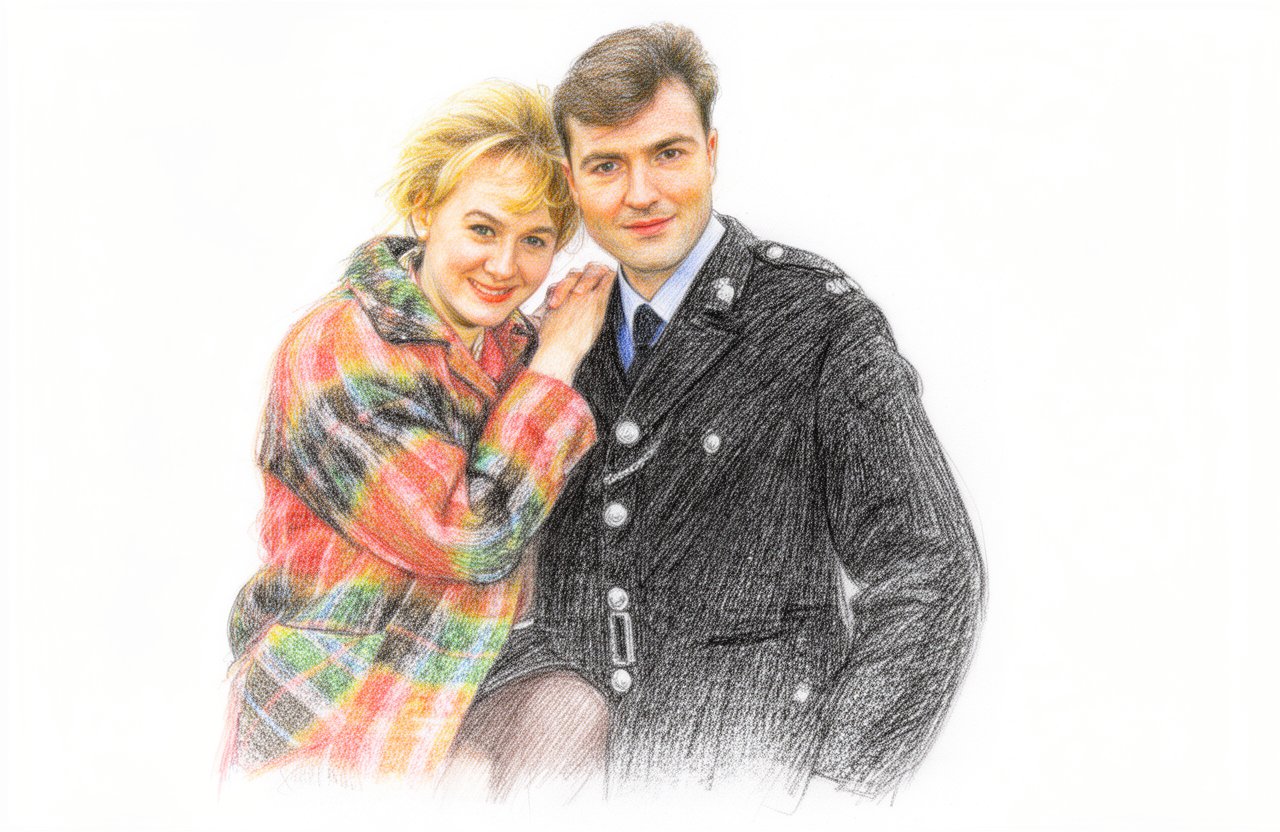
Nick Berry’s portrayal of PC Nick Rowan established the emotional and professional centre of Heartbeat for its foundational years. A former Metropolitan Police officer who relocates from London to Aidensfield with his wife, Dr Kate Rowan, Berry’s character embodied the core tension between modern methods and rural tradition.
Rowan’s journey was one of integration, as he learned to navigate the tight-knit, often suspicious community under the watchful eye of Sergeant Blaketon. Berry brought a grounded, earnest quality to the role, balancing his duty as a village bobby with the personal dramas of his family life.
His performance set the template for the show’s lead constable—a compassionate, pragmatic figure who served as the audience’s entry point into the world of 1960s Yorkshire policing. The character’s departure marked a significant shift for the series, proving its ensemble strength could survive the exit of its initial star.
Sergeant Oscar Blaketon
Derek Fowlds’ Oscar Blaketon is one of British television’s great curmudgeons with a heart of gold. As the stern, by-the-book sergeant of Ashfordly police station, Blaketon was initially a formidable obstacle for Nick Rowan, representing the rigid old guard of rural policing.
Fowlds’ genius was in gradually revealing the character’s hidden depths and softening edges over eighteen series. Following his retirement from the force, Blaketon’s reinvention as the landlord of the Aidensfield Arms provided rich new comic and dramatic territory.
His enduring presence, from first episode to last, made him the show’s bedrock. Fowlds delivered a masterclass in long-form character development, turning Blaketon from a figure of authority into a beloved community pillar, all while maintaining that signature gruff exterior.
Notable Support and Guest Stars
The show’s longevity was built on a deep bench of reliable supporting players. William Simons, as the world-weary, tea-loving PC Alf Ventress, provided a constant link to the show’s history, appearing in every series.
His dry wit and paternal relationship with younger officers grounded the police station scenes.
Bill Maynard’s Claude Jeremiah Greengrass defined the show’s comic spirit for many seasons. As the perpetually scheming yet ultimately harmless rogue, Greengrass and his dog Alfred were a vehicle for countless light-hearted subplots, embodying a very English tradition of lovable scoundrels.
Later leads like Jason Durr, who brought a youthful energy as PC Mike Bradley, and Tricia Penrose, whose long run as singer-barmaid Gina Ward added musical charm, ensured fresh dynamics. Guest stars often included esteemed British actors like Frederick Treves, who brought gravitas to standalone stories, enriching the tapestry of village life with each visit.
Key Episodes & Defining Stories
Changing Places
The series premiere, “Changing Places,” is essential viewing as the blueprint for everything that followed. It efficiently establishes the central premise: city policeman Nick Rowan and his doctor wife Kate’s jarring transition to rural Aidensfield.
The episode introduces the key dynamics—Rowan’s friction with Sergeant Blaketon, his first encounters with the wily Claude Greengrass, and Kate’s struggle against professional prejudice.
It matters because it sets the show’s core tension between modernity and tradition. Fans remember it for establishing the show’s unique blend of low-stakes crime, community drama, and period charm.
Watching Nick and Kate navigate suspicion and find their footing makes for a perfect origin story, showcasing the grounded performances of Nick Berry and Niamh Cusack that won over the audience from the very start.
The Queen’s Message
This Christmas episode from 1997 is a masterclass in weaving social history into personal drama. Centred on the scramble for colour televisions ahead of the monarch’s broadcast, it captures a precise moment of 1960s technological and social change.
The plot follows repairman Rex Hawkins, whose ambitions lead him into debt and danger with a criminal supplier.
It stands out for its nuanced look at working-class aspiration and the dark side of the consumer boom. The festive atmosphere of Aidensfield, combined with a plot that involves threats and assault, shows Heartbeat’s ability to balance cosy nostalgia with genuine stakes.
Fans recall it for its perfect period atmosphere and a storyline that feels both specific to its time and universally relatable.
Heroes and Villains
Often cited for its emotional depth, “Heroes and Villains” tackles themes of respect, memory, and juvenile delinquency. The story of two brothers who rob a war veteran’s home becomes a poignant study in contrast.
While one boy remains hardened, the younger is moved by the old soldier’s medals and story.
The episode is significant for its treatment of Britain’s wartime legacy and intergenerational understanding within the show’s accessible format. Guest actor Frederick Treves delivers a powerful performance as the veteran Gerard Sefton.
Fans remember it as one of Heartbeat’s most thoughtful instalments, where the crime investigation takes a back seat to a more profound exploration of honour, guilt, and the potential for redemption in a changing world.
The World of Heartbeat
Heartbeat is anchored in the fictional North Riding village of Aidensfield and the nearby town of Ashfordly, a world meticulously brought to life using the North Yorkshire landscape. The real village of Goathland served as Aidensfield, its stone cottages, village green, and railway station on the preserved North Yorkshire Moors Railway providing an instantly recognisable and authentic backdrop.
This setting is not just scenery; it’s a character. The sweeping moors, rural roads like the A171, and the coastal town of Whitby periodically appearing on the horizon establish a sense of isolated, tight-knit community.
The show’s environment emphasises a rural beat defined by personal relationships rather than anonymous urban policing, where the local pub and surgery are as central to village life as the police station.
Origin Story
Heartbeat was born from the “Constable” series of novels by former policeman Peter N. Walker, writing as Nicholas Rhea.
Yorkshire Television, led by executive producer Keith Richardson and producer Gerry Mill, developed the television adaptation with Rhea’s guidance on using his characters and locations.
Created by Johnny Byrne, Keith Richardson, and Gerry Mill, the series first aired on ITV on 10 April 1992. Filmed primarily at The Leeds Studios for interiors and on location in Yorkshire, it was conceived as a period police procedural that would adapt Rhea’s stories of 1960s rural policing, blending crime with a strong sense of community and nostalgia.
Narrative Style & Tone
The show operates on a reliable three-strand structure, blending a police investigation, a medical storyline from the village surgery, and a comic subplot often involving a local rogue. This formula ensured a balanced episode that could deliver mild suspense, human drama, and light relief.
While early series had a grittier, more socially realistic edge, the tone evolved into a warmer, family-friendly ensemble drama. The generous use of 1960s pop music on the soundtrack reinforced the period setting and nostalgic feel.
The tone is ultimately comforting, focusing on community resilience, gentle humour, and character arcs that unfold slowly alongside weekly, self-contained stories.
How is Heartbeat remembered?
Heartbeat is remembered as a flagship Sunday evening institution for ITV, a defining piece of British television culture throughout the 1990s and early 2000s. At its peak, it regularly attracted over 13 million viewers, making it one of the UK’s most-watched programmes.
It won awards, including TRIC Awards for ITV Programme of the Year, and found a strong international audience.
In retrospect, it is seen as the quintessential nostalgic drama, offering a gentle, cosy portrayal of 1960s rural life contrasted with grittier modern police shows. Its enduring appeal is evidenced by persistent reruns on channels like ITV3.
For fans, it represents a dependable world of community, familiar faces, and straightforward storytelling—a television comfort food whose long run and cultural footprint are a testament to its unique appeal.
In Closing
For eighteen series, Heartbeat offered a consistent, comforting journey into a lovingly recreated past. Its legacy lies in its memorable characters, its picturesque Yorkshire world, and its successful formula of crime, medicine, and community.