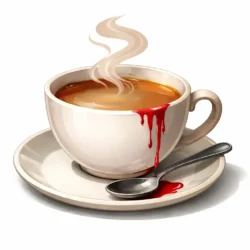

My Critique of Midsomer Murders
Midsomer Murders endures as a defining cozy mystery series by contrasting picturesque English villages with baroque, theatrical violence. Its strength lies in meticulously crafted whodunits, ensemble casting and a distinctive visual shorthand that elevates formula into ritual.
Yet that formula is also a constraint: the ‘murder-a-episode’ ratio strains plausibility, and later years drifted into self-parody, stretching the idiom. Relative to contemporaries like Foyle’s War or Broadchurch, it prioritises comfort over grit, domestic intrigue rather than systemic critique.
For modern viewers, its value is in reliable, unchallenging craft and in capturing a changing Englishness. While rarely essential, it remains a sturdy artifact of pre-streaming Sunday-night prestige.
Principal Characters & Performances
Detective Chief Inspector Tom Barnaby
For fourteen series, the bedrock of Midsomer Murders was John Nettles’s portrayal of Detective Chief Inspector Tom Barnaby. Nettles brought a unique and defining presence to the role, one of grounded authority and wry, understated observation.
His Barnaby was a family man, often seeking solace in his home life with wife Joyce, which provided a crucial counterpoint to the chaos he investigated. He approached each bizarre village murder with a methodical, slightly weary patience.
His investigative style was conversational rather than confrontational, often disarming suspects with his avuncular demeanour before delivering a piercing insight. This performance established the show’s core dynamic, making the detective a steady guide through the county’s eccentricities and horrors.
Nettles’s tenure defined the series’ early identity, and his departure in 2011 marked the end of a significant era, leaving a legacy of integrity and quiet intelligence that remains the benchmark for the franchise.
Detective Chief Inspector John Barnaby
The seamless continuation of the series rested on the shoulders of Neil Dudgeon, who took over as the new lead, DCI John Barnaby. Introduced as Tom’s cousin, John shares a surname and a profession, but Dudgeon crafted a distinctly different character.
Where Tom was a classicist, John is more modern, with an interest in forensic psychology and a different domestic rhythm with his wife, Sarah, and their dog, Sykes. Dudgeon portrays him as perceptive and sharp, with a dry, sometimes more openly sarcastic wit.
His relationship with his sergeants, from Ben Jones to Jamie Winter, evolved into a partnership of equals, reflecting a subtle shift in the show’s dynamic. Dudgeon’s achievement was in honouring the established formula while confidently making the role his own, ensuring the heart of the series remained intact through its transition and beyond.
Notable Support and Guest Stars
The world of Midsomer is populated by a rich tapestry of supporting characters and guest performers. Jane Wymark, as Tom’s wife Joyce, provided essential warmth and normality, her curiosity often inadvertently nudging cases forward.
The succession of sergeants—Daniel Casey’s earnest Gavin Troy, Jason Hughes’s dependable Ben Jones, and Nick Hendrix’s tech-savvy Jamie Winter—each brought a unique dynamic to the investigative partnership.
Barry Jackson’s pathologist, Dr. George Bullard, delivered morbid findings with delightful cheer.
Furthermore, the show became a showcase for British acting talent, with actors like Richard Briers, Orlando Bloom, and Emily Mortimer appearing in guest roles, often as the respectable villagers with the darkest secrets. This consistent quality in casting has been a hallmark of the series’ production.
Key Episodes & Defining Stories
The Killings at Badger’s Drift
Any journey into Midsomer must begin at the beginning. This pilot episode, adapted from Caroline Graham’s novel, is the blueprint.
It introduces DCI Tom Barnaby and DS Gavin Troy investigating a death everyone but one friend dismisses as natural.
The investigation peels back the layers of Badger’s Drift to reveal blackmail, illicit relationships, and shocking family secrets. Guest actors like Bernard Hepton and a young Emily Mortimer embody the hidden tensions perfectly.
It matters because it established everything: the contrast of idyllic scenery and macabre crime, the methodical police work, and the understanding that in Midsomer, the most picturesque villages hide the deepest sins. Fans remember it as the confident, award-winning start that proved this formula could captivate millions.
Judgement Day
This episode from the year 2000 showcases the series hitting its confident stride. The premise—a Perfect Village competition disrupted by a pitchfork murder—is classic Midsomer satire, skewering middle-class pretensions and local rivalries.
The plot weaves together planning disputes and a decades-old crime with darkly comic precision. It’s notable for featuring Orlando Bloom in a small role just before his fame, but the guest cast, including Tessa Peake-Jones and Richard Briers, is uniformly strong.
Fans remember it for its iconic, grimly humorous opening murder and its encapsulation of the show’s unique tone. It’s a prime example of how the series uses a seemingly genteel village activity as a catalyst for baroque violence and thorough detection.
The Killings of Copenhagen
As the 100th episode, this story is a milestone that demonstrates the series’ longevity and international appeal. Breaking its own format, it sends DCI John Barnaby and DS Charlie Nelson to Denmark to investigate a death linked to a Midsomer business.
The collaboration with Danish police, filmed on location in Copenhagen, offers a fresh visual palette while maintaining the core investigative dynamic. Guest stars Ann Eleonora Jørgensen and Birgitte Hjort Sørensen integrate seamlessly.
It matters because it proved the franchise could successfully experiment with its setting without losing its identity. Fans remember it as a celebratory, ambitious episode that honoured the show’s past while confidently stepping beyond the county borders, a testament to its enduring global popularity.
The World of Midsomer Murders
The fictional county of Midsomer is a character in itself. It is a patchwork of picturesque villages with names like Midsomer Mallow and Midsomer Worthy, centred on the county town of Causton.
The landscape is quintessentially English, featuring rolling fields, ancient woods, and country lanes.
This world is brought to life through location filming primarily in Buckinghamshire and Oxfordshire. Real pubs, village greens, and historic manor houses stand in for their fictional counterparts, giving the setting an authentic texture.
The Black Swan in Badger’s Drift, for instance, is often the Six Bells pub in Warborough. This grounding in real, beautiful locations creates the essential contrast: the serene, chocolate-box backdrop against which the most unnatural acts occur, making the murders feel both more shocking and more intriguing.
Origin Story
Midsomer Murders began on ITV in March 1997, developed for television by Betty Willingale and producer Brian True-May for Bentley Productions. It was commissioned as prime-time drama, not a niche offering.
The series is adapted from the Chief Inspector Barnaby novels written by Caroline Graham, with the pilot, “The Killings at Badger’s Drift,” taken directly from her first book.
Early episodes continued to adapt Graham’s work before the show transitioned to original screenplays. Filmed on location from the start, it established its distinctive look and tone quickly, securing a large audience and setting the stage for a long-running franchise that would become an ITV Studios Global Entertainment property.
Narrative Style & Tone
The show operates firmly within the tradition of the cozy mystery, yet one with a notably high body count. Each feature-length episode presents a self-contained case, beginning with a murder and concluding with Barnaby’s revelation of the culprit.
The investigation is methodical, built on interviews and deduction rather than action.
The tone is a careful blend of the sinister and the darkly humorous, often finding comedy in village eccentricities and the elaborate murder methods. The iconic theme music, composed by Jim Parker and featuring a theremin, perfectly captures this mix of the pastoral and the peculiar.
It is a puzzle to be solved, set against a backdrop of seemingly tranquil English life.
How is Midsomer Murders remembered?
Midsomer Murders is remembered as a quintessential and enduring staple of British television drama. It holds a reputation as comfort viewing, a reliable Sunday night mystery set in an idealised yet dangerous rural England.
The show has cultivated a loyal global fanbase, inspiring location tours in the counties where it is filmed.
Commentary often focuses on the amusing disparity between the fictional county’s staggering murder rate and real rural crime statistics. While it faced discussion about diversity in its portrayal of Englishness, the series remains a defining example of the traditional whodunit.
It is celebrated for its consistent formula, high-caliber guest casts, and its unique, unchanging world—a place where the villages are beautiful, the communities are close-knit, and the secrets are always lethal.
In Closing
Through its compelling detectives, intricate puzzles, and beautifully sinister version of rural life, Midsomer Murders has secured its place as one of television’s most lasting and distinctive crime series.