
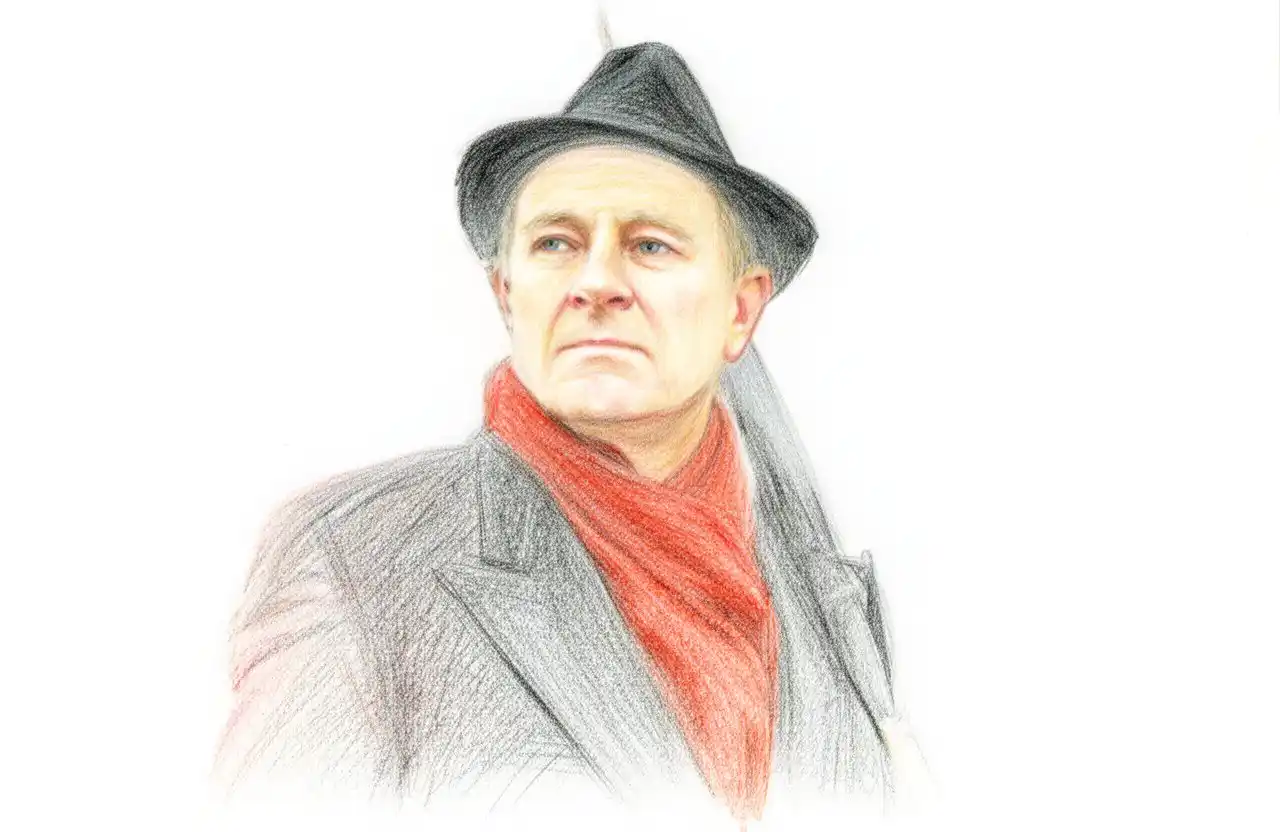
My Critique of Mr. Palfrey Of Westminster
Mr. Palfrey of Westminster distinguishes itself from contemporaries like The Sandbaggers by privileging bureaucratic process over fieldcraft.
Alec McCowen’s performance provides a quiet, formidable centre that elevates procedural minutiae into genuine drama. Its strengths lie in moral ambiguity, intricate dialogue, and a convincing portrayal of institutional self-preservation.
However, the series is constrained by its very reticence; it can feel stagey and claustrophobic. This deliberate, intellectual approach risks feeling remote today.
Yet for viewers weary of bombastic espionage, its dry intelligence and psychological realism offer a compelling, historically grounded alternative.
Principal Characters & Performances
Mr. Palfrey
Alec McCowen’s portrayal of the title character is the quiet, immovable centre of the series. He is a middle-ranking civil servant, a man whose domain is a nondescript office near the Houses of Parliament rather than a glamorous field station.
McCowen plays him with a brilliant, understated precision. Palfrey appears mild-mannered, even fussy, a creature of bureaucracy and paperwork.
He is the antithesis of the action spy.
Yet beneath this unassuming exterior lies a formidable intellect and a ruthless pragmatism. His power comes from patience, from asking the right question at the right time, and from an unshakeable understanding of human weakness.
He navigates the murky waters of Cold War intelligence not with a gun, but with a filing cabinet and a penetrating stare. McCowen ensures Palfrey is never a caricature; he is a believable, complex functionary operating in an unbelievable world.
The performance earned contemporary praise, with The Times noting McCowen played the role “to perfection.” It is a masterclass in how to command a screen through stillness and suggestion.
Blair
Clive Wood co-stars as Blair, Mr. Palfrey’s younger assistant.
Where Palfrey is deliberation, Blair is often impulse. He represents a more conventional, action-oriented approach to intelligence work.
This dynamic creates a productive, if occasionally tense, partnership. Blair is the man more likely to want to kick a door down, while Palfrey prefers to pick the lock quietly from the inside.
Wood brings a necessary energy and physicality to the role, serving as a foil to McCowen’s cerebral intensity. Blair is not merely a sidekick; he is a competent officer whose methods highlight the uniqueness of Palfrey’s own.
Their relationship is one of mutual, if sometimes grudging, respect. The character was significant enough to later anchor the 1989 postscript play “A Question of Commitment,” which focused on Blair after the main series concluded.
The Coordinator & Notable Guests
Caroline Blakiston plays the Coordinator, Palfrey’s boss and the head of their small, unnamed department. She is his political master, the conduit to higher government authority, and often the source of his most delicate assignments.
Blakiston delivers a steely, commanding performance. Her interactions with McCowen are a highlight, a subtle dance of power, manipulation, and occasionally, shared understanding.
She pushes, he resists or redirects, and the drama unfolds in their verbal exchanges.
The series boasted an exceptional roster of guest actors who populated its one-off stories. Briony McRoberts provided grounding as Palfrey’s secretary, Caroline.
Guest stars like Julian Glover in “The Defector,” Leslie Phillips, Martin Jarvis, Tim Pigott-Smith, and James Faulkner brought considerable weight to their roles, often playing the suspects, defectors, or officials caught in Palfrey’s investigative web.
Their presence elevated each episode, ensuring that the world Palfrey navigated felt populated by credible, high-stakes personalities, making his quiet victories all the more satisfying.
Key Episodes & Defining Stories
The Defector
This episode is a quintessential example of the series operating at its peak. Palfrey is tasked with managing the defection of a celebrated Russian author, a potential propaganda coup for the West.
While the Coordinator plans a media spectacle, Palfrey’s instincts prick. He suspects the defection is too neat, too convenient.
The drama unfolds through tense interviews and diplomatic manoeuvring, not chase scenes.
Guest star Julian Glover is perfectly cast as the enigmatic writer, his performance layered with ambiguity. Is he a genuine dissident or a sophisticated plant?
The episode matters because it crystallises the show’s core themes: the manipulation of truth, the cynical use of human beings as political trophies, and the quiet, lonely work of discernment in a world of lies. Fans remember it for its intellectual tension and moral complexity.
Music of a Dead Prophet
Written by producer Michael Chapman, this is one of the series’ most overtly political and historically engaged instalments. Palfrey is ordered to prevent the publication of a book alleging British complicity in a foreign assassination and regime change.
The plot is a direct exploration of official secrecy and historical accountability. As Palfrey investigates the manuscript’s claims, he is forced to confront uncomfortable truths about his own government’s past actions.
The drama is procedural and cerebral, built on research and interviews. It showcases Palfrey not just as a security operative, but as an investigator of history and institutional memory.
It matters for its boldness, tackling themes of censorship and legacy that resonate beyond the Cold War frame. Fans value it as a standout story that proves the series was willing to engage with substantive, real-world ethical dilemmas.
The Baited Trap
As the final episode of the original series, this story brings the show’s central tensions to a personal head. Palfrey is compelled to investigate his close friend, Robert Sanding, for suspected treason.
The Coordinator insists, based on a Soviet tip, but Palfrey suspects a deliberate manipulation. The episode masterfully explores the conflict between personal loyalty and professional duty, the human cost of a life in intelligence.
It is a sombre, psychological piece, heavy with the weight of surveillance and betrayed trust. There are no easy answers or triumphant conclusions, only a profound moral uncertainty.
This matters because it provides a fittingly ambiguous and mature coda to the series. Fans remember it as a powerful, character-driven finale that stays true to the show’s grounded, unglamorous view of spycraft and its consequences.
The World of Mr. Palfrey of Westminster
The series exists in the shadowy corridors of Whitehall and Westminster during the Cold War. This is not the globe-trotting adventure of James Bond, but the bureaucratic heart of British counter-espionage.
Palfrey’s office, near the Houses of Parliament, is the central hub. Stories revolve around defections, double agents, and internal security leaks, often involving the Soviet Union and Eastern Bloc.
The environment is one of government buildings, diplomatic receptions, and quiet meetings in clubs or safe houses. The threat is not a spectacular laser, but a leaked document, a turned agent, or a well-placed piece of disinformation.
It depicts a small, specialist department, a world where the most dangerous battles are fought with memos, interrogations, and psychological pressure. This grounded setting is crucial, making the intellectual stakes feel as high as any physical confrontation.
Origin Story
The character of Mr. Palfrey first appeared in a 1983 pilot play titled “The Traitor,” broadcast as part of Thames Television’s Storyboard anthology.
Alec McCowen originated the role in this initial outing.
Following the pilot’s success, Thames Television, under executive producer Lloyd Shirley and producer Michael Chapman, developed the series proper for ITV. McCowen was retained, and the main series began its run in April 1984.
Writers including George Markstein, Philip Broadley, and Michael Chapman himself crafted the sophisticated, dialogue-driven scripts. The show was created as a deliberate counterpoint to action-led spy thrillers, focusing instead on the procedural and psychological realities of Cold War intelligence work from a British perspective.
Narrative Style & Tone
Mr. Palfrey of Westminster is a serious, low-key drama.
Its pace is measured, favouring procedure over spectacle. Episodes are self-contained investigations, driven by dialogue and character interaction in offices and meeting rooms.
The tone is grounded and realistic, aiming for plausible depictions of counter-intelligence work. It explores moral ambiguity, loyalty, and the often-cynical machinery of government secrecy.
Action is rare; suspense is generated through interrogation, surveillance, and psychological manoeuvring. The show trusts its audience to engage with complex plots and ethical dilemmas, presenting spycraft as a cerebral profession of deep suspicion and subtle manipulation.
How is Mr. Palfrey of Westminster remembered?
The series is remembered as an intelligent, credible entry in the canon of British television spy drama. It never achieved the blockbuster status of some contemporaries, but it has cultivated a lasting respect.
Modern synopses and DVD releases frame it as a stylish, subtle series, highlighting Alec McCowen’s definitive performance and the sharp interplay between the core trio. It is appreciated for its refusal to glamorise its subject.
For fans of classic television and espionage stories, it represents a pinnacle of the thinking-person’s spy show. Its complete release on DVD and availability on streaming platforms has allowed it to find new audiences who value its narrative sophistication, strong performances, and authentically grey portrayal of Cold War tensions.
It stands as a testament to the power of understatement, a series where the most dangerous weapon is a quiet question asked by a man in a civil servant’s suit.
In Closing
For those seeking a spy drama of intellect over instinct, of bureaucratic nuance over ballistic excess, Mr. Palfrey of Westminster remains a uniquely satisfying and sophisticated discovery.