My Critique of The Sweeney
The Sweeney’s defining achievement is its fusion of location-shot realism with a morally ambiguous, hard-edged policing ethos that reset British television expectations. John Thaw’s Jack Regan operates with a procedural credibility, yet the series’ celebrated confrontations and visceral car chases often push violence beyond the decorous norms of contemporaneous BBC dramas.
Even in peak instalments, a constraint emerges: while the show’s commitment to London’s socio-economic grit is palpable, its character work can feel secondary to the demands of action-driven plotting. This matters today because its unvarnished depiction of Flying Squad methods offers a vital, stylistically influential counterpoint to later, more polished procedurals, anchoring its landmark status.
Principal Characters & Performances
Detective Inspector Jack Regan
John Thaw’s Jack Regan is the volatile, magnetic heart of The Sweeney. Creator Ian Kennedy Martin specifically envisaged Thaw for the role, having worked with him previously on Redcap.
Regan is a product of his environment: a brilliant, instinctive thief-taker operating within a system he frequently despises.
He is defined by a fierce loyalty to his team and a relentless drive to catch villains, often by bending or breaking the rules. Thaw’s performance masterfully balances this professional aggression with moments of profound weariness and vulnerability.
Regan’s personal life is a mess, sacrificed to the job, and his relationships with superiors are perpetually strained. Thaw ensures Regan is never a simple tough guy; he is charismatic, flawed, and utterly compelling, a blueprint for the modern, morally complex television detective.
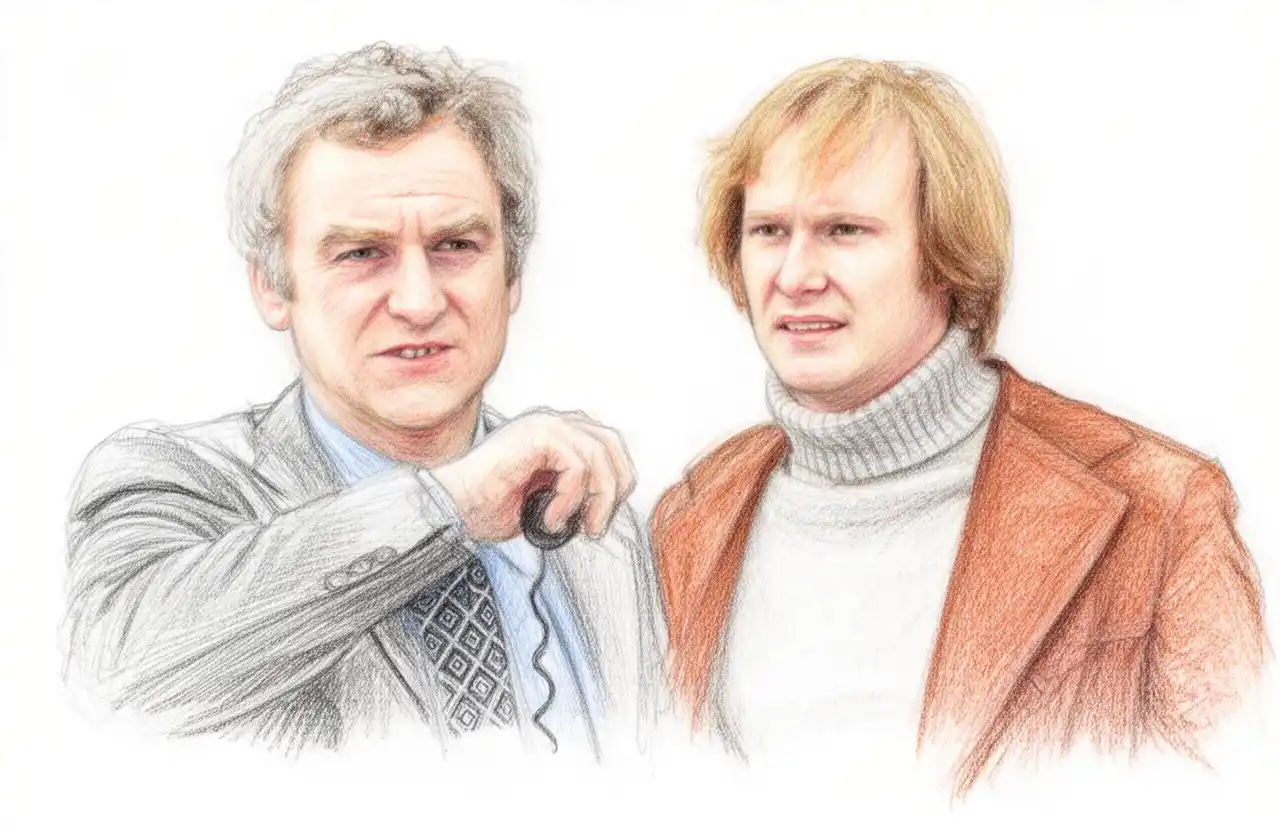
His partnership with George Carter provides the series’ crucial human counterpoint, a bond forged in shared danger and mutual respect. Thaw’s iconic portrayal made him a national star and cemented Regan as one of British television’s most enduring characters.
Detective Sergeant George Carter
As Regan’s partner, Dennis Waterman’s George Carter is the essential anchor. Cast after impressing Euston Films on Special Branch, Waterman brings a grounded, everyman quality to the Flying Squad.
Carter is the reliable professional, often the voice of caution trying to temper Regan’s wilder impulses.
He is a skilled detective in his own right, fiercely loyal, but more connected to a conventional home life, at least initially. The chemistry and banter between Thaw and Waterman became a defining feature of the show, feeling authentically like a partnership forged in a high-pressure job.
Carter’s character arc is marked by profound tragedy, most notably in the second series, which tests his resilience and deepens his connection to Regan. Waterman’s performance makes Carter relatable; he is the audience’s conduit into Regan’s world, a good cop trying to stay afloat in a brutal environment.
Detective Chief Inspector Frank Haskins & The Guest Ensemble
Garfield Morgan’s DCI Frank Haskins completes the central trio as the beleaguered superior. Haskins is perpetually caught between demanding results from his best team and reining in their destructive, rule-bending methods to appease his own bosses.
Morgan portrays him not as a mere obstacle, but as a pragmatic manager trying to balance operational success with procedural survival. His exasperated interactions with Regan are a series highlight, full of bureaucratic friction and underlying, grudging respect.
Beyond the core cast, The Sweeney featured a remarkable roster of guest stars who populated its gritty London. Actors like Joe Gladwin, often playing informants or minor criminals, added layers of authenticity and pathos to single episodes.
These characters—the frightened ‘grass’, the weary publican, the professional villain—were sketched with economy and truth, making the world feel densely populated and real. The strength of these supporting performances ensured that even standalone episodes resonated with a sense of lived-in consequence.
Key Episodes & Defining Stories
Ringer
As the very first episode broadcast, Ringer had the immediate job of establishing the show’s entire ethos, and it succeeded definitively. The plot is a masterclass in pressure: Regan’s surveillance photos are stolen from his girlfriend’s car, forcing a desperate race against time to recover them before a major criminal is tipped off.
From the opening moments, it showcases the series’ documentary-like location work and propulsive pace. For fans, Ringer is the essential primer.
It introduces Regan’s abrasive genius, his fractious dynamic with Haskins, and the easy partnership with Carter.
It presents the Flying Squad’s world as one of constant compromise and moral grey areas, where personal and professional lines blur dangerously. Watching Ringer is witnessing the blueprint for a new kind of British police drama being laid down in real time, gritty, immediate, and thrillingly adult.
Abduction
If you want to understand the personal cost of Regan’s life, Abduction is the essential, harrowing watch. The episode sees a criminal gang kidnap Regan’s young daughter to neutralise him during a major investigation.
Directed by Tom Clegg and written by Trevor Preston, it pushes the series’ tension to an almost unbearable degree.
It strips away Regan’s professional armour, revealing the raw vulnerability beneath. The episode is remembered for its relentless pace and emotional stakes, as Regan and Carter operate outside the system to save a child.
Guest actor Joe Gladwin provides poignant depth as an informant caught in the crossfire. Abduction matters because it proves the show’s commitment to consequence; the dangers of the job aren’t abstract, they can shatter a detective’s private world, a theme that would resonate through later episodes.
Hit and Run
Hit and Run represents The Sweeney at its most brutally consequential. This second-series episode kills off George Carter’s wife, Alison, in a deliberate attack linked to his work.
It was a stark, shocking narrative move for 1970s television, refusing to insulate main characters from devastating loss.
The episode is a profound study of grief and professional duty, following Carter as he grapples with unimaginable personal tragedy while still pursuing the perpetrators. Fans remember it for its uncompromising bleakness and its impact on Carter’s character arc.
It deepened the bond between Regan and Carter, transforming it from a professional partnership into a brotherhood forged in shared trauma. Hit and Run demonstrated the series’ narrative courage, proving that in this version of London, no one was truly safe, and actions had permanent, life-altering repercussions.
The World of The Sweeney
The Sweeney’s London is a character in itself. This is the mid-1970s capital, all concrete, brown interiors, and rain-slicked streets.
The series, produced by Euston Films on 16mm film, was shot almost entirely on location across West London and the southeast.
You see real pubs, sprawling industrial estates, bleak housing blocks, and the endless tangle of motorways and arterial roads. The Flying Squad’s offices are functional, cramped spaces, not glamorous headquarters.
This environment of economic tension and urban grit provides the perfect backdrop for stories of armed robbery and violent crime. The show’s geography feels authentic; chases tear through real suburbs, meetings happen in scruffy cafes, and deals go down in gloomy warehouses.
It captures a specific moment in British social history, presenting a London that is tough, lived-in, and far from tourist landmarks. This commitment to a tangible world was revolutionary for television drama and remains a key part of the show’s powerful, enduring atmosphere.
Origin Story
The Sweeney began as a 90-minute television film titled Regan, broadcast in 1974 as part of ITV’s Armchair Cinema anthology. Written by Ian Kennedy Martin and produced by Thames Television’s film subsidiary Euston Films, Regan served as a pilot.
Its strong audience response and ratings success led Thames to commission a full series. The creative team, including producer Ted Childs, was influenced by the grittiness of contemporary crime films like Get Carter.
They aimed for a new realism in police drama, utilising location filming and harder-edged storytelling. The title itself comes from Cockney rhyming slang: “Sweeney Todd” for the Flying Squad.
This pilot film established the tone, characters, and production style that would define the landmark series that followed.
Narrative Style & Tone
The Sweeney’s style is defined by gritty realism and propulsive action. Episodes are fast-paced, self-contained crime stories running around 50 minutes.
The dialogue crackles with contemporary London slang and criminal jargon, adding authenticity.
Visually, the use of handheld 16mm film on location creates a documentary-like immediacy, especially in chase sequences and surveillance scenes. The tone is hard-edged and morally ambiguous.
Regan and his team frequently bend rules and operate in ethical grey areas to catch villains, sparking contemporary debate. Violence is presented as sudden and messy, pushing 1970s television boundaries.
Composer Harry South’s iconic theme music reinforces the tough, urban atmosphere. The series mixes procedural investigation with tense undercover work and rapid-response operations, maintaining a relentless pace that keeps the focus on the harsh realities of fighting serious crime.
How is The Sweeney remembered?
The Sweeney is remembered as a landmark of British television that permanently changed the police drama. During its original run on ITV from 1975 to 1978, it achieved massive popularity, with peak audiences nearing 19 million.
It was praised for its realism but also scrutinised for its violence and portrayal of rule-bending cops.
Its influence was immediate, prompting rivals like the BBC to produce their own grittier shows. Culturally, it entered the lexicon, with its title and phrases becoming part of popular culture, referenced in music and comedy.
Retrospectively, critics hail it as a definitive 1970s drama. The performances of John Thaw and Dennis Waterman are iconic.
Its legacy is sustained through constant repeats and home-media releases, allowing new generations to appreciate its raw energy, complex characters, and unparalleled sense of time and place.
It is the crucial bridge between the more decorous detectives of the past and the morally complex, realistic crime series that dominate television today.
In Closing
The Sweeney endures because it got so much right: iconic characters, a tangible world, and stories that balanced thrilling action with genuine consequence. It remains the gold standard of hard-edged British crime drama.