
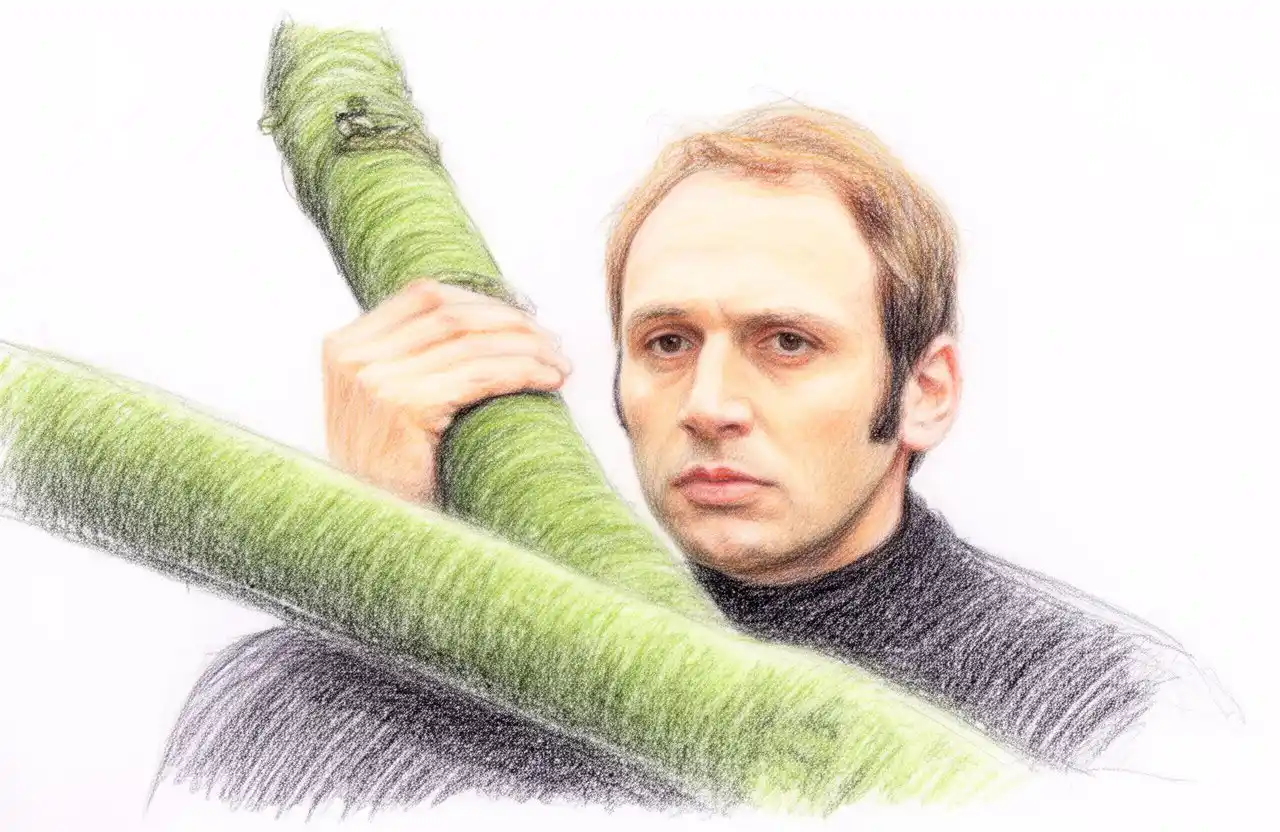
My Critique of The Xyy Man
The XYY Man’s primary strength lies in its morally murky triangle of a cat burglar, a spymaster, and a dogged policeman. Stephen Yardley and Don Henderson anchor this tension with compelling credibility.
Its darker counterpoint is a scientifically dubious genetic premise, now rightly seen as reductive and ethically questionable. Compared with contemporaries, it distinguishes itself through longer-form espionage intrigue rather than case-of-the-week procedural convention.
This combination still matters for viewers tracking British crime drama’s evolution towards compromised protagonists and institutional ambiguity. Yet its dated central conceit requires critical context, tempering nostalgia with an awareness of its problematic framework.
Principal Characters & Performances
William “Spider” Scott
At the heart of The XYY Man is Stephen Yardley’s compelling portrayal of William “Spider” Scott. Spider is a reformed cat burglar, a man trying to build a straight life after prison, yet constantly pulled back into the shadows by forces beyond his control.
His genetic makeup, the XYY syndrome, is the show’s controversial hook, framing him as biologically predisposed to criminality. Yardley, however, invests the character with a deep humanity and conflict that transcends this simplistic premise.
Spider is intelligent, resourceful, and possesses a strong moral compass, which makes his manipulation by the state all the more tragic. Yardley’s performance captures the constant tension in Spider’s life.
He is caught between his desire for legitimacy, the lure of a big score, and the coercive demands of intelligence officer Fairfax. This internal struggle, played with a quiet intensity, is what makes Spider a fascinating and enduring protagonist.
He is not a superhero or a glamorous spy. He is a skilled tradesman whose trade happens to be burglary, used as a pawn in a game he never asked to join.
Yardley ensures we root for him, despite the crimes he commits.
Detective Sergeant George Bulman
If Spider Scott is the show’s conflicted soul, then Don Henderson‘s Detective Sergeant George Bulman is its relentless, earthbound conscience. Henderson creates one of the most distinctive police characters in 1970s British television.
Bulman is dogged, unglamorous, and perpetually rumpled. He operates with a world-weary tenacity, always a few steps behind Spider but never giving up the chase.
Henderson’s genius is in making this persistence compelling rather than tedious.
He brings a granular realism to the role. Bulman is not a genius detective with flashes of inspiration.
He is a plodder, a man who solves cases through sheer stubbornness and attention to detail.
His dynamic with Spider is crucial. There is a grudging respect between the hunter and the hunted, a recognition that they are both professionals in their respective fields.
Henderson’s performance was so powerfully defined that it became the foundation for the character’s future.
Bulman’s popularity directly led to him headlining the spin-off series Strangers and later Bulman, a testament to the strength and originality Henderson brought to the role from its very first scene.
Notable Support and Guest Stars
The world around Spider and Bulman is populated by a strong ensemble of character actors who define the series’ atmosphere. Mark Dignam is superb as Fairfax, the shadowy civil servant.
With an air of quiet, bureaucratic menace, Fairfax is the embodiment of the state’s amoral pragmatism. He recruits Spider not with threats, but with offers he cannot refuse, making him a uniquely chilling antagonist.
Dennis Blanch provides solid support as Detective Constable Derek Willis, Bulman’s more conventional assistant, who would also follow the detective into the Strangers spin-off.
Vivienne McKee brings warmth and normality as Spider’s girlfriend, Maggie Parsons, representing the straight life he is desperate to grasp. The guest cast is a roll call of superb 1970s talent.
Brian Croucher brings formidable presence as the criminal Raisen. Johnny Shannon appears as the shady Warren.
William Squire and Fiona Curzon add depth to later storylines.
These performers ground the espionage plots in a very real, gritty British landscape, ensuring the high-stakes drama always feels connected to a world of backstreet deals and police station coffee.
Key Episodes & Defining Stories
The Proposition
This is where it all begins. The opening episode is essential viewing, not just as a pilot, but as a masterclass in establishing a complex dramatic universe with efficiency and grit.
We meet Spider Scott fresh from prison, determined to reform, only to be immediately ensnared by Fairfax.
The mission is a classic espionage set-up: retrieve a compromising photograph from a foreign embassy. What defines the episode is the instant clarity of its core relationships.
Stephen Yardley and Don Henderson establish the cat-and-mouse dynamic between Spider and Bulman in their very first indirect confrontation.
Meanwhile, Mark Dignam’s Fairfax coolly demonstrates how the security services exploit marginal figures like Spider. The episode is remembered because it perfectly lays out the show’s central dilemma.
It asks whether a man can escape his past, or his genetics, when powerful institutions have a use for his skills.
The tension is palpable, the moral ambiguity is baked in from the start, and the 1970s London atmosphere is thick enough to touch. For fans, this is the blueprint.
Friends and Enemies
As the opener to the second series, this episode is crucial for showing how the concept could evolve beyond its original novel adaptation. Spider is trying to go legit, investing in an executive aircraft charter company.
This new setting immediately broadens the show’s scope, introducing aviation and international business as fresh backdrops for trouble.
The plot kicks off with a murder that drags Spider back into his old world, proving that his past is inescapable. This episode reinforces the show’s core triangle, with Fairfax applying pressure and Bulman circling closer.
It matters in the series arc because it demonstrates Spider’s genuine attempt at building a normal life, making the external forces that crush that attempt more poignant. Fans remember it for its shift in tone and setting, proving The XYY Man was more than a one-story premise.
It feels like the start of a new chapter, with higher stakes and a more entrepreneurial, yet still vulnerable, Spider at its centre.
Law and Order
This late-series episode is one of the show’s darkest and most morally complex hours. Spider, framed and imprisoned, finds himself in the heart of the system Fairfax manipulates.
Recruited to assist in a prison break for intelligence purposes, the line between inmate and asset vanishes completely.
The episode is a brutal exploration of the show’s central theme: the state can be as criminal as the criminals it pursues. The prison environment is grimly authentic, and Spider’s position is hopelessly compromised.
Bulman’s investigation continues on the outside, providing a stark contrast between straightforward police work and the murky world of intelligence ops. Fans remember “Law and Order” for its unflinching bleakness and its powerful climax.
It pushes the concept to its logical extreme, asking what is left of a man after he has been used by the system, imprisoned by it, and then turned into its tool within the walls. It is a defining, hard-hitting chapter in Spider’s tragic journey.
The World of The XYY Man
The series is steeped in the texture of 1970s Britain. This is not a glamorous world of international jet-setters, but a landscape of urban grit, drab government offices, and rain-slicked city streets.
Spider operates in this environment, his cat burglary requiring a knowledge of back alleys and fire escapes as much as embassy layouts.
The police stations, where Bulman and Willis ply their trade, are functional and unspectacular, filled with paperwork and weary routine. This grounded reality makes the intrusion of espionage plots so effective.
When Fairfax appears, he emerges from the shadows of Whitehall, bringing a cold, bureaucratic menace that feels just as real as the street crime. The later introduction of an aircraft charter company adds a different flavour, hinting at a more mobile, international criminality, but it remains rooted in a very believable business reality.
The world of The XYY Man is one where the mundane and the treacherous coexist. A quiet street can hide a surveillance team, a normal office can front an intelligence operation, and a man trying to buy a legitimate business can find himself negotiating with killers.
Origin Story
The XYY Man began as a sequence of novels by author Kenneth Royce, featuring the character of Spider Scott. Granada Television saw its potential for the small screen.
The initial adaptation was a three-part serial, broadcast in July 1976.
This mini-series was written for television by Ivor Marshall and directed by Ken Grieve. It proved successful enough for Granada to commission a full second series of ten original episodes, which aired in 1977.
This expanded run was written by a team including Tim Aspinall, Murray Smith, and Edward Boyd, with direction from Ken Grieve, Carol Wilks, and Alan Grint. The transition from adapted serial to original series demonstrated the strength of the core concept and characters, particularly the dynamic between Spider and Bulman.
Narrative Style & Tone
The series expertly blends two genres: the character-driven crime drama and the paranoid espionage thriller. The tone is consistently grounded and tense, avoiding flashy action for suspense built through dialogue and situation.
Stories are often told over multiple episodes, allowing plots to breathe and character conflicts to deepen.
The dialogue is sharp and purposeful, particularly in the scenes between Spider, Fairfax, and Bulman, where every line is a negotiation or a manoeuvre. The visual style is pure 1970s ITV drama, making extensive use of location filming to create an authentic, sometimes bleak, atmosphere.
Music and sound are used sparingly to underscore tension rather than dominate it. At its core, the narrative is a character study of Spider Scott, a man trapped by his genetics, his past, and the manipulations of the state, forever seeking a path to redemption that remains just out of reach.
How is The XYY Man remembered?
The show is remembered today as a distinctive and gritty product of its time, a serious thriller that left a legacy beyond its 13 episodes. For fans of British crime drama, it is a crucial link in the chain, notable for introducing the iconic character of George Bulman, who would headline his own successful series.
Stephen Yardley’s performance as the tortured Spider Scott is frequently praised for its depth and complexity. The series is also revisited with an awareness of its controversial central premise regarding XYY syndrome, a concept science has since debunked.
This adds a layer of historical curiosity, a snapshot of a once-popular theory. Ultimately, it is remembered as a well-made, intelligent series that took its audience seriously.
It presented a morally ambiguous world where heroes were compromised and authority was suspect.
For those seeking the authentic feel of 1970s British television drama, with its strong characters and slow-burn suspense, The XYY Man remains a compelling and noteworthy discovery.
In Closing
The XYY Man stands as a compelling, character-driven thriller from the golden age of British ITV drama. Its blend of crime and espionage, anchored by standout performances, ensures its place as a noteworthy and rewarding series for discerning fans.