My Critique of The Vice
The Vice established a distinctive, unflinching authority within British crime drama by pairing procedural rigour with the psychological toll of policing Soho’s sex trade. Ken Stott’s Chappel offered a compelling, compromised focal point; however, the series’ later pivot toward institutional corruption and his replacement risked diffusing that potency.
Compared to contemporaries such as Cracker or The Bill, it was notably adult and confrontational, foregrounding exploitation, grooming, and trafficking well before mainstream acceptance. Yet its grimness could feel relentless, leaving little space for tonal variation and occasionally nudging the narrative towards schematic degradation.
For modern viewers, its value lies in that refusal to aestheticise or soften: it traces a lineage to unvarnished contemporary dramas like Unforgiven and pays a sobering price in bleakness. Ultimately, The Vice matters because it mapped the moral corrosion inside the squad as rigorously as the crimes outside it, even when its late-period turbulence fractured the focus.
Principal Characters & Performances
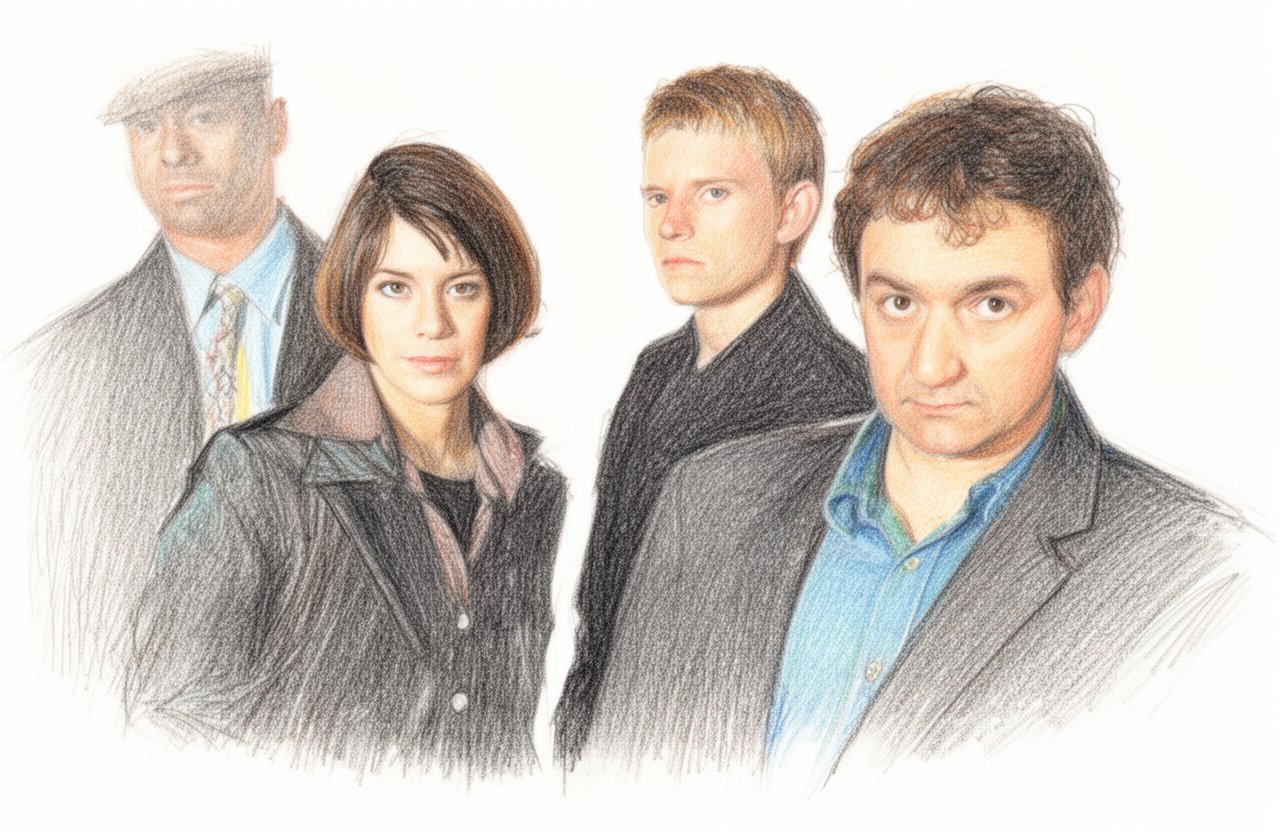
Detective Inspector Pat Chappel (Ken Stott)
At the heart of The Vice is Ken Stott’s Detective Inspector Pat Chappel. He is not a conventional television hero.
Chappel leads the Metropolitan Police Vice Unit with a weary, obsessive determination that is as much a liability as a strength.
Stott’s performance grounds the series in a palpable, gritty reality. Chappel is a man deeply scarred by the world he polices.
His commitment borders on self-destruction, leading him into morally ambiguous territory and personal entanglements that blur professional lines.
His affair with his psychiatrist, Dr Christina Weir, is a clear signal of his fractured psyche. Stott portrays Chappel’s descent not with grand gestures but through a growing burden of silence and rage.
This complexity makes his eventual, dramatic exit from the series feel like an inevitable conclusion to a deeply flawed character study.
Detective Sergeant Joe Robinson (David Harewood)
As Chappel’s right-hand man, David Harewood’s DS Joe Robinson provides a crucial counterpoint. Where Chappel is instinctive and volatile, Robinson often represents a more procedural, though no less determined, approach to policing.
Harewood brings a compelling intensity to the role, portraying Robinson as a capable officer navigating the unit’s toxic dynamics. His character serves as a moral compass that is frequently tested by Chappel’s methods and the corruption they uncover.
Robinson’s loyalty and competence make him a steady presence throughout the series’ turmoil. His return in the final series to a unit now led by his former rival underscores the show’s ongoing exploration of institutional memory and personal history within the force.
Notable Support and Guest Stars
The series boasted a formidable supporting cast that deepened its world. Caroline Catz played WPC Cheryl Hutchins, whose traumatic undercover experience in the episode “Hooked” becomes a catalyst for tragedy.
Tim Pigott-Smith was brilliantly cast as the sinister DS, later Chief Inspector, Frank Vickers. His arrival in “Out of Mind” exposes a vein of institutional corruption and personal history that permanently alters the series’ trajectory.
Marc Warren and Rosie Marcel appeared as officers within the unit, while actors like Mel Raido and Tamzin Malleson featured in key guest roles. These performances collectively built the show’s authentic, ensemble feel, portraying a team often overwhelmed by the human cost of their work.
Key Episodes & Defining Stories
“Out of Mind”
This feature-length opener to the third series is a masterclass in character-driven tension. The plot kicks off when Pat Chappel discovers his former superior, Frank Vickers, hiding during a brothel raid.
This chance encounter unravels a cold case linked to Chappel’s past relationship with an ex-prostitute, Jane Farrell. The investigation becomes a personal crusade, pitting Stott’s Chappel against Tim Pigott-Smith’s impeccably smug Vickers.
The episode matters because it fundamentally reshapes the series. It moves beyond case-of-the-week vice to expose deep-seated institutional rot and personal guilt.
Fans remember it for the electric confrontation between Stott and Pigott-Smith and for permanently darkening Chappel’s world with the ghosts of his own compromises.
“Hooked”
“Hooked” represents the devastating culmination of Pat Chappel’s journey. After an undercover operation goes wrong, a disgraced Chappel operates from the shadows to find missing officer Cheryl Hutchins.
He discovers Hutchins, played by Caroline Catz, traumatised and addicted after being raped by pornographer Keith Beaumont. Chappel’s subsequent actions are those of a man whose professional and personal lines have fully dissolved.
This episode is the essential, if brutal, endpoint for the character. It demonstrates the ultimate cost of the obsession the series has charted from the beginning.
Fans recall it as Chappel’s last stand, a harrowing narrative that forces a complete reinvention of the show’s leadership and tone for its final series.
“Control”
In the fifth series, “Control” exemplifies the show’s new dynamic under Frank Vickers. Now a Chief Inspector, Vickers is threatened when a witness from his past recognises him during a murder investigation.
The plot sees Joe Robinson targeting a violent pimp, while Vickers manipulates the situation to protect his own reputation. The policing is directly compromised by the commander’s hidden personal misconduct.
This episode matters because it confirms the series’ cynical thesis: the vice is not just on the streets, but in the station. It is remembered for showcasing Pigott-Smith’s nuanced portrayal of a corrupt authority figure, proving the drama could sustain its tension even after the departure of its original lead.
The World of The Vice
The Vice constructs a London that is all grim daylight and neon-soaked shadow. Its primary environment is the Soho sex trade, a world of brothels, escort agencies, and street corners portrayed without glamour.
The show’s authenticity stems from its focus on the ecosystem of exploitation. Storylines delve into trafficking networks bringing women from Eastern Europe, and the pipeline from northern children’s homes to London’s streets.
This is a procedural world where raids on massage parlours and tense undercover operations in nightclubs are the daily routine. The financial districts and police stations are not sanctuaries but interconnected spaces where power and vulnerability are constantly negotiated.
Origin Story
The Vice was created by Barry Simner and Rob Pursey and produced by Carlton Television in association with Touchpaper Television. Commissioned by ITV, it debuted in January 1999 as part of the network’s push into darker, adult-oriented drama.
It was conceived specifically as a police drama focusing on the Metropolitan Police Vice Unit, a niche within the genre that allowed for intense, socially conscious storytelling. Stephen Smallwood is credited as a producer on the series.
From the start, it was anchored by Ken Stott’s performance and defined by its uncompromising look at the sex trade, setting its tone apart from more conventional detective shows of the era.
Narrative Style & Tone
The Vice is a gritty, psychological crime drama. Its style is grounded and location-driven, favouring the authentic grime of urban streets over studio polish.
Early series used two-part stories, later shifting to feature-length and then hour-long self-contained episodes. This flexibility allowed for deep, novelistic plotting.
The tone is consistently adult and bleak, underscored by the haunting Portishead track “Sour Times” in its title sequence. It is less about solving puzzles and more about documenting the psychological strain on both officers and victims, presenting a world where moral victories are rare and costly.
How is The Vice remembered?
The Vice is recalled as a hard-hitting and often brutal entry in the British crime drama canon. While not a mainstream awards contender, it maintains a dedicated fan following drawn to its unflinching subject matter.
Retrospectives frame it as a precursor to the darker, more serialised police dramas that followed. Its continued availability on streaming platforms like BritBox speaks to its enduring niche appeal.
It is remembered for Ken Stott’s career-defining performance as the flawed Pat Chappel and for its willingness to tackle themes of exploitation and institutional corruption with a seriousness that felt groundbreaking for its time on commercial television.
In Closing
The Vice stands as a compelling, character-driven exploration of a murky world. Its power lies in its psychological realism and its refusal to offer easy answers, securing its place as a distinctive and memorable chapter in British television drama.